When a crisis demands immediate evacuation, your ability to survive hinges on what you carry. A properly assembled bug-out bag is not a luxury; it is a critical life-support system designed to sustain you for a minimum of 72 hours, potentially longer. This guide outlines the essential categories and specific items required to ensure your readiness when every second counts.
The Foundation: Water, Shelter, and Fire Systems
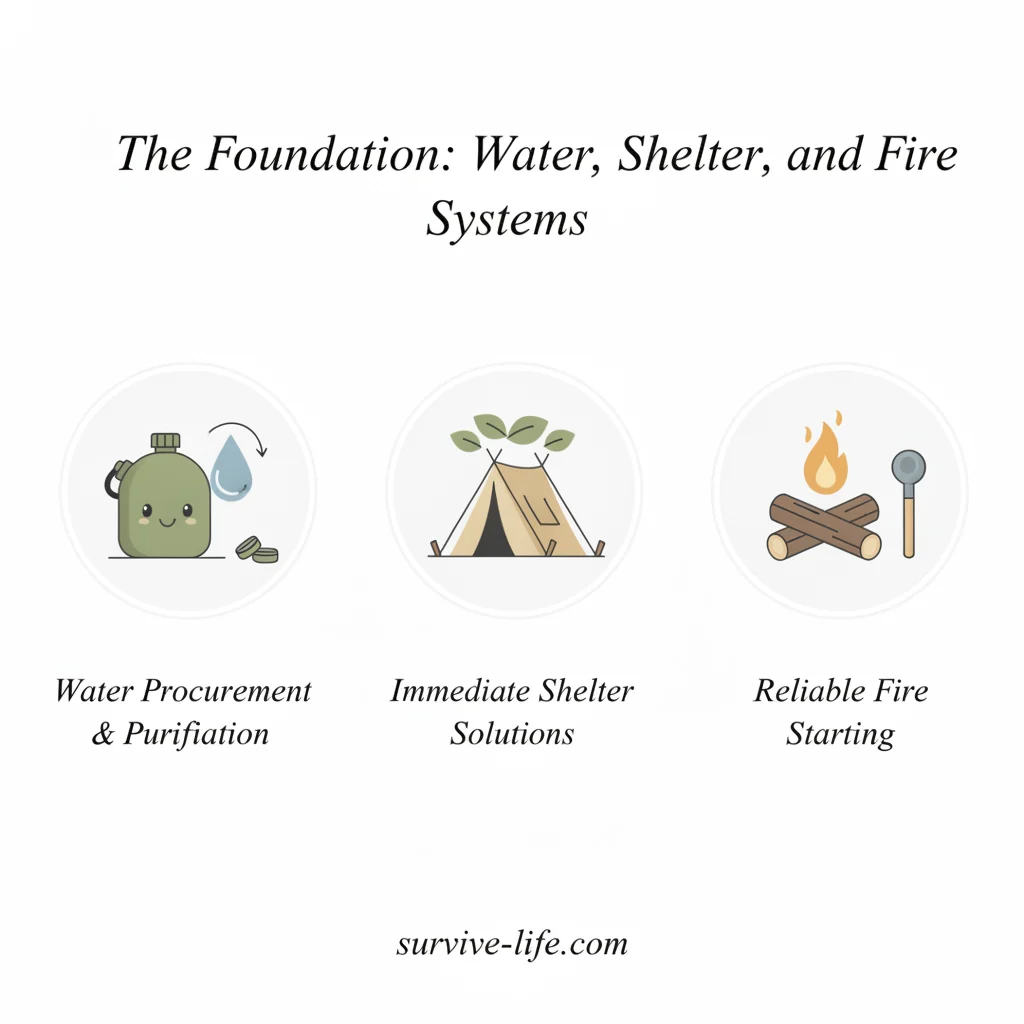
These are the absolute priorities for immediate survival. Without reliable access to water, protection from the elements, and the ability to create fire, other items are secondary. Emphasize redundancy and reliability in these core systems.
Water Procurement & Purification
Access to potable water is non-negotiable for survival. An adult requires a minimum of one gallon of water per day for drinking and basic hygiene. Carry at least two liters of water in your bag to start. Implement multiple purification methods to ensure redundancy. A high-quality water filter, such as a Sawyer Squeeze or Katadyn BeFree, removes bacteria and protozoa from natural water sources. These filters are lightweight and effective for immediate use. Include chemical purification tablets, like iodine or chlorine dioxide, as a backup method; they are compact and have a long shelf life. Boiling water is a reliable purification technique if you have a heat source and a metal container. Always pre-filter turbid water through a cloth to extend the life of your filter and improve the effectiveness of chemical treatments. Collect water from moving sources when possible, avoiding stagnant pools. Understand the limitations of each purification method; some filters do not remove viruses, and chemical treatments require specific contact times.
Immediate Shelter Solutions
Protection from the elements prevents hypothermia, hyperthermia, and exposure-related injuries. A lightweight tarp (8×10 feet) offers versatile shelter, allowing you to construct various configurations like an A-frame or lean-to. It provides protection from rain, wind, and sun. An emergency bivy sack or space blanket offers immediate thermal protection and can be used inside a tarp for added warmth. Consider a compact sleeping bag or woobie (poncho liner) appropriate for your expected climate. Select a shelter site that is naturally protected from wind and falling debris. Ensure the ground is level and well-drained. Insulate yourself from the cold ground using a closed-cell foam pad or natural materials like pine needles.
Reliable Fire Starting
Fire provides warmth, purifies water, cooks food, signals for help, and offers psychological comfort. Carry at least three distinct fire-starting methods. A ferrocerium rod is highly reliable, works when wet, and provides thousands of strikes. Waterproof matches stored in a sealed container are a simple, effective option. A reliable butane lighter, preferably a windproof model, offers quick ignition. Prepare and carry various forms of tinder, such as cotton balls soaked in petroleum jelly, dryer lint, or commercial fire starters. Collect dry kindling (pencil-lead to thumb-sized sticks) and fuel wood (wrist-thick and larger) before attempting to start a fire. Build a small, manageable fire that conserves fuel. Always clear a fire break around your fire pit to prevent uncontrolled spread, especially in dry conditions. Learn to build different fire lays, such as a teepee or log cabin, to suit various conditions and purposes. Practice fire starting in adverse weather to build proficiency.
Medical Preparedness: Trauma and Sustained Health
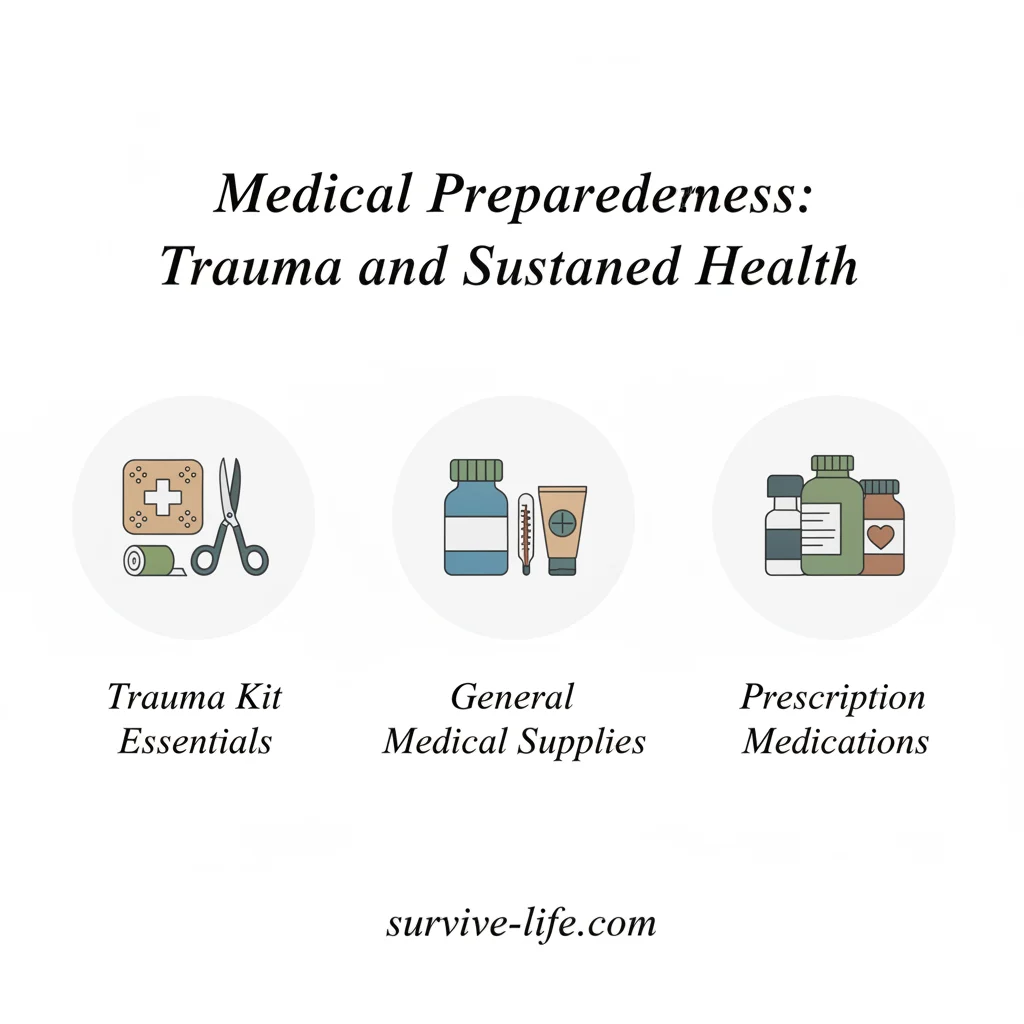
A comprehensive first-aid kit is non-negotiable. It must address both immediate trauma and ongoing health needs. Crucially, you must know how to use every item effectively.
Trauma Kit Essentials
Immediate trauma care can be life-saving in a crisis. Your trauma kit must include items for severe bleeding and major injuries. Carry at least one tourniquet (e.g., CAT or SOF-T Wide) and know how to apply it with one hand. Include a hemostatic dressing, such as QuikClot, to stop severe bleeding. A pressure bandage (e.g., Israeli bandage) provides direct pressure and secures dressings. Chest seals are vital for penetrating chest wounds to prevent tension pneumothorax. Include medical tape, trauma shears, and a splinting device like a SAM splint for fractures or sprains. Pack nitrile gloves to protect against bloodborne pathogens. Understand that these items require training; attend a Stop the Bleed course or similar trauma first-aid training.
General Medical Supplies
Beyond trauma, address common ailments and minor injuries to maintain health and morale. Pack various adhesive bandages, gauze pads, and antiseptic wipes for wound cleaning. Include antibiotic ointment to prevent infection. Pain relievers (ibuprofen, acetaminophen) manage discomfort and fever. Antihistamines address allergic reactions. Anti-diarrhea medication (loperamide) is crucial for preventing dehydration. Oral rehydration salts replenish electrolytes lost through illness or exertion. Blister treatment, such as moleskin or hydrocolloid dressings, prevents debilitating foot issues. Tweezers and a magnifying glass assist with splinter removal. A thermometer helps monitor illness. Regularly check expiration dates on all medications and replace them as needed.
Prescription Medications
If you or a family member rely on prescription medications, these are paramount. Carry a minimum 7-day supply, ideally more if space permits, in their original containers with clear labeling. Include a copy of your prescriptions and a doctor’s note explaining the necessity of the medication. This documentation can be critical if you encounter medical personnel or need to cross checkpoints. Store medications in a waterproof, crush-proof container. Consult your physician about obtaining an emergency supply of essential prescriptions. Ensure all prescription medications are stored in a cool, dry place and rotated before their expiration dates to maintain efficacy. Consider any necessary medical devices, such as an inhaler, EpiPen, or insulin, and pack appropriate backups and supplies for their administration. Keep a list of dosages and administration instructions readily accessible.
Sustenance & Security: Food, Tools, and Self-Defense
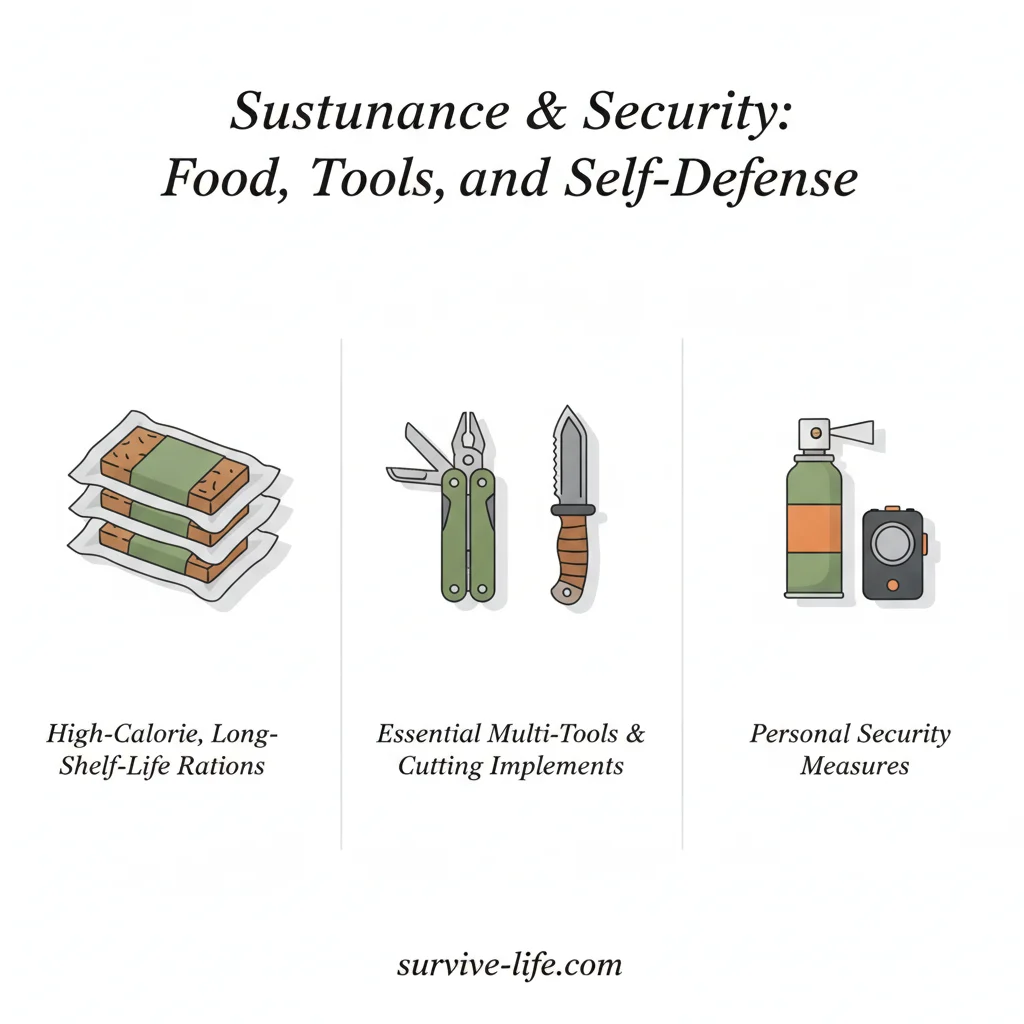
Beyond the initial 72 hours, food becomes critical. Tools enable problem-solving and resourcefulness, while personal security measures ensure your safety in uncertain environments.
High-Calorie, Long-Shelf-Life Rations
Food provides essential energy and maintains morale during stressful situations. Focus on high-calorie, nutrient-dense options with a long shelf life. Emergency survival bars (e.g., Mainstay, SOS Food Labs) are compact, require no cooking, and provide significant calories. Dehydrated or freeze-dried meals offer variety and better taste but require water for preparation. MREs (Meals Ready-to-Eat) are self-contained and require no additional water or cooking equipment, though they are heavier. Pack enough food for at least 72 hours, aiming for 2000-2500 calories per day per person. Include comfort foods like hard candy or chocolate for a morale boost. Rotate your food supply every 3-5 years, or according to manufacturer recommendations, to ensure freshness and palatability. A small cooking pot or metal cup allows for boiling water and preparing simple meals.
Essential Multi-Tools & Cutting Implements
Tools are extensions of your capability, enabling repairs, resource acquisition, and problem-solving. A high-quality fixed-blade knife (4-6 inch blade) is indispensable for heavy-duty tasks like batoning wood or preparing game. A sturdy folding knife provides a more compact option for everyday tasks. A multi-tool with pliers, screwdrivers, and a can opener offers versatility. Include a small folding saw or wire saw for processing firewood or building shelter. A sharpening stone or field sharpener maintains the edge of your cutting tools. Duct tape and paracord are invaluable for repairs, lashing, and countless other uses. Carry at least 50 feet of 550 paracord. A small shovel or trowel assists with sanitation and digging.
Personal Security Measures
Your safety is paramount in an uncertain environment. Personal security involves both defensive tools and a proactive mindset. Carry a legal self-defense tool appropriate for your skills and local regulations, such as pepper spray, a tactical pen, or a firearm if you are trained and licensed. Understand the legal implications and proper use of any defensive tool you carry. Situational awareness is your primary defense; constantly observe your surroundings, identify potential threats, and plan escape routes. Avoid unnecessary risks and confrontations. Travel with a buddy or group whenever possible. Learn basic self-defense techniques. Your most effective security measure is a well-trained mind, capable of assessing threats and making decisive actions under pressure. Consider a personal alarm or whistle to deter attackers or signal for help. Practice safe handling and storage of any defensive tools.
Communication & Navigation: Staying Connected and On Course
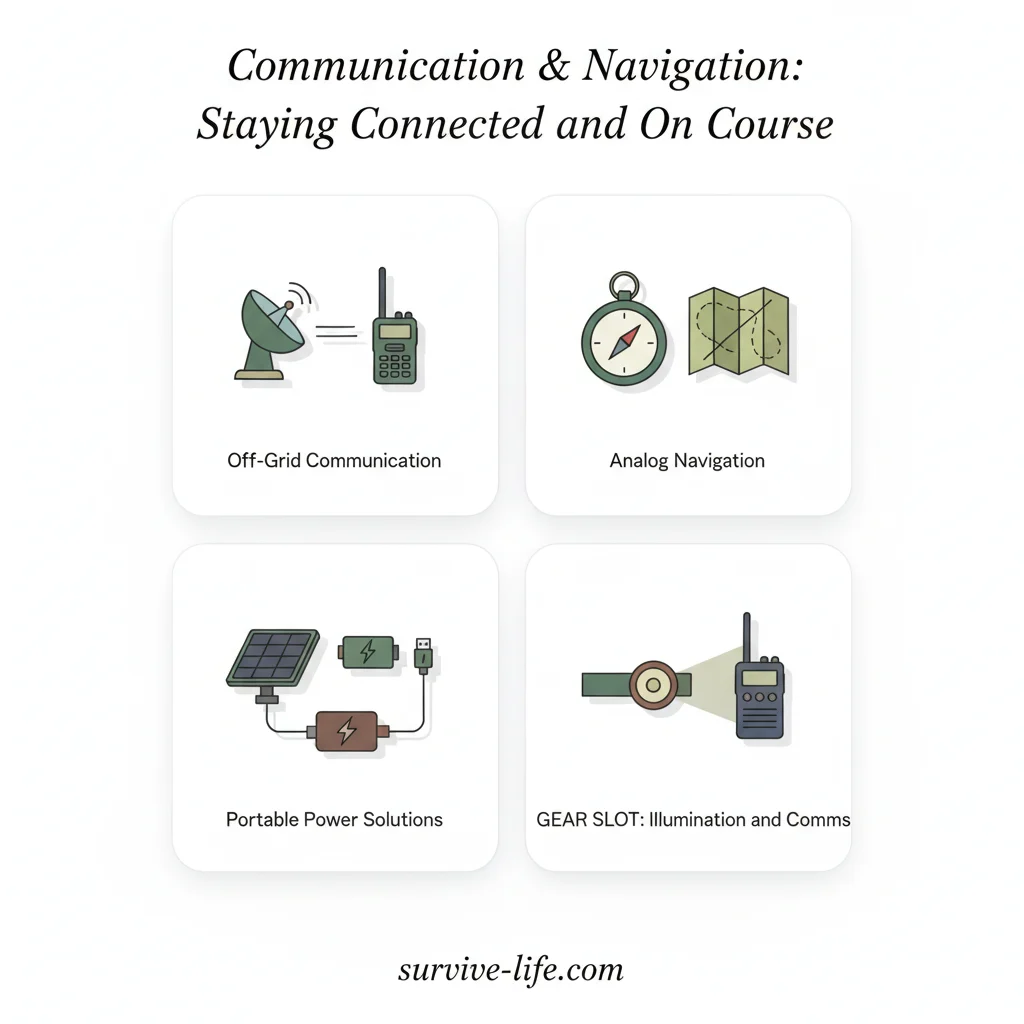
In a grid-down scenario, traditional communication and navigation may fail. Redundant, off-grid systems are vital for situational awareness and staying on your intended path. Practice with your navigation tools before a crisis.
Off-Grid Communication
Maintaining communication is crucial for situational awareness and coordinating with others. A hand-crank or solar-powered NOAA weather radio provides critical information on weather patterns and emergency broadcasts. Handheld FRS/GMRS radios allow short-range communication with family or group members. For longer distances and more robust capabilities, a programmable Ham radio (e.g., Baofeng UV-5R) is a cost-effective option, but requires a license for transmission in non-emergency situations. A signal mirror and a loud whistle are passive communication tools for signaling over distances. Develop pre-arranged communication plans and rally points with your family or group. Understand radio etiquette and emergency frequencies.
Analog Navigation
Reliable navigation ensures you stay on course and reach your destination. A detailed, waterproof map of your local area and intended bug-out routes is essential. Carry a reliable baseplate compass and know how to use it for triangulation and taking bearings. Understand magnetic declination for your region and how to adjust for it. A protractor assists with plotting courses on a map. Practice navigating using only a map and compass in varied terrain. Learn to identify landmarks and use terrain association. Do not rely solely on electronic devices for navigation; batteries can fail. Mark your routes and alternative routes on your map.
Portable Power Solutions
Electronic devices, even off-grid ones, require power. A portable power bank with a high capacity (e.g., 20,000 mAh) can recharge phones, radios, and headlamps multiple times. Include a compact solar panel charger to replenish power banks or directly charge devices when sunlight is available. Carry spare batteries for all battery-dependent devices, such as headlamps and radios. Organize batteries by type and keep them protected from moisture. Understand the charging requirements of your devices. Test your power solutions regularly to ensure they function correctly and hold a charge.
GEAR SLOT: Illumination and Comms
For reliable illumination and hands-free operation, I carry a Fenix HM65R-T headlamp (1500 lumens) and a compact Streamlight MicroStream USB flashlight (250 lumens) for backup. The headlamp offers multiple modes and a robust build, while the flashlight provides a small, powerful secondary light source. For communication, a Baofeng UV-5R radio is a cost-effective, programmable option for local comms. It allows for monitoring multiple frequencies and offers a wide range of capabilities for those who understand its programming. Always carry spare batteries for all illumination devices and ensure they are protected from moisture and accidental activation.
Personal Essentials & Documentation: Health, Morale, and Identity
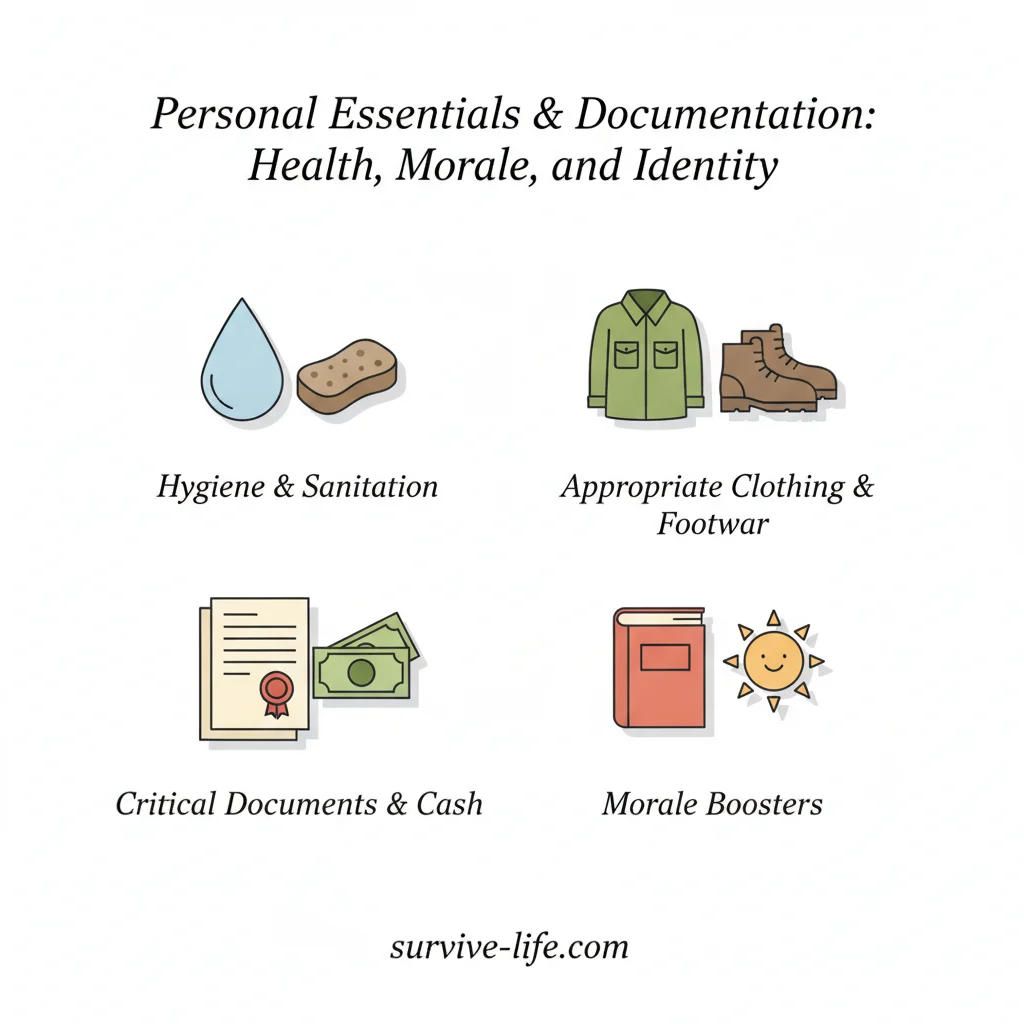
Maintaining hygiene and having critical documents can prevent secondary issues, maintain morale, and aid in recovery or identification. These items often get overlooked but are crucial for sustained well-being.
Hygiene & Sanitation
Maintaining personal hygiene prevents illness and maintains morale. Pack a small bottle of biodegradable soap, hand sanitizer, and a travel-sized toothbrush with toothpaste. Include toilet paper, compressed wipes, and feminine hygiene products if applicable. A small towel or bandana is versatile for cleaning and drying. Proper waste disposal is critical to prevent contamination; carry small trash bags for human waste and other refuse. Consider a portable bidet for water conservation. Preventing the spread of germs is essential in a survival scenario.
Appropriate Clothing & Footwear
Layered clothing protects against varying weather conditions and allows for temperature regulation. Pack moisture-wicking base layers (synthetic or wool), an insulating mid-layer (fleece or down), and a waterproof/windproof outer shell. Include durable, broken-in hiking boots that provide ankle support and traction. Pack multiple pairs of wool or synthetic socks to prevent blisters and keep feet dry. A wide-brimmed hat or beanie protects from sun or cold. Consider gloves for hand protection. Choose clothing in subdued colors for blending into natural environments.
Critical Documents & Cash
Essential documents can facilitate identification, aid, and recovery. Carry waterproof copies of identification (driver’s license, passport), insurance cards, birth certificates, and property deeds. Include a list of emergency contacts, medical information (allergies, blood type), and copies of prescriptions. Store these documents in a waterproof bag or container. Carry a supply of small-denomination cash, as electronic transactions may be impossible. Include some quarters for payphones if available. Consider a pre-paid debit card with a small balance.
Morale Boosters
Maintaining mental resilience is as important as physical preparedness. Pack small items that offer comfort or distraction. A small book, a journal and pen, or a deck of cards can provide mental engagement during downtime. Photos of loved ones can offer psychological support. A small, familiar comfort item can significantly boost morale during stressful periods. These items are lightweight but provide immense value in sustaining mental well-being.
Bag Selection & Strategic Packing: The Container and Its Contents
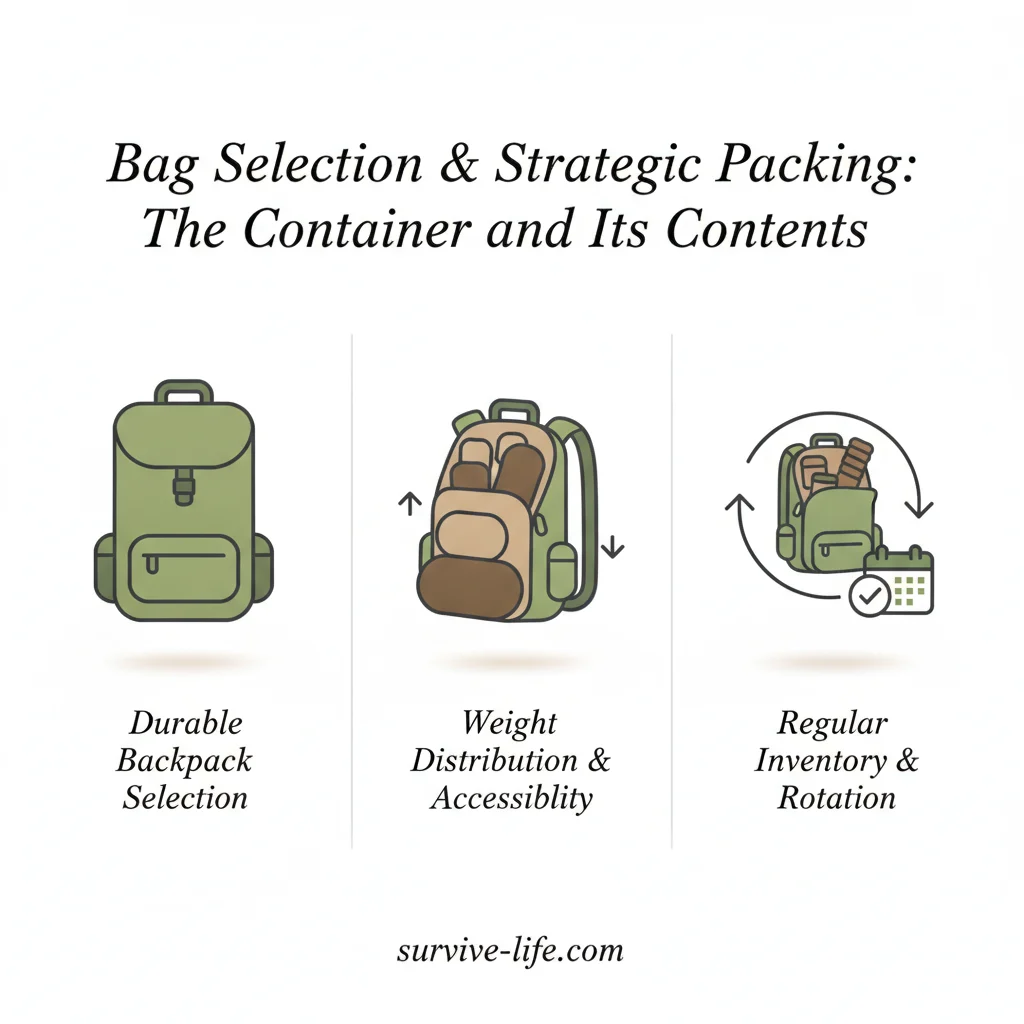
The bag itself is as important as its contents. A durable, comfortable pack is essential. Proper packing ensures accessibility, balance, and efficiency when you need to move quickly. Regular checks are non-negotiable.
Durable Backpack Selection
Your bug-out bag is your primary means of carrying your survival system. Select a durable backpack with a capacity of 40-60 liters, suitable for 3-5 days of supplies. Look for robust materials like Cordura nylon and strong zippers. A comfortable suspension system with padded shoulder straps, a sternum strap, and a hip belt is crucial for weight distribution and reducing fatigue during extended movement. Test the pack with its full intended weight to ensure a proper fit and comfort. Consider a pack with external attachment points for items like sleeping pads or tarps. Ensure the pack is water-resistant or use a rain cover.
Weight Distribution & Accessibility
Proper packing maximizes comfort and efficiency. Place heavy items close to your back and between your shoulder blades to maintain balance. Frequently accessed items, such as water bottles, snacks, and a first-aid kit, should be in external pockets or easily reachable compartments. Use stuff sacks or dry bags to organize items by category and protect them from moisture. Distribute weight evenly to prevent strain on one side of your body. Pack items you will need first on top. Practice packing and unpacking your bag to develop an efficient system.
Regular Inventory & Rotation
Your bug-out bag is a dynamic system requiring consistent maintenance. Conduct a full inventory and inspection of your bag every six months, as recommended by Ready.gov. Check expiration dates on food, water, and medications, replacing items as needed. Test batteries in all electronic devices. Inspect clothing for wear and tear. Replace any damaged or depleted items. Adjust the contents based on seasonal changes or specific threats in your area. Maintain a detailed inventory list inside your bag to facilitate quick checks and ensure nothing is overlooked during rotation. This proactive maintenance ensures your bag is always ready when an emergency strikes.
The Mindset and Maintenance
A bug-out bag is more than just a collection of items; it is a declaration of self-reliance and a commitment to your survival. Assemble it with purpose, train with its contents, and maintain it diligently. Your life, and potentially the lives of those you protect, may depend on it.