
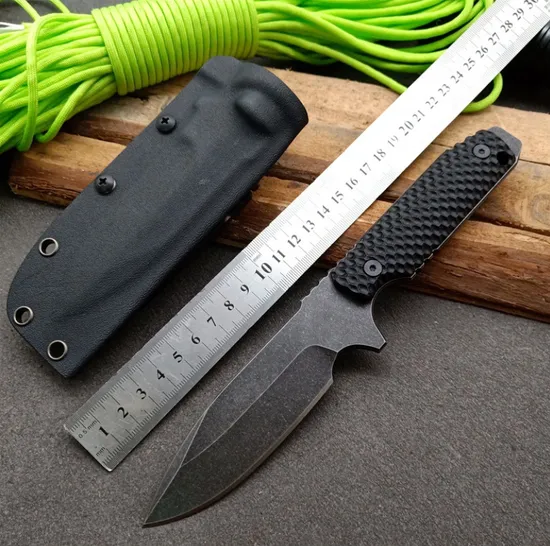
A compromised knife in a survival situation is a death sentence. Understanding the fundamental construction of your primary cutting tool, specifically the full tang design, is not merely academic; it is critical for ensuring reliability when your life depends on it. This article details why a full tang knife is the only acceptable standard for serious survival and outdoor use.
The Uncompromising Core: Defining Full Tang Construction
A full tang knife represents the pinnacle of structural integrity in blade design. The blade steel extends the full length and width of the handle, forming a single, continuous piece from the tip to the pommel. This monolithic construction eliminates common failure points found in lesser designs. Consequently, the knife becomes an extension of your hand, capable of enduring extreme stress without compromise. The steel’s uninterrupted flow through the handle is the foundation of its superior strength.
Visual identification of a full tang knife is straightforward. Observe the handle’s perimeter; the tang steel is exposed along the entire edge, sandwiched between two handle scales. These scales, often made from durable materials like Micarta or G10, are securely fastened to the tang with rivets, screws, or epoxy. This exposed steel confirms the blade’s robust internal structure. Furthermore, the handle scales provide a comfortable and secure grip, enhancing control during demanding tasks. A visible, continuous steel spine along the handle is a clear indicator of a true full tang design.
Contrast this with inferior designs, which present inherent points of failure under stress. Partial tangs, such as rat-tail or stick tangs, feature a blade that narrows significantly into a thin rod extending only partially into the handle. This rod is typically epoxied or friction-fitted into the handle material. During heavy use, especially tasks involving impact or prying, the connection between the blade and handle can easily snap or loosen. The handle itself might also crack or separate from the blade due to insufficient internal support. Therefore, these designs are unsuitable for survival applications where reliability is paramount. A full tang design mitigates these risks entirely, offering unwavering performance when it matters most.
Field Note: Always inspect the pommel end of a knife; if the steel is not visible and continuous with the blade, it is likely a partial tang, regardless of external appearance.
Structural Superiority: Why Full Tang Guarantees Reliability
Full tang construction delivers unmatched strength and durability, which are non-negotiable attributes for a survival knife. This design distributes stress evenly across the entire knife, from the blade’s edge through the handle. Consequently, it prevents bending, breaking, or handle separation during heavy use. The continuous steel core acts as a robust backbone, absorbing and dissipating forces that would catastrophically damage weaker designs. This inherent strength ensures the knife remains functional even after prolonged, rigorous application in the field. Furthermore, the solid steel foundation provides a stable platform for all cutting and impact tasks.
The resilience of a full tang knife against high-impact tasks is exceptional. It excels at batoning firewood, a critical skill for shelter and fire preparation, where the blade is struck repeatedly with a log. Lesser designs would quickly fail, with the blade either snapping or separating from the handle. Similarly, chopping tasks, such as clearing brush or processing larger wood, are performed with confidence. Prying, another common emergency application, also benefits from the full tang’s integrity. The robust construction ensures the blade will not deform or detach when leverage is applied. Therefore, a full tang knife is indispensable for demanding physical work.
Longevity in harsh environments is another significant advantage of the full tang design. The robust construction minimizes points of weakness susceptible to corrosion, moisture ingress, or structural compromise. Partial tangs often have voids within the handle where moisture can collect, leading to rust and degradation of the handle material or the tang itself. A full tang, with its exposed steel and securely fastened scales, allows for easier inspection and maintenance. This design reduces the likelihood of hidden damage developing over extended periods in the field. Consequently, a full tang knife maintains its structural integrity and performance even after years of exposure to the elements. This makes it a reliable companion for long-term outdoor use.
Field Rule: A full tang knife is engineered to withstand the most brutal forces encountered in a survival scenario, making it the only reliable choice.
Practical Applications: Tasks a Full Tang Knife Excels At
A full tang knife is indispensable for wood processing and shelter building, core survival skills. Its robust construction allows for efficient batoning of logs, splitting firewood for a fire, or creating smaller pieces for tinder. The unwavering strength prevents blade separation, a common failure point with partial tang designs. Furthermore, carving notches for traps or shelter construction, and shaping wood for tools, are performed with precision and confidence. The knife’s stability ensures consistent cuts, which is crucial for effective bushcraft. Therefore, a full tang blade is a primary tool for manipulating natural materials.
For game processing and food preparation, a full tang knife provides necessary control and strength. Skinning game requires a sharp, stable blade that can withstand lateral pressure without flexing or breaking. Butchering tasks, involving cutting through muscle and connective tissue, demand a knife with unyielding integrity. The full tang design ensures the blade remains firmly attached to the handle, preventing dangerous slippage or structural failure. General food tasks, from slicing vegetables to preparing wild edibles, are also handled with ease. Consequently, the knife becomes a versatile culinary tool in the wilderness.
In emergency situations, a full tang knife transforms into a multi-functional tool. It is capable of prying open stubborn containers, a critical action when accessing supplies or creating an escape route. The robust pommel can be used for hammering stakes, breaking glass, or signaling in critical situations. Digging small holes for fire pits or latrines is also feasible due to the blade’s strength. This versatility extends the knife’s utility far beyond simple cutting. Therefore, its ability to perform diverse emergency tasks makes it an invaluable asset.
Self-defense and utility tasks also benefit from a full tang knife’s unwavering confidence. During high-stress encounters, the absolute structural integrity of the blade provides a psychological edge and physical reliability. For demanding utility tasks, such as cutting through thick ropes, heavy canvas, or even light metal, the knife performs without hesitation. Its solid construction ensures that the blade will not fail when maximum force is applied. This makes it a dependable tool for both protection and demanding practical applications. A full tang knife offers peace of mind in any challenging scenario.
Selecting Your Lifeline: Key Features Beyond the Tang
Selecting the right full tang knife involves considering several critical features beyond its core construction. Steel type and edge retention are paramount for a survival blade. High-carbon steels, such as 1095 or D2, are renowned for their toughness and ease of sharpening in the field. They hold a good edge and can withstand significant abuse. However, they require diligent maintenance to prevent corrosion. Stainless steels, like S30V or CPM-3V, offer superior corrosion resistance and often exceptional edge retention. These steels are harder to sharpen but maintain their keenness longer. The choice depends on the user’s environment and maintenance commitment. A balanced steel offers both durability and reasonable sharpening characteristics.
Handle ergonomics and material significantly impact a knife’s performance and safety. A secure, comfortable grip is essential, especially under wet, cold, or fatigued conditions. Materials like Micarta, G10, or textured rubber provide excellent traction and durability. These materials are impervious to moisture and temperature changes, ensuring a consistent grip. Avoid smooth, slick materials that can become dangerous when wet. The handle shape should fit your hand naturally, preventing hot spots or fatigue during prolonged use. A well-designed handle reduces the risk of accidental slippage, which can lead to serious injury. Therefore, prioritize a handle that offers maximum control and comfort.
Sheath design and retention are as crucial as the knife itself. A secure, quick-draw sheath protects the blade and prevents accidental loss, a potentially fatal error in the wilderness. Kydex sheaths offer excellent retention, are waterproof, and often allow for multiple carry options. Heavy-duty leather sheaths, when properly constructed, also provide good protection and retention. Ensure the sheath has positive retention, meaning the knife clicks or snaps securely into place. It should also allow for one-handed deployment. Furthermore, the sheath must protect the edge from damage and the user from accidental cuts. A reliable sheath ensures your knife is always accessible and safe.
Blade geometry and grind influence a knife’s versatility and cutting performance. Blade shapes like the drop point or clip point are highly versatile, offering a strong tip for piercing and a belly for slicing. A flat grind provides excellent slicing ability and is relatively easy to sharpen. A saber grind, with its thicker primary bevel, offers superior strength for chopping and batoning. The blade thickness also plays a role; a thicker blade is generally stronger for heavy tasks but less efficient for fine cutting. Consider your primary intended uses when evaluating blade geometry. A well-chosen blade profile enhances the knife’s overall utility. This ensures it performs optimally for specific survival tasks.
Pro-Tip: For high-carbon steels, a thin layer of mineral oil or a specialized rust preventative applied after each use significantly extends blade life.
Essential Field Kit: Recommended Full Tang Knives
For demanding tasks, a heavy-duty workhorse full tang knife is indispensable. Models like the ESEE-6 or Becker BK2 are built for extreme abuse. The ESEE-6 features a 1095 carbon steel blade, known for its toughness and ease of sharpening, with a comfortable Micarta handle. It excels at wood processing, chopping, and general camp tasks. The Becker BK2, also made from 1095 Cro-Van steel, is a thick, robust blade designed for batoning and heavy-duty prying. Both knives offer exceptional durability and reliability in the harshest conditions, making them top choices for primary survival tools.
A versatile mid-size full tang knife strikes a balance between capability and portability. The Benchmade Bushcrafter and Mora Garberg are excellent choices for a wide range of tasks. The Benchmade Bushcrafter utilizes CPM-S30V stainless steel, offering superior edge retention and corrosion resistance, paired with a G10 handle for a secure grip. It performs well for carving, food preparation, and light batoning. The Mora Garberg, available in both stainless and carbon steel, is a robust and affordable option. It features a Scandinavian grind, ideal for wood carving, and a durable polymer handle. These knives are suitable for general bushcraft and everyday outdoor use, providing reliable performance without excessive bulk.
A compact utility full tang knife serves as an invaluable secondary or neck knife. The Izula II, from ESEE Knives, is a prime example. This small, robust knife is crafted from 1095 carbon steel, making it incredibly tough despite its size. It is perfect for fine work, such as preparing tinder, detailed carving, or as a backup blade. Its compact size allows for discreet carry and easy access. The Izula II often comes with a secure Kydex sheath, ensuring it stays in place during active movement. This type of knife complements a larger primary blade, providing versatility for intricate tasks where a bigger knife might be cumbersome.
Maintaining Your Investment: Ensuring Peak Performance
Maintaining a razor edge is crucial for any survival knife. Practical field sharpening methods include using diamond stones, ceramic rods, or strops. Diamond stones are effective for quickly re-profiling an edge or removing nicks. Ceramic rods provide a finer grit for refining the edge. Stropping with a leather strop loaded with compound polishes the edge to a hair-shaving sharpness. Always maintain a consistent angle during sharpening to achieve the best results. Regular touch-ups are more effective than waiting for a completely dull blade. Therefore, mastering these techniques ensures your knife remains a highly effective cutting tool.
Corrosion prevention is especially critical for high-carbon steel blades. These steels are prone to rust and pitting if not properly cared for. After each use, thoroughly clean the blade to remove any debris, moisture, or acidic residues. Subsequently, apply a thin layer of protective oil, such as mineral oil or a specialized gun oil. This creates a barrier against moisture and oxygen. Store the knife in a dry environment, away from humidity. Regular inspection for any signs of rust allows for early intervention. Consequently, diligent cleaning and oiling routines significantly extend the life and performance of your blade.
Handle and sheath care also contribute to the knife’s longevity and reliability. Regularly inspect the handle scales for any signs of wear, cracks, or loosening. Tighten any screws if necessary. Clean debris from around the handle and tang to prevent accumulation that could trap moisture. For sheaths, ensure they remain functional and secure. Kydex sheaths should be checked for cracks or deformation. Leather sheaths require occasional conditioning to prevent drying and cracking. A well-maintained sheath protects both the knife and the user. Therefore, comprehensive care ensures your entire cutting system remains in peak condition.
The Non-Negotiable Standard
A full tang knife is not a luxury; it is a fundamental requirement for any serious survivalist or outdoorsman. Compromising on this core design principle is compromising on your safety and capability in the field. The unwavering integrity of a full tang blade provides the strength, durability, and reliability necessary to perform critical tasks under extreme pressure. Your life may depend on the unwavering integrity of your blade. Choose wisely, train diligently, and maintain your lifeline without compromise.