
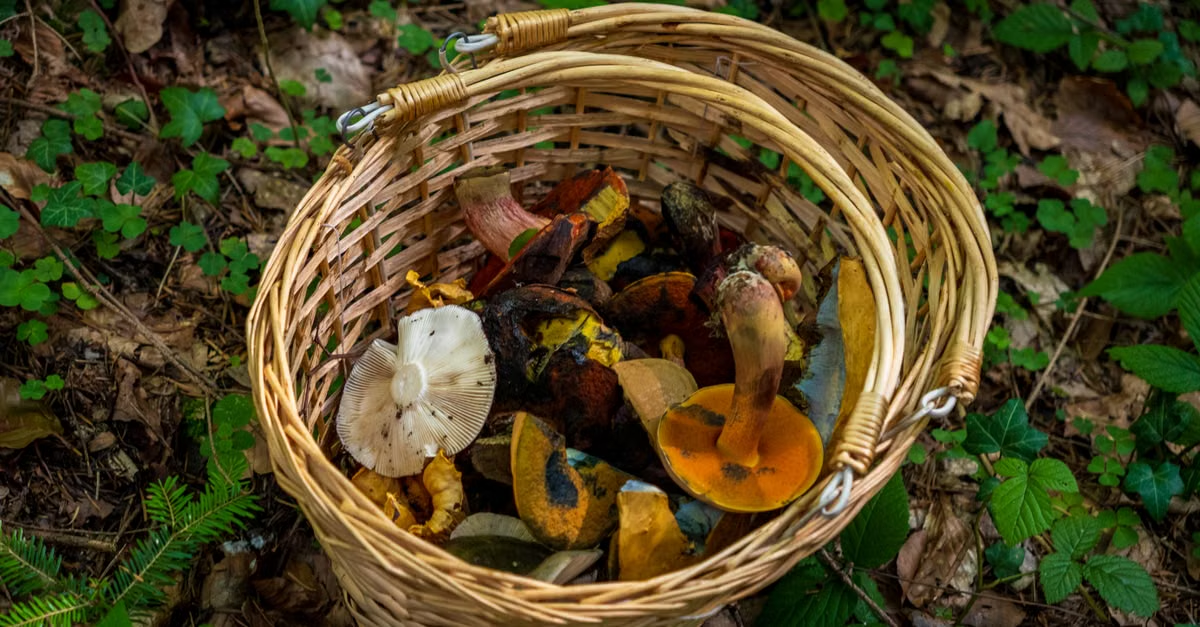
Start foraging safely with this beginner’s guide to edible wild plants. Learn essential identification, harvesting rules, and common species to boost your survival skills and connect with nature.
Step into the ancient practice of foraging and tap into nature’s abundant pantry. This skill is essential for survivalists, preppers, and anyone who loves the outdoors.
This guide introduces you to the rewarding world of edible wild plants, stressing the absolute necessity of safety and responsible practices for new foragers.
You’ll learn foundational principles, crucial safety tips, and how to identify common, beginner-friendly plants to begin your foraging path with confidence.
1. Why Forage? The Benefits Beyond the Plate
Connecting with Nature and Self-Sufficiency
Re-establish a fundamental connection to the land and build a deeper understanding of local ecosystems.
Cultivate self-reliance by learning to find food directly from your environment.
Enhancing Survival Skills and Preparedness
Add a critical skill to your survival toolkit, ensuring food security in various situations.
Understand how to identify and use natural resources when typical food sources aren’t available.
Nutritional Value and Flavor Exploration
Access nutrient-dense wild foods, often richer in vitamins and minerals than their cultivated counterparts.
Find unique flavors and textures to diversify your diet and culinary experiences.
2. The Golden Rules of Safe Foraging: Your Non-Negotiables
Rule #1: ‘When in Doubt, Throw it Out!’ (The Absolute Must)
Never eat a plant unless you are 100% certain of its identification and edibility.
Prioritize safety above all else; one mistake can be dangerous or fatal.
Rule #2: Positive Identification is Key (Using Multiple Sources)
Always cross-reference with at least three reliable sources: field guides, trusted apps, or expert advice.
Learn to identify key features: leaf arrangement, flower structure, stem characteristics, smell, and growth habit.
Rule #3: Know Your Local Environment (Pesticides, Pollutants, Protected Areas)
Avoid foraging near roadsides, industrial areas, agricultural fields (pesticides), or polluted water sources.
Respect private property and protected natural areas; always ask for permission if needed.
Rule #4: Harvest Responsibly (Sustainability and Ethics)
Never take more than 10-20% of a plant patch. This ensures regeneration and leaves enough for wildlife.
Harvest cleanly, minimizing disturbance to the plant and its surroundings.
Rule #5: The ‘Small Taste Test’ (For Known Edibles Only, After Cooking)
Even with known edibles, introduce new plants in small quantities. This checks for personal sensitivities or allergies.
Always cook plants that require it (e.g., nettles) before tasting.
3. Essential Gear for the Beginner Forager
Identification Guides and Apps
Invest in a good regional field guide specific to your area.
Use reputable plant identification apps (e.g., PictureThis, iNaturalist) as supplementary tools, not your primary identification method.
Harvesting Tools (Knife, Scissors, Gloves)
A sharp, small knife or pair of scissors makes clean cuts.
Gloves are useful, especially for plants like nettles or thorny species.
Carrying and Storage (Baskets, Bags, Containers)
Breathable baskets or cloth bags prevent crushing and allow air circulation.
Small containers work well for delicate berries or seeds.
Safety and Comfort (First-Aid, Water, Appropriate Clothing)
Carry a basic first-aid kit for minor cuts or stings.
Bring water, snacks, and wear appropriate clothing for the weather and terrain.
4. Getting Started: Identifying Common Beginner-Friendly Edibles
Dandelion (Taraxacum officinale): Leaves, Flowers, Roots
Easily recognizable, you’ll find dandelions almost everywhere.
Use leaves for salads or cooked greens, flowers for fritters, and roots as a coffee substitute.
Plantain (Plantago major/lanceolata): Leaves, Seeds
This common ‘weed’ has distinct ribbed leaves.
Young leaves go into salads, older leaves are cooked, and seeds can be ground into flour.
Wild Garlic/Ramps (Allium ursinum/tricoccum): Leaves, Bulbs (seasonal)
A distinct garlic or onion smell is the key identifier for these.
Leaves and bulbs are highly valued for their flavor.
Stinging Nettle (Urtica dioica): Leaves (cooked)
Recognize nettles by their stinging hairs – wear gloves when handling!
Cooked leaves lose their sting and are highly nutritious, excellent for soups or teas.
Chickweed (Stellaria media): Leaves, Stems, Flowers
This delicate, sprawling plant has tiny white star-like flowers.
It’s excellent raw in salads or as a garnish.
5. Beyond Identification: Harvesting, Preparation, and Storage
Proper Harvesting Techniques (Minimizing Impact)
Use clean cuts; avoid ripping or tearing plants.
Harvest only what you need, leaving the rest to grow.
Cleaning and Inspecting Your Haul
Thoroughly wash all foraged items to remove dirt, insects, and potential contaminants.
Inspect for signs of disease or pest damage.
Basic Preparation Methods (Cooking, Blanching, Drying)
Learn which plants are best eaten raw, cooked, or blanched.
Explore simple preservation techniques like drying herbs or making tinctures.
Safe Storage for Freshness and Future Use
Store fresh greens in the refrigerator just like store-bought produce.
Understand methods for longer-term storage: freezing, dehydrating, or canning.
6. Common Foraging Mistakes to Avoid
Misidentification (The most dangerous mistake)
Never guess. If you’re unsure, do not consume it.
Be aware of poisonous look-alikes, such as Water Hemlock versus Wild Parsnip.
Over-harvesting and Damaging Ecosystems
Ignoring sustainable harvesting practices depletes local populations and harms wildlife.
Always leave enough for the plant to recover and reproduce.
Ignoring Environmental Contaminants
Foraging in areas exposed to heavy metals, pesticides, or industrial runoff means you could consume harmful toxins.
Always research the history of your foraging location.
Foraging Without Permission
Respect private property and local regulations.
Foraging on public lands often has specific rules; know them before you go.
Conclusion
Foraging for edible wild plants is an incredibly rewarding skill. It deepens your connection to nature and boosts your preparedness.
Remember, safety, positive identification, and responsible harvesting are the cornerstones of a successful and sustainable foraging path.
Start small, keep learning, and always prioritize caution. With practice and respect for the natural world, you’ll soon enjoy the bounty of nature’s pantry.
So, grab your guide, put on your boots, and step into the wild – safely and smartly!