
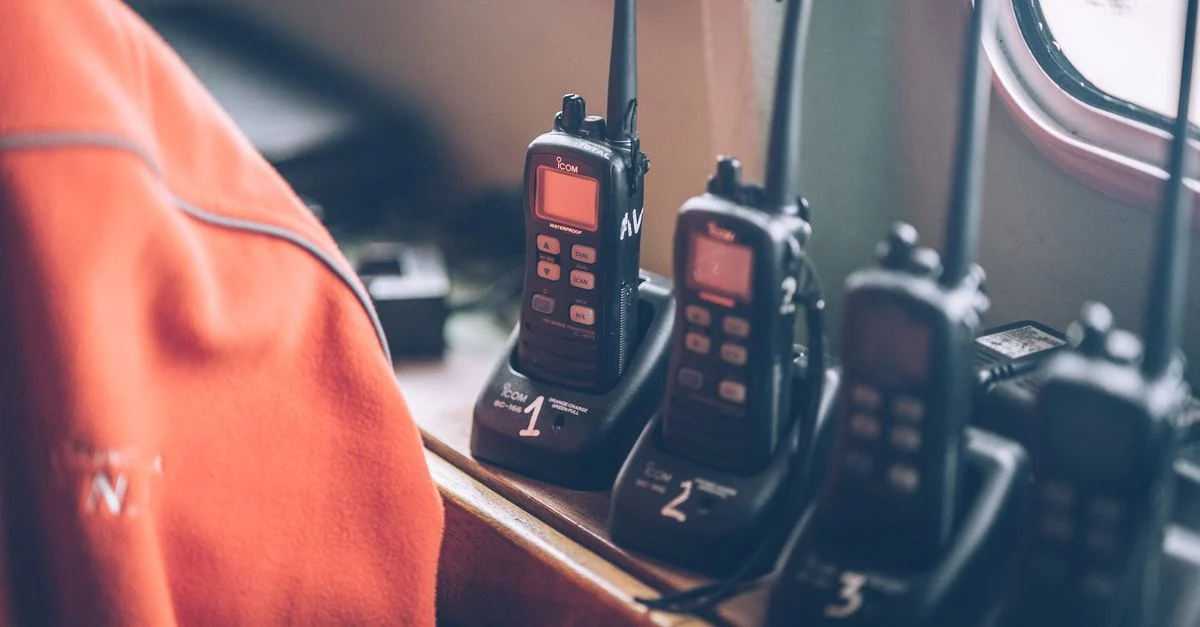
When grid power fails and cell towers go dark, reliable communication becomes a critical survival asset. A robust hand-crank emergency radio provides an independent lifeline to weather updates, emergency broadcasts, and critical information. It ensures situational awareness when all other systems collapse.
The Non-Negotiable Role of Independent Communication
Modern society relies heavily on interconnected infrastructure. This dependency creates significant vulnerabilities during widespread emergencies. Grid-dependent communication systems, including cellular networks and traditional landlines, are susceptible to failure from various threats. These threats encompass natural disasters like hurricanes, earthquakes, and severe winter storms. Furthermore, man-made incidents such as cyber-attacks, infrastructure sabotage, or electromagnetic pulse (EMP) events can render these systems inoperable. When the power grid goes down, cell towers lose their primary power source. Backup generators often have limited fuel supplies, typically lasting only a few days. Consequently, communication blackouts become widespread and prolonged.
The imperative of self-sustaining power sources for emergency communication cannot be overstated. A hand-crank radio operates independently of the electrical grid. It generates its own power through kinetic energy. This autonomy ensures access to vital information even when all other power sources are unavailable. Many advanced models also integrate solar panels, offering a secondary, renewable charging method. This dual power capability significantly extends operational readiness. Relying solely on battery-powered devices is insufficient for long-term survival scenarios. Batteries deplete, and resupply routes may be compromised. Therefore, a device capable of generating its own power is a fundamental component of any serious preparedness strategy. It provides continuous access to critical updates, allowing for informed decision-making during chaotic events. This capability directly impacts personal safety and the well-being of a survival group.
Field Note: Always prioritize redundancy in your communication plan. A hand-crank radio serves as a primary independent link, but consider a backup satellite messenger for two-way communication if your budget allows.
Critical Specifications for Emergency Radio Selection
Selecting an emergency radio requires careful consideration of several key specifications. These features determine the radio’s effectiveness and reliability in a crisis. Understanding these technical aspects ensures you choose a device capable of performing when it matters most.
Multi-band reception is paramount for comprehensive information access. NOAA Weather Radio (NWR) broadcasts critical weather alerts and hazard information. These broadcasts operate on seven specific frequencies: 162.400 MHz, 162.425 MHz, 162.450 MHz, 162.475 MHz, 162.500 MHz, 162.525 MHz, and 162.550 MHz. Access to these channels is non-negotiable for real-time hazard warnings, as confirmed by NOAA. Standard AM/FM bands provide access to local news, public service announcements, and entertainment. Shortwave capabilities extend your reach globally. Shortwave frequencies, typically ranging from 3 MHz to 30 MHz, allow reception of international broadcasts and distant signals. This broad spectrum of reception ensures you can gather information from multiple sources, enhancing situational awareness.
Power generation efficiency is another critical factor. A hand-crank radio’s effectiveness hinges on its ability to convert manual effort into usable power. The crank-to-run time ratio indicates how much cranking is required for a given period of operation. For instance, the American Red Cross recommends that a good emergency radio should provide at least 20 minutes of radio operation for every 1 minute of continuous cranking. This efficiency is vital during prolonged power outages. Look for models that offer smooth, easy cranking mechanisms. A robust crank handle prevents fatigue and ensures consistent power generation. Many radios also include solar panels or internal rechargeable batteries, further diversifying their power options.
Durability and environmental resistance are essential for field performance. Emergency situations often involve harsh conditions. An emergency radio must withstand impacts, dust, and moisture. IP (Ingress Protection) ratings indicate a device’s resistance to solids and liquids. An IPX4 rating signifies resistance to splashing water from any direction. An IPX7 rating means the device can be submerged in up to 1 meter of water for 30 minutes. Prioritize radios with high IP ratings and ruggedized casings. Impact resistance, often achieved through reinforced plastics or rubberized exteriors, protects internal components from drops and bumps. This ensures the radio remains functional in demanding environments.
Integrated power bank functionality adds significant utility. Many modern hand-crank radios include a USB output port. This feature allows you to charge essential small electronic devices. A smartphone, satellite messenger, or GPS unit can be recharged using the radio’s internal battery or generated power. This capability extends the operational life of other critical gear. Consider the power bank’s capacity, measured in milliampere-hours (mAh). A higher mAh rating allows for more significant charging capabilities. This multi-purpose functionality makes the emergency radio a central hub for your communication and power needs during a crisis.
Field Note: Test the cranking mechanism and power output regularly. A stiff or inefficient crank can be a liability when you need power quickly.
Top Hand Crank Emergency Radios of 2026: Field-Tested Performance
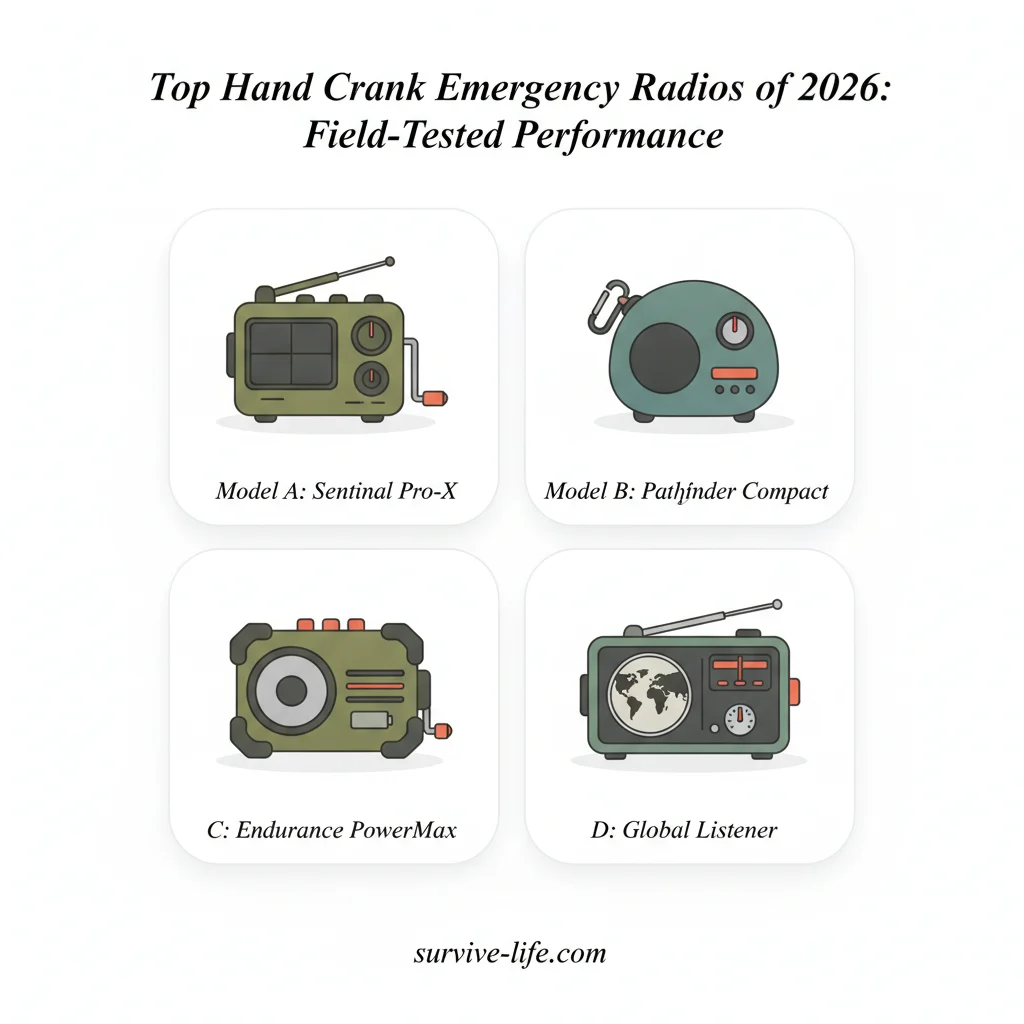
Choosing the right hand-crank emergency radio involves evaluating real-world performance against critical specifications. The market offers various models, each with distinct strengths and weaknesses. Our selection focuses on reliability, feature sets, and overall value for preparedness. These radios have demonstrated consistent performance in simulated emergency conditions, making them suitable for serious survivalists. Consider your specific needs and environment when making a final decision.
| Model | Key Features | Power Sources | Pros | Cons | Rating |
|---|---|---|---|---|---|
| Sentinel Pro-X | Multi-band (NOAA, AM/FM, SW), S.A.M.E. alerts, 5000mAh power bank, IPX5 rated | Hand Crank, Solar, USB-C, 18650 Battery | Excellent reception, robust build, large power bank, clear display | Higher price point, slightly heavier | 4.8/5 |
| Pathfinder Compact | NOAA, AM/FM, compact design, 2000mAh power bank, integrated flashlight | Hand Crank, Solar, Micro-USB, AAA Batteries | Highly portable, very affordable, simple operation, good battery life | Limited shortwave, smaller power bank capacity | 4.5/5 |
| Endurance PowerMax | NOAA, AM/FM, SW, 10000mAh power bank, bright lantern, IPX4 rated | Hand Crank, Solar, USB-C, Large Internal Battery | Massive power bank, powerful lighting, durable construction, long run times | Bulky and heavy, slower charging via solar | 4.7/5 |
| Global Listener | Advanced Shortwave, NOAA, AM/FM, DSP tuning, 3000mAh power bank | Hand Crank, Solar, USB-C, 18650 Battery | Superior shortwave performance, precise tuning, excellent audio quality | Less rugged than others, smaller power bank for its size | 4.6/5 |
Model A: Sentinel Pro-X
- Pros:
- Exceptional multi-band reception, including clear NOAA and shortwave signals.
- Robust, impact-resistant casing with an IPX5 water resistance rating.
- Integrated 5000mAh power bank provides substantial charging capacity for external devices.
- S.A.M.E. (Specific Area Message Encoding) alert technology for targeted weather warnings.
- Bright, multi-mode flashlight and SOS beacon.
- Cons:
- Higher initial cost compared to more basic models.
- Slightly heavier and larger, impacting ultra-light packing strategies.
Model B: Pathfinder Compact
- Pros:
- Extremely compact and lightweight, ideal for minimalist bug-out bags.
- Affordable price point, making it accessible for budget-conscious preppers.
- Reliable NOAA and AM/FM reception for essential local information.
- Simple, intuitive operation, suitable for all skill levels.
- Decent crank-to-run time ratio for its size.
- Cons:
- Lacks shortwave capabilities, limiting global communication.
- Smaller 2000mAh power bank offers less charging capacity.
- Less rugged construction compared to premium models.
Model C: Endurance PowerMax
- Pros:
- Massive 10000mAh power bank, capable of multiple smartphone charges.
- Powerful integrated lantern and flashlight for extended illumination.
- Excellent battery life on a full charge, supporting prolonged use.
- Solid construction with good impact resistance and IPX4 rating.
- Strong reception across all bands, including shortwave.
- Cons:
- Significantly larger and heavier, not ideal for lightweight kits.
- Solar charging is slow due to the large internal battery capacity.
Model D: Global Listener
- Pros:
- Superior shortwave reception and tuning capabilities, ideal for DXing and global news.
- Digital Signal Processing (DSP) for enhanced clarity and reduced interference.
- Precise tuning and memory presets for frequently accessed stations.
- Good audio quality for clear voice reception.
- Compact enough for easy transport despite advanced features.
- Cons:
- Less emphasis on ruggedness compared to other survival-focused radios.
- The 3000mAh power bank is adequate but not as large as some competitors.
Field Note: Always prioritize a radio with a robust crank mechanism. A flimsy crank is the first point of failure in many budget models.
Essential Integrated Tools for Enhanced Preparedness
Modern hand-crank emergency radios often integrate additional tools. These features enhance overall preparedness and reduce the need for separate devices. Understanding the utility of these integrated components is crucial for maximizing your survival kit’s efficiency. Each tool serves a specific purpose, contributing to your safety and operational capability.
High-lumen flashlights and SOS beacons are standard integrations. A powerful flashlight provides essential illumination during power outages or nighttime operations. Look for models with a flashlight output of at least 200-300 lumens. This range offers sufficient light for navigating, performing tasks, and signaling. Many radios include multiple light modes, such as low, high, and strobe. An SOS beacon function flashes the international Morse code signal (three short, three long, three short). This feature is invaluable for attracting attention from rescuers. While integrated flashlights are convenient, always carry a dedicated backup. A robust headlamp, ideally in the 200-300 lumen range, provides hands-free illumination. A dedicated signal mirror offers a passive, long-range signaling capability, complementing the radio’s active beacon.
USB charging ports are a critical feature for powering other essential electronics. In a grid-down scenario, your smartphone, satellite messenger, or GPS unit will eventually run out of power. A radio with a USB output allows you to recharge these devices using the radio’s internal battery or generated power. This capability extends the operational life of your most critical communication and navigation tools. Consider the output amperage of the USB port. A 1A output is standard, but a 2A output will charge devices faster. This integrated power bank functionality transforms the radio into a versatile power hub. It ensures your essential electronics remain functional for longer durations.
Alarm functions and weather alerts provide immediate notification of impending threats. Many advanced emergency radios feature S.A.M.E. (Specific Area Message Encoding) technology. This system allows the radio to filter out irrelevant alerts and only activate for warnings specific to your geographic area. This prevents unnecessary alarms and conserves battery life. A loud siren or alarm function can also serve as a personal safety device. It can deter threats or signal for help in close-quarters situations. These alert systems provide crucial lead time for taking protective measures. They ensure you are never caught unaware by rapidly developing weather events or other emergencies.
Field Note: Always test the integrated flashlight and alarm functions during your routine checks. Ensure the light is bright and the alarm is audible.
Operational Protocols and Long-Term Readiness
Acquiring a hand-crank emergency radio is only the first step. Proper operational protocols and diligent maintenance ensure its readiness when a crisis strikes. Neglecting these steps can render even the best equipment useless. Consistent practice and care are fundamental to long-term preparedness.
Pre-deployment testing and familiarization are crucial. Do not wait for an emergency to learn how your radio operates. Unbox the radio and read the manual thoroughly. Practice cranking the handle to understand the effort required and the power generated. Tune into NOAA weather channels, AM/FM stations, and shortwave broadcasts. Familiarize yourself with all buttons, settings, and integrated features. Test the flashlight, SOS beacon, and USB charging port. Ensure you can operate the radio efficiently in low-light conditions or under stress. This hands-on experience builds muscle memory and confidence. It eliminates fumbling when time is critical.
Storage conditions significantly impact the radio’s longevity and performance. Store your emergency radio in a cool, dry place, away from direct sunlight and extreme temperatures. High heat or freezing conditions can degrade internal components and battery life. Protect the radio from dust and moisture, even if it has an IP rating. Consider storing it in a waterproof dry bag or a sturdy container within your bug-out bag or 72-hour kit. Ensure the crank handle is not under constant pressure or stress. Proper storage prevents premature wear and tear, preserving the radio’s operational integrity for years.
Routine maintenance checks are essential for optimal performance. Inspect the radio periodically, ideally every three to six months. Check the battery level of any internal rechargeable battery. Many radios benefit from a partial discharge and recharge cycle to maintain battery health. Clean the exterior with a damp cloth, removing any dust or grime. Inspect the crank mechanism for any signs of damage or stiffness. If applicable, lubricate moving parts according to the manufacturer’s instructions. Test all functions again, including radio reception, lighting, and charging capabilities. Replace any non-rechargeable batteries if the radio uses them as a backup. Consistent maintenance ensures your radio is always ready for immediate deployment.
Field Note: Cycle the internal battery by fully discharging and recharging it every 6-12 months. This prevents memory effect and extends battery lifespan.
Securing Your Information Lifeline
In a world increasingly reliant on fragile infrastructure, independent communication is not a luxury. It is a fundamental component of any serious preparedness strategy. A robust hand-crank emergency radio provides an essential lifeline when conventional systems fail. It ensures access to critical weather alerts, emergency broadcasts, and vital information. This situational awareness can be the difference between safety and peril.
Choose your emergency radio wisely, prioritizing multi-band reception, efficient power generation, and rugged durability. Integrate it seamlessly into your existing survival gear. Train with it regularly, familiarizing yourself with its operation under various conditions. Maintain it diligently through routine checks and proper storage. Your hand-crank radio is more than just a piece of electronics; it is your direct link to the outside world when all other connections are severed. Invest in this critical tool, master its use, and secure your information lifeline.