
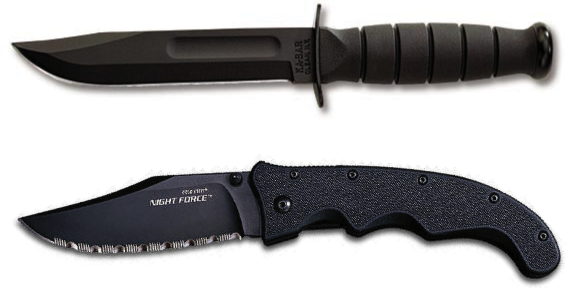
Choosing the right survival knife is critical; a poor choice can compromise your ability to perform essential tasks under duress. This guide dissects the fundamental differences and applications of fixed blade and folding knives to equip you with the knowledge to make an informed decision for your survival kit.
The Uncompromising Role of a Survival Knife
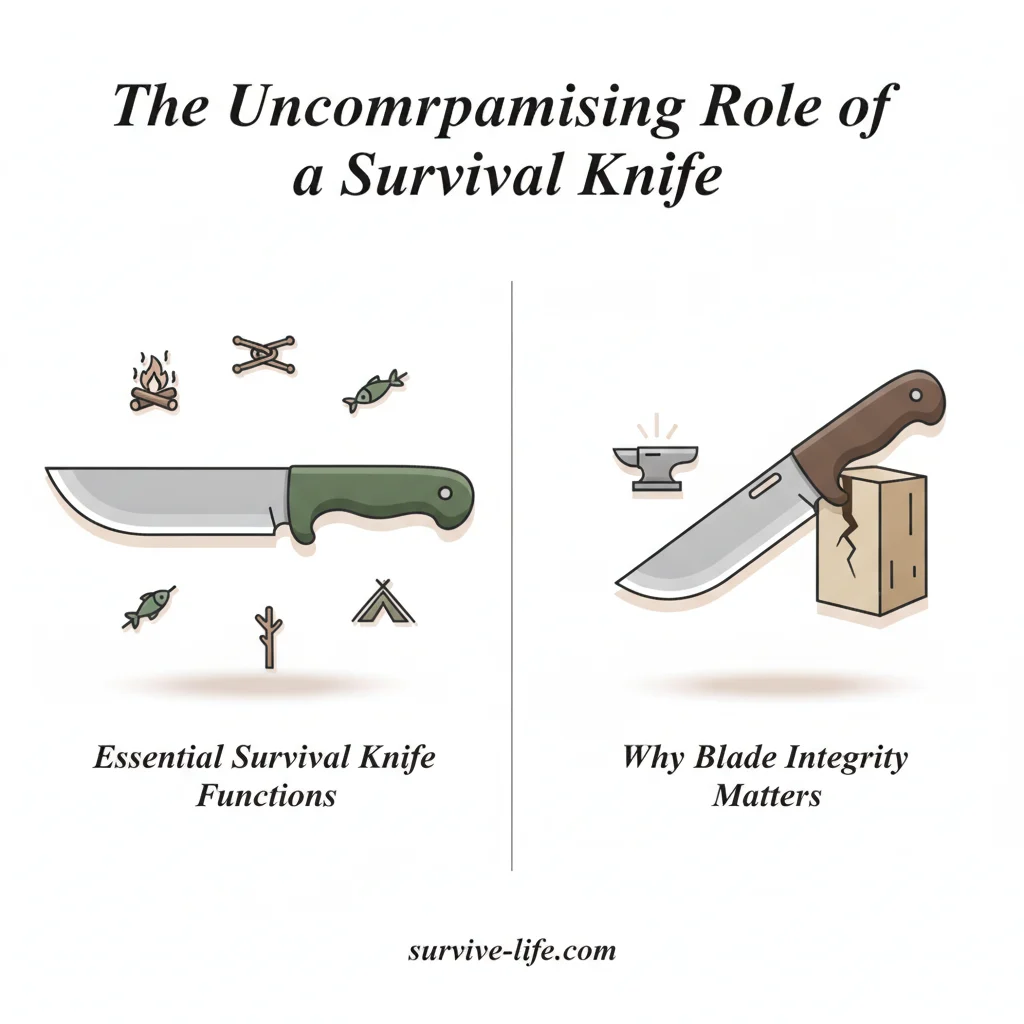
A knife is not merely a tool; it is a primary survival implement for shelter building, fire starting, food procurement, and self-defense. Understanding the non-negotiable demands placed on a survival blade is paramount.
Essential Survival Knife Functions
A survival knife performs multiple critical roles in a wilderness scenario. It processes wood for fire and shelter construction. Batoning wood, a technique involving striking the spine of the blade with a baton, splits larger pieces of timber. This task demands significant blade strength and durability. The knife also prepares cordage from natural fibers. It carves tools and traps for hunting and fishing. Furthermore, a sharp blade is essential for field dressing game. It also prepares wild edibles safely. A survival knife can also be used to strike a ferro rod for fire ignition. This creates sparks for tinder. Additionally, a robust blade can pry open containers or dig small holes. It can also be used for basic first aid, such as cutting bandages or removing splinters. This extensive versatility makes a reliable knife an indispensable component of any survival kit. Its ability to adapt to diverse challenges directly impacts survival outcomes.
Why Blade Integrity Matters
Blade integrity directly correlates with reliability in the field. A knife must withstand repeated impacts, twisting forces, and lateral stress without breaking. A weak blade can snap during critical tasks, such as batoning or prying. This leaves the user without a primary tool when it is most needed. The tang, the part of the blade extending into the handle, is crucial for structural integrity. A full tang design means the blade steel extends the full length and width of the handle. This construction distributes stress evenly across the entire tool. It prevents the blade from separating from the handle under duress. Partial tangs or hidden tangs are inherently less robust. They create weak points that can fail under heavy use. A strong, integral blade ensures consistent performance. It provides unwavering confidence in demanding situations. Compromising on blade integrity is a critical error in survival planning.
Fixed Blade Knives: Unyielding Strength and Reliability
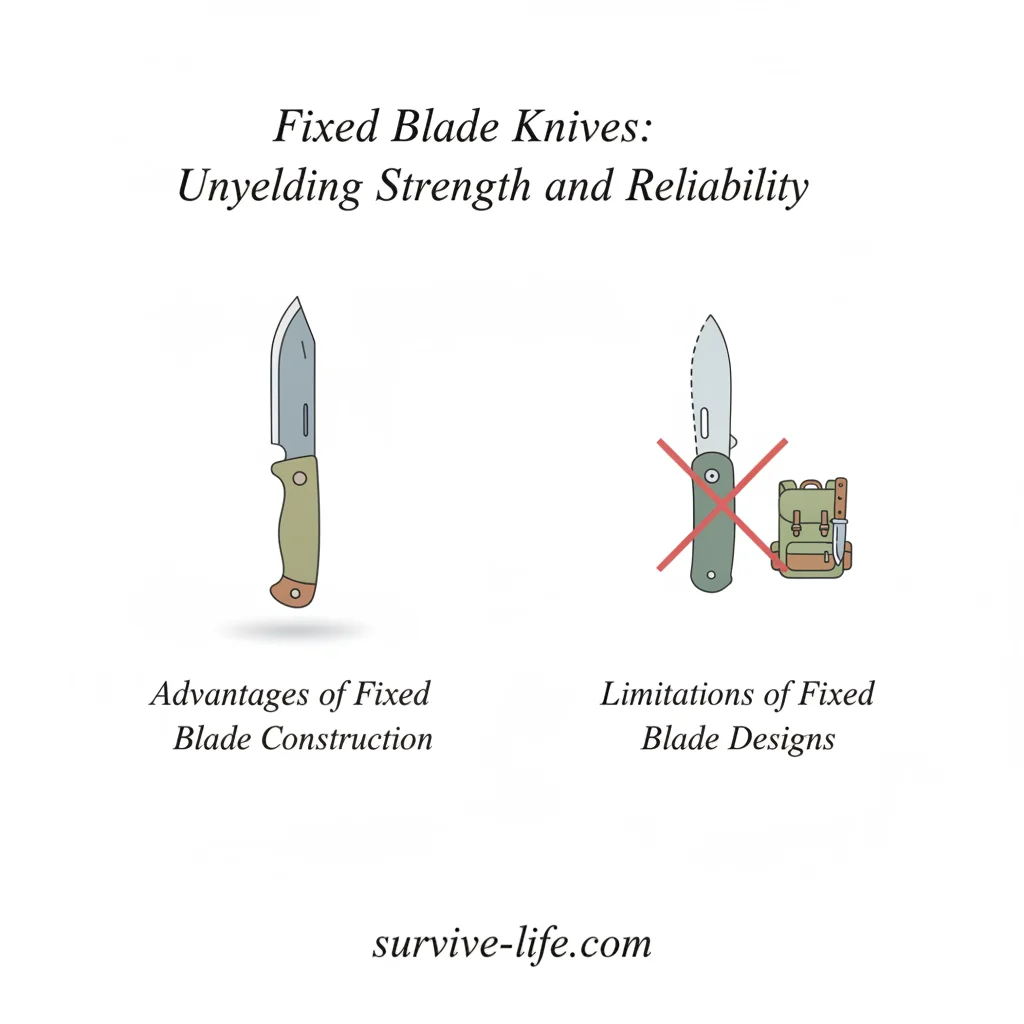
Fixed blade knives, characterized by their full-tang construction, offer inherent strength and a robust design with minimal failure points. Recognizing scenarios where a fixed blade excels due to its structural integrity is key to effective survival planning.
Advantages of Fixed Blade Construction
Fixed blade knives possess superior structural integrity. Their one-piece construction eliminates moving parts. This removes common failure points found in folding designs. The full tang ensures maximum strength transfer from blade to handle. This makes them ideal for heavy-duty tasks. Batoning wood, prying, and digging are performed with confidence. Fixed blades are also easier to clean and maintain in the field. There are no crevices for dirt or debris to accumulate. This reduces the risk of corrosion or mechanical failure. Furthermore, deployment is instantaneous. There is no lock to disengage or blade to unfold. This provides immediate access in urgent situations. Their robust nature makes them the preferred choice for primary survival tools. They offer unparalleled reliability when lives depend on performance.
Limitations of Fixed Blade Designs
Despite their strength, fixed blade knives have limitations. Their larger size and weight can be a disadvantage for everyday carry. They are less discreet than folding knives. Carrying them openly may draw unwanted attention. Sheath retention is critical for safe transport. A poor sheath can lead to accidental loss or injury. Fixed blades also require more deliberate carry methods. This often involves belt or pack attachment. This can be less convenient in urban or confined environments. The lack of a folding mechanism means the blade is always exposed. This necessitates careful handling and storage.
Common fixed blade steels include 1095 carbon steel, D2 tool steel, and various stainless steels like S30V or 440C. 1095 is known for its toughness and ease of sharpening. It holds a good edge. However, it is prone to rust without proper maintenance. D2 offers excellent wear resistance and edge retention. It is tougher to sharpen in the field. S30V provides a balance of corrosion resistance, edge retention, and toughness. It is a premium stainless option. The specific hardness (Rockwell HRC) for these steels varies significantly based on the manufacturer’s heat treatment process. For instance, a well-treated 1095 steel might range from 56-58 HRC. D2 often falls between 59-61 HRC. S30V typically ranges from 58-61 HRC. These ranges are general industry observations and depend heavily on the specific tempering and quenching protocols used by individual knife makers, as noted by materials science experts in the knife manufacturing industry.
Folding Knives: Versatility and Compact Carry
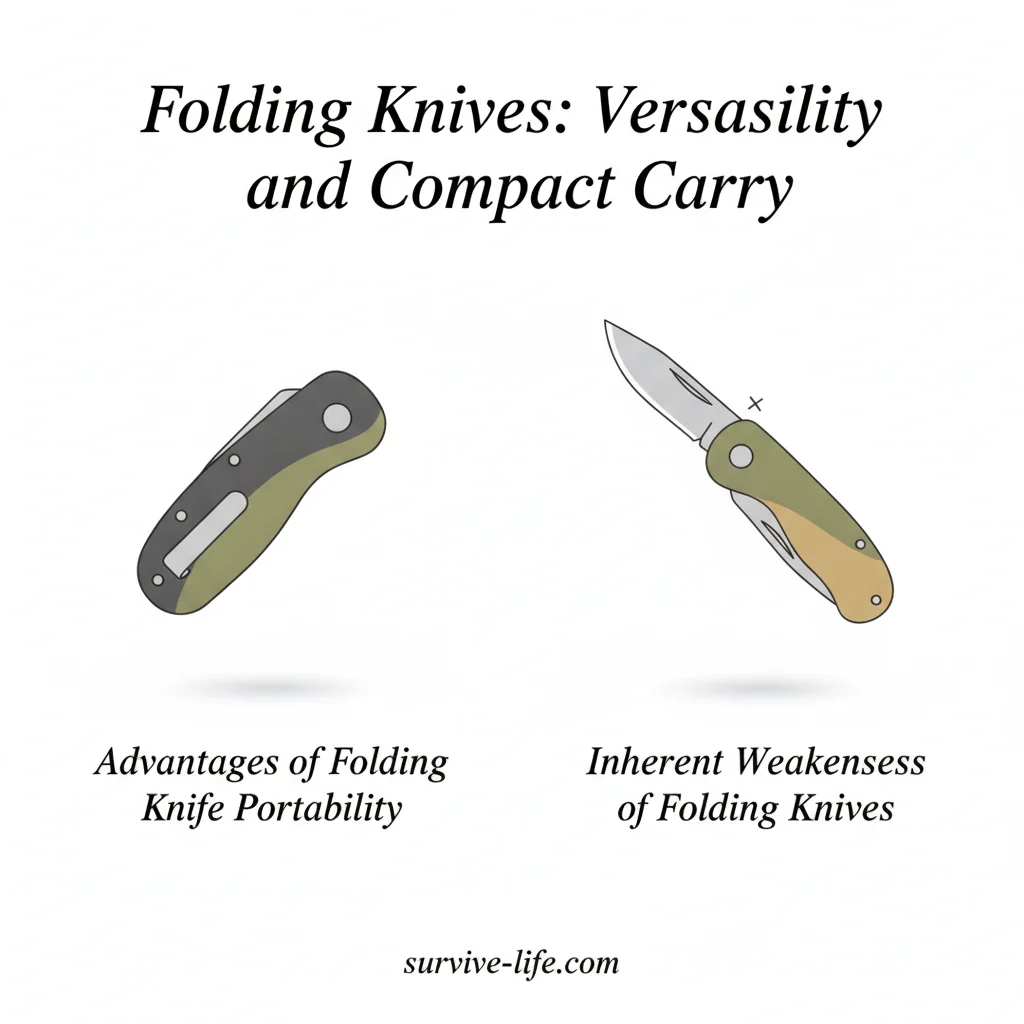
Folding knives provide portability and discretion, often featuring advanced locking mechanisms and various blade deployment methods. Identifying situations where a folding knife’s compact nature is an asset allows for strategic tool selection.
Advantages of Folding Knife Portability
Folding knives excel in portability and discretion. Their compact size allows for easy pocket carry. This makes them suitable for everyday carry (EDC). They are less conspicuous than fixed blades. This is important in urban or public settings. Many feature pocket clips for secure, accessible carry. This ensures the knife is always within reach. Modern folding knives incorporate advanced locking mechanisms. These enhance safety and blade stability. Assisted opening or flipper mechanisms allow for rapid deployment. This provides quick access when needed. Their versatility extends to various tasks. They are useful for opening packages, cutting cordage, or light utility work. A folding knife serves as an excellent backup tool. It complements a primary fixed blade.
Inherent Weaknesses of Folding Knives
Folding knives possess inherent structural weaknesses compared to fixed blades. The pivot point and locking mechanism are potential failure points. These components introduce complexity and reduce overall strength. Under extreme lateral stress or impact, locks can fail. This can cause the blade to fold unexpectedly. This poses a significant safety risk. Dirt, debris, or rust can compromise the locking mechanism’s function. This requires more diligent cleaning and maintenance. Disassembly for thorough cleaning can be complex. This is not ideal in a field environment. Furthermore, the handle scales are often attached separately. This can weaken the overall handle integrity under heavy use.
Common folding knife locking mechanisms include the liner lock, frame lock, back lock, and axis lock. Liner locks use a spring-loaded liner to engage the blade tang. They are common but can be susceptible to failure under heavy spine pressure. Frame locks are a more robust variation. They use a thicker part of the handle frame to engage the blade. Back locks utilize a rocker arm that engages a notch on the blade’s spine. They are generally considered very strong. Axis locks, often proprietary to specific brands, use a spring-loaded bar that engages a ramp on the blade tang. They offer excellent strength and ambidextrous operation. While specific failure rates are not universally published due to varying manufacturing standards and testing protocols, industry experts generally agree that back locks and axis locks offer superior strength and reliability compared to basic liner locks under significant stress, as observed in extensive user testing and design analyses.
Direct Comparison: Performance Under Duress
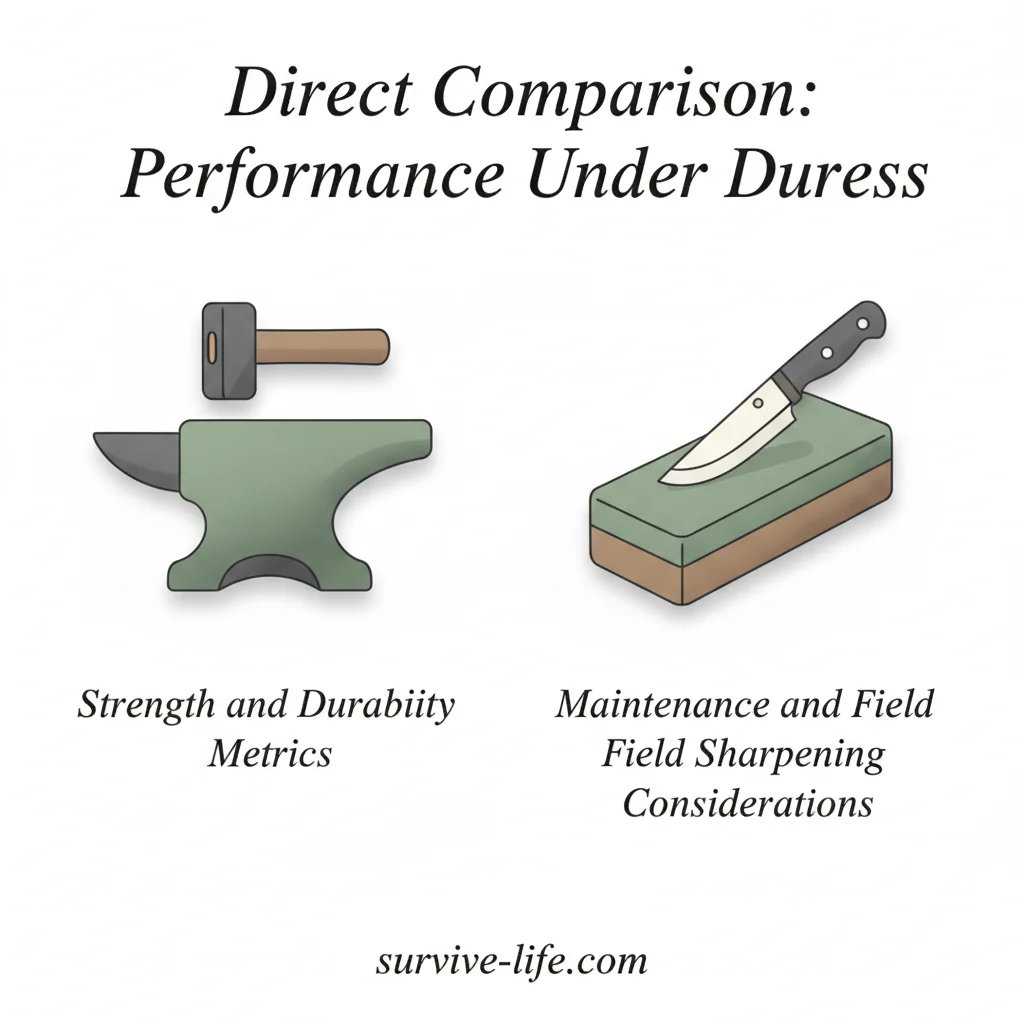
Directly comparing key attributes such as strength, maintenance, deployment speed, and carry method reveals the trade-offs inherent in each design. Use this comparison to weigh options based on specific survival needs and anticipated challenges.
| Attribute | Fixed Blade Knife | Folding Knife |
|---|---|---|
| Strength | Superior; full-tang construction, no moving parts, ideal for heavy tasks. | Good to moderate; pivot and lock are potential weak points, less suited for heavy prying/batoning. |
| Maintenance | Easier to clean; open design, fewer crevices for dirt. | More complex; pivot and lock can accumulate debris, requires more detailed cleaning. |
| Deployment | Instantaneous; always ready, no mechanism to engage. | Quick to moderate; requires opening mechanism, can be slower under stress or with one hand. |
| Carry | Requires sheath; often belt, pack, or neck carry, less discreet. | Compact; pocket clip, discreet, ideal for everyday carry. |
| Weight | Generally heavier due to solid construction. | Generally lighter and more compact. |
| Cost | Varies widely; can be very affordable or high-end. | Varies widely; can be very affordable or high-end, often more complex manufacturing. |
| Primary Use Cases | Wilderness survival, bushcraft, heavy-duty tasks, self-defense. | Everyday utility, backup tool, urban carry, light tasks. |
Strength and Durability Metrics
Fixed blades consistently outperform folding knives in strength tests. Their monolithic construction eliminates the weakest link: the pivot. This allows for extreme force application without fear of failure. Batoning wood, a crucial survival skill, is safely performed with a fixed blade. Prying tasks, such as opening crates or dislodging objects, also favor fixed blades. Folding knives, even with robust locking mechanisms, cannot match this inherent durability. The pivot point remains a stress concentrator. The locking mechanism, no matter how advanced, introduces a potential failure mode. A folding knife’s blade can also develop wobble over time. This reduces precision and safety. Always select a fixed blade for tasks requiring maximum force and reliability.
Maintenance and Field Sharpening Considerations
Maintaining a fixed blade in the field is straightforward. Its open design allows for easy cleaning of the blade and handle. Debris is simply wiped away. Rust prevention involves drying the blade and applying a thin layer of oil. Sharpening is also simpler. The entire blade is accessible without obstruction. Folding knives present more challenges. Dirt and lint can accumulate in the pivot and locking mechanism. This compromises function. Thorough cleaning often requires disassembly. This is impractical in a survival scenario. Sharpening can be hindered by handle scales or finger choils. These obstruct access to the full edge. Regular maintenance is critical for both, but fixed blades are more forgiving.
Situational Deployment and Recommended Gear
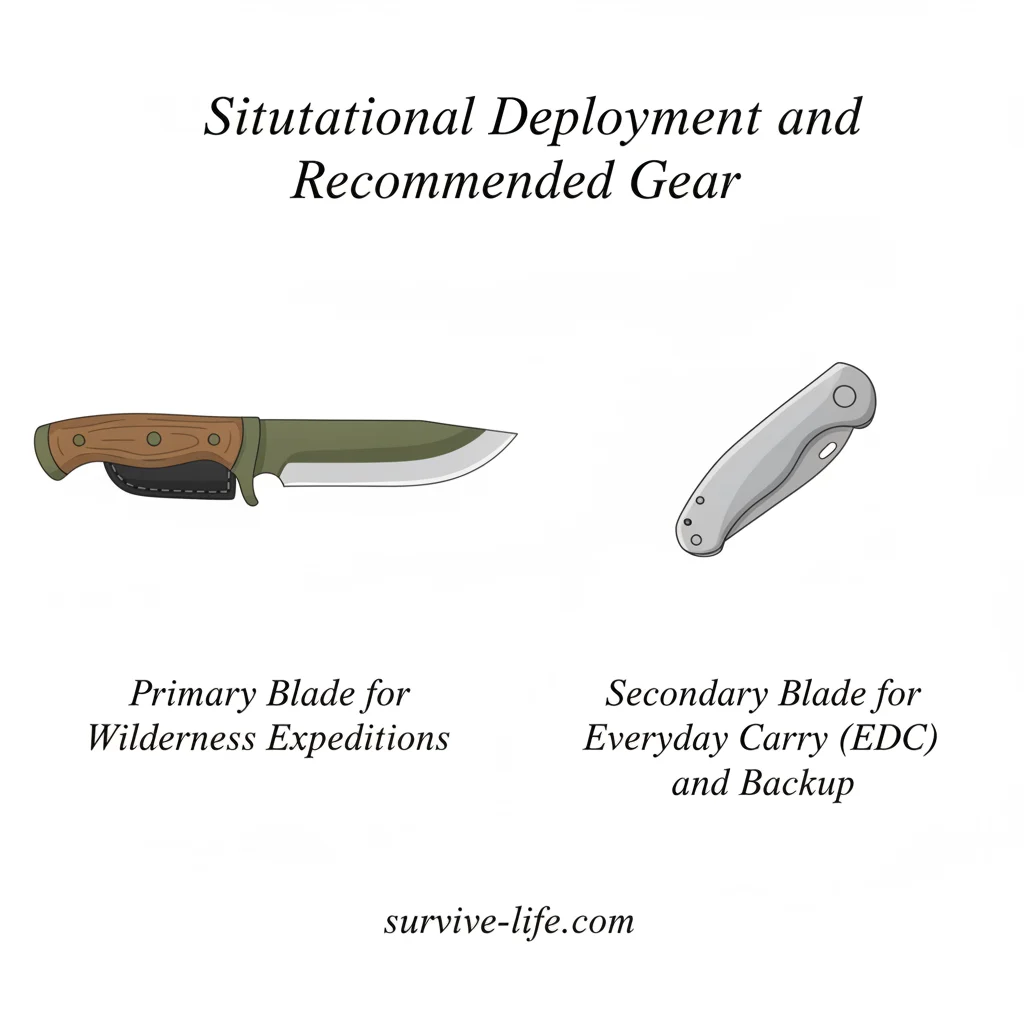
Selecting the appropriate blade depends heavily on the environment, duration of the expedition, and specific tasks. Equipping your kit with the right tool for the anticipated challenge is a non-negotiable aspect of preparedness.
Primary Blade for Wilderness Expeditions
For wilderness expeditions, a fixed blade knife is the unequivocal primary choice. Its robust construction handles demanding tasks. These include shelter building, processing firewood, and preparing game. A full-tang design ensures maximum reliability. Blade length should be practical, typically between 4 to 7 inches. This length offers a balance of control for fine work and leverage for heavier tasks. A high-carbon steel blade provides excellent toughness and edge retention. It is also easier to sharpen in the field. A comfortable, secure grip is paramount. This prevents hand fatigue and slippage during prolonged use. The sheath must be durable and offer secure retention. It should allow for quick, one-handed deployment. This ensures immediate access in emergencies.
Secondary Blade for Everyday Carry (EDC) and Backup
A folding knife serves as an excellent secondary blade or everyday carry (EDC) tool. Its compact size and discreet nature make it suitable for urban environments. It handles routine tasks like opening packages, cutting cordage, or minor repairs. For a backup, choose a folding knife with a strong locking mechanism. Frame locks or axis locks offer superior security. Blade material should prioritize corrosion resistance for EDC. Stainless steel is a good choice for this purpose. A pocket clip ensures the knife is always accessible. It prevents loss. This secondary blade complements the primary fixed blade. It provides redundancy. It also offers convenience for less demanding tasks. This preserves the primary blade for critical survival functions.
For a primary fixed blade, consider a full-tang ESEE-6 or a Morakniv Garberg. The ESEE-6 features 1095 carbon steel, a durable coating, and a comfortable handle, making it a robust choice for heavy bushcraft. The Morakniv Garberg offers a full-tang stainless steel blade with a multi-mount sheath system, providing excellent corrosion resistance and versatility. For a robust folding backup, a Benchmade Griptilian or Spyderco Paramilitary 2 offers reliable locking mechanisms and blade integrity. The Benchmade Griptilian utilizes an Axis lock, known for its strength and ambidextrous operation, with various blade steels. The Spyderco Paramilitary 2 features a Compression Lock, offering exceptional strength and a smooth opening action, often with S30V or similar premium blade steels.
Beyond the Blade: Sharpening and Maintenance for Longevity
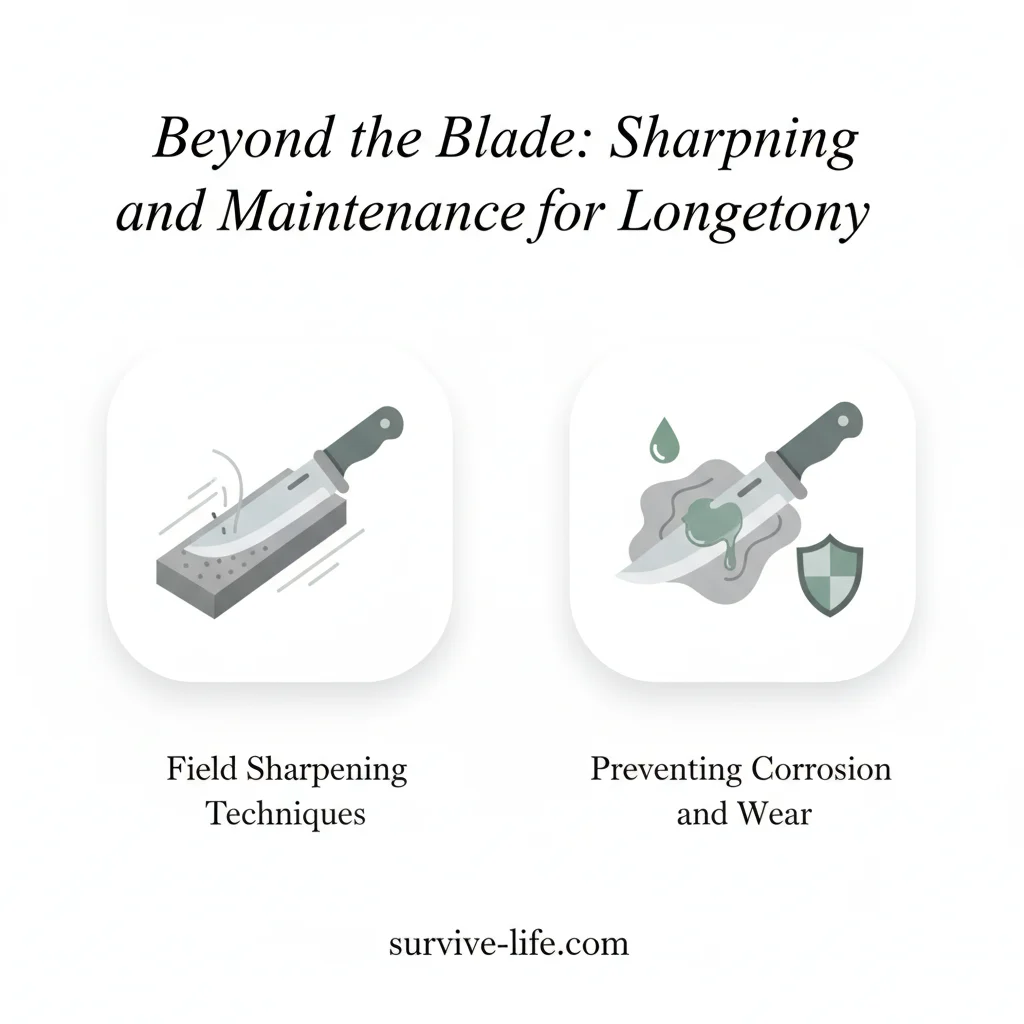
Even the most robust knife is useless if not properly maintained. Implementing a regular maintenance schedule ensures your blade remains a reliable tool when you need it most.
Field Sharpening Techniques
Maintaining a sharp edge is critical for knife performance. A dull blade requires more force. This increases the risk of injury. Field sharpening tools are compact and effective. These include ceramic rods, diamond plates, or small whetstones. Angle consistency is paramount for effective sharpening. Use a consistent angle to remove metal from the edge. Start with a coarser grit to repair damage. Progress to a finer grit for a razor-sharp finish. Stropping on leather or denim refines the edge further. This removes any burr. Practice these techniques regularly. This builds muscle memory. A sharp knife makes all survival tasks safer and more efficient. Always maintain a razor-sharp edge on your survival knife.
Preventing Corrosion and Wear
Corrosion and wear degrade a knife’s performance and lifespan. Carbon steel blades are highly susceptible to rust. They require diligent care. After each use, clean the blade thoroughly. Remove all moisture and debris. Apply a thin layer of protective oil. Mineral oil or specialized knife oils work well. Stainless steel blades are more corrosion-resistant. However, they are not entirely rust-proof. They still benefit from regular cleaning and oiling. Store knives in a dry environment. Avoid prolonged exposure to moisture. Check the handle and sheath for wear. Replace damaged components promptly. A well-maintained knife will serve reliably for years. Neglect can render even the best blade useless.
The Expert’s Verdict on Your Primary Survival Tool
While both fixed blade and folding knives have distinct roles in a comprehensive survival kit, a robust fixed blade is the superior primary survival tool due to its uncompromising strength and reliability. A folding knife serves best as a secondary, convenient backup for less demanding tasks.
A fixed blade knife offers unparalleled structural integrity. Its full-tang construction eliminates the inherent weaknesses of a pivot and locking mechanism. This makes it capable of enduring extreme stress. Tasks like batoning wood for fire, prying, or digging are performed without concern for mechanical failure. In a survival situation, where tool failure can have dire consequences, this reliability is non-negotiable. The immediate deployment of a fixed blade also provides a critical advantage. There is no fumbling with locks or opening mechanisms under duress. This ensures instant access to a vital tool.
Conversely, a folding knife excels in portability and discretion. It is an ideal choice for everyday carry or as a convenient backup. Its compact form factor allows for easy pocket carry. This makes it readily available for routine tasks. However, its design inherently introduces points of potential failure. The pivot and locking mechanism, while often robust, cannot match the sheer strength of a solid piece of steel. Using a folding knife for heavy-duty survival tasks risks damage to the tool or, more critically, injury to the user.
Therefore, a comprehensive survival strategy incorporates both. The fixed blade stands as the unwavering primary implement, ready for any demanding challenge the wilderness presents. The folding knife complements it, providing convenience and redundancy for lighter duties. This dual-tool approach ensures maximum preparedness. It leverages the strengths of each design. Prioritize the fixed blade for your core survival needs.