
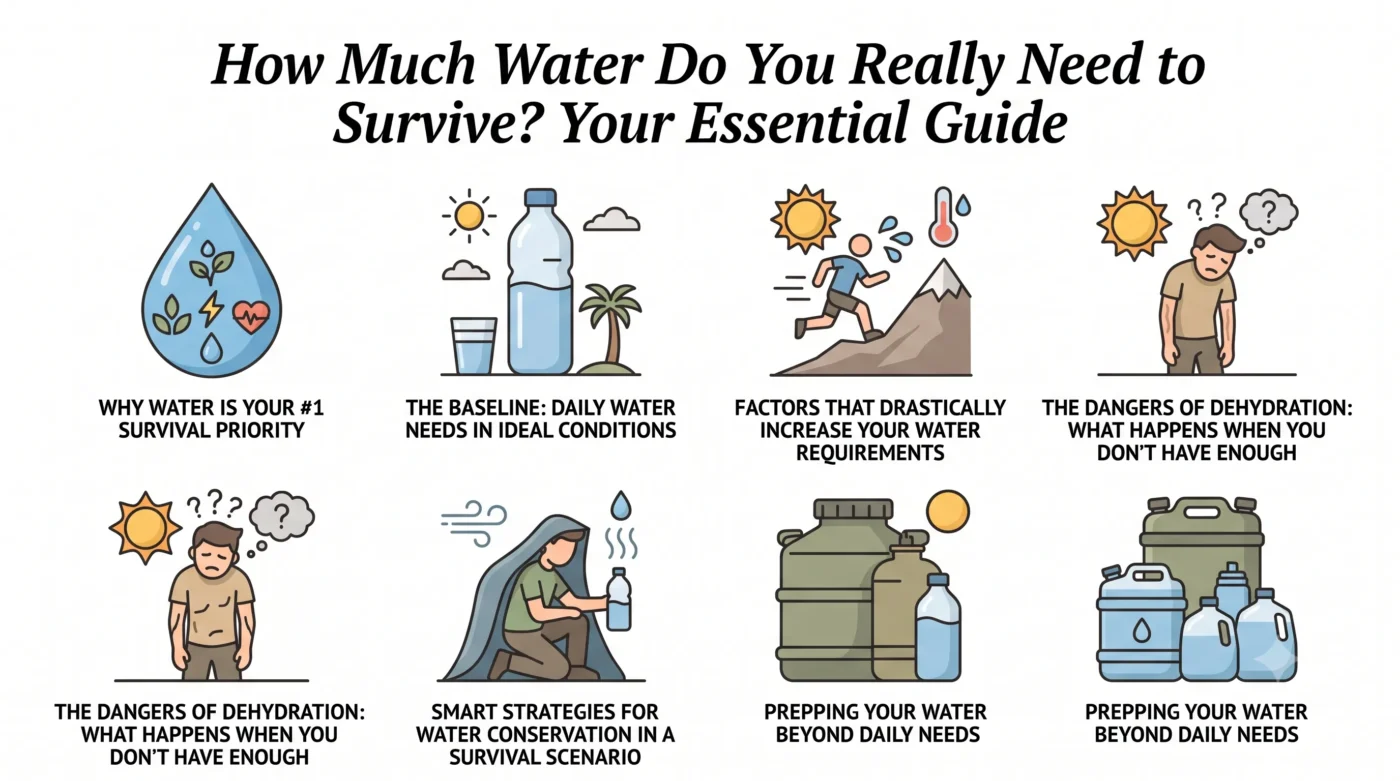
Uncover your true water needs in a survival situation. Learn how factors like climate and activity impact hydration, recognize dehydration signs, and master vital conservation and purification strategies. Your life depends on it.
Why Water is Your #1 Survival Priority
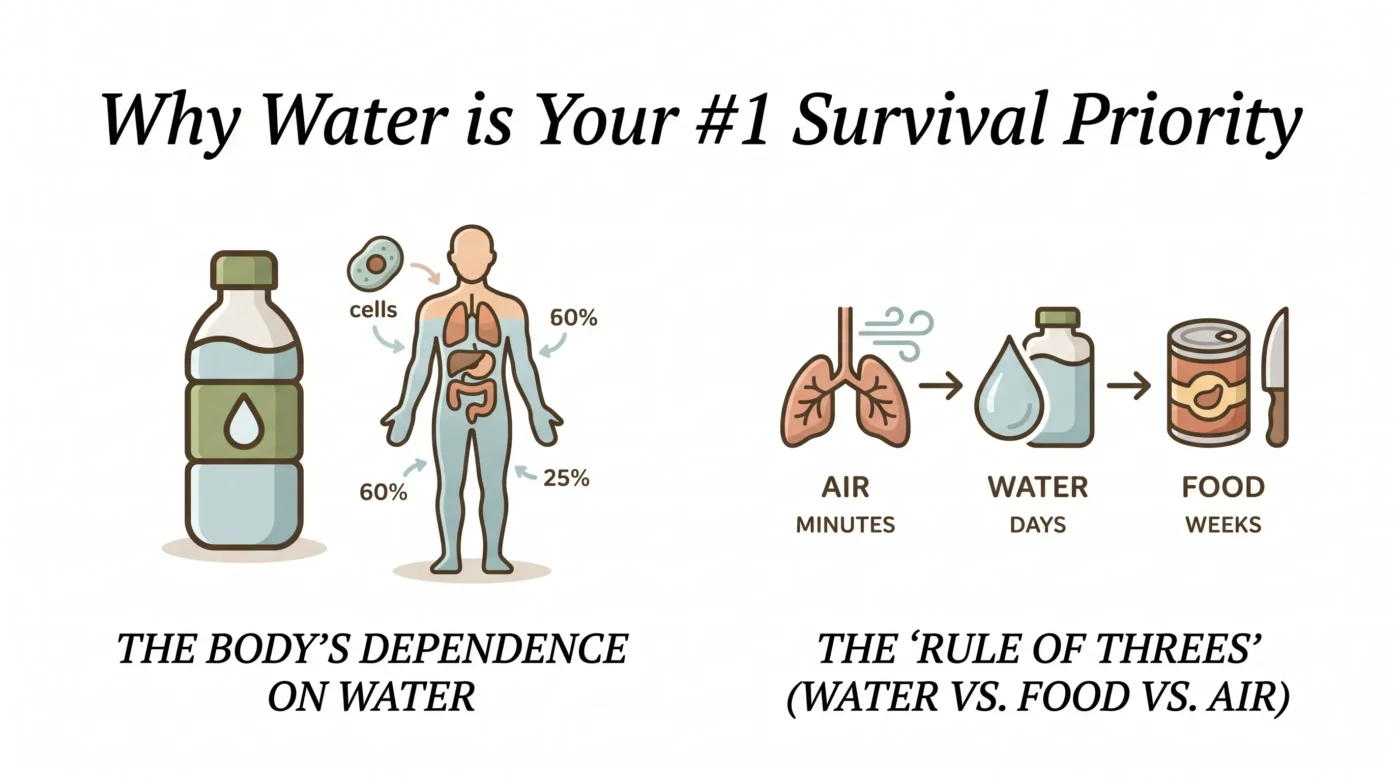
The Body’s Dependence on Water
Your body is a complex machine, and water is its primary fuel and lubricant. Roughly 60% of your body weight is water, and it’s involved in virtually every essential function. Water regulates your body temperature through sweating, transports nutrients and oxygen to your cells, flushes waste products, lubricates joints, and protects your organs and tissues. Without adequate water, these systems begin to fail, quickly and catastrophically.
The ‘Rule of Threes’ (Water vs. Food vs. Air)
Survivalists often refer to the “Rule of Threes” to prioritize immediate needs. You can typically survive:
- 3 minutes without air.
- 3 days without water.
- 3 weeks without food.
While these are rough estimates and can vary wildly based on conditions, they powerfully illustrate water’s immediate importance. You’ll succumb to dehydration long before starvation becomes a critical threat.
The Baseline: Daily Water Needs in Ideal Conditions
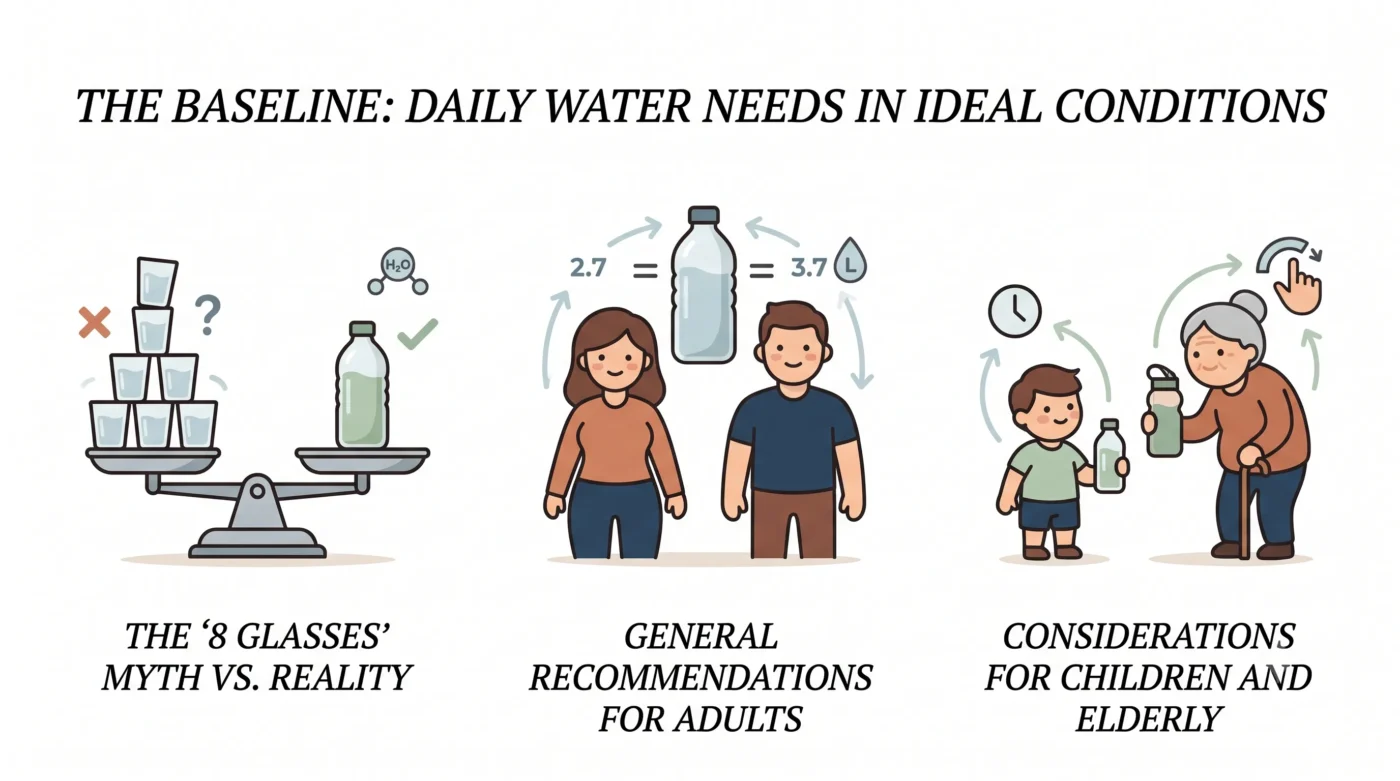
The ‘8 Glasses’ Myth vs. Reality
You’ve likely heard the advice to drink eight 8-ounce glasses of water a day. While it’s a decent starting point, it’s more of a guideline than a hard-and-fast rule. Your actual daily water intake depends on many variables, even in comfortable, everyday settings. Some of your water comes from the foods you eat, and individual needs fluctuate.
General Recommendations for Adults
In a temperate climate with minimal physical activity, an adult generally needs around 2-3 liters (roughly 68-100 ounces or 8-12 cups) of water per day to maintain proper hydration. This is your baseline, the minimum you should aim for when conditions are favorable. Think of it as the ideal, not the survival minimum.
Considerations for Children and Elderly
Children and the elderly are particularly vulnerable to dehydration. Children have a higher surface area to body mass ratio, meaning they can lose fluids faster, and their thirst mechanism might not be as developed. The elderly often have a diminished sense of thirst and their bodies are less efficient at conserving water. They require closer monitoring and consistent access to water, often needing slightly more than their thirst dictates.
Factors That Drastically Increase Your Water Requirements
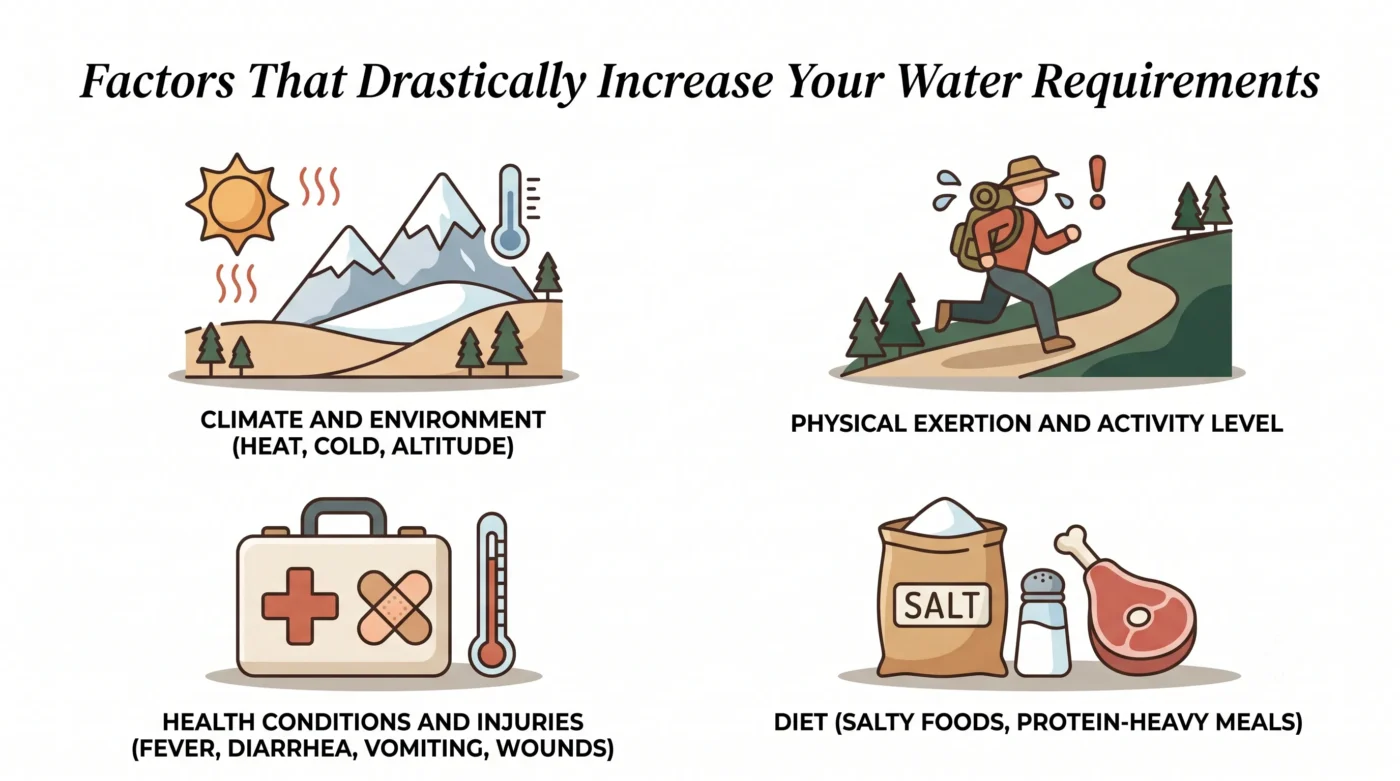
Your baseline needs go out the window the moment you step into a survival scenario. Many factors can dramatically increase how much water your body demands.
Climate and Environment (Heat, Cold, Altitude)
- Heat: This is the most obvious. High temperatures cause profuse sweating, your body’s natural cooling mechanism. You can lose liters of water an hour in extreme heat, making dehydration a rapid threat.
- Cold: Less intuitive, but cold weather also increases water loss. Your body works harder to stay warm, leading to increased respiration (you lose water vapor with every breath) and often increased urination. You might not feel as thirsty, but you’re still losing fluids.
- Altitude: At higher altitudes, the air is drier, and you breathe more rapidly and deeply. This leads to increased evaporative water loss from your lungs. The lower atmospheric pressure can also cause fluid shifts in your body, increasing urination.
Physical Exertion and Activity Level
Any physical activity, from hiking to building a shelter, increases your metabolic rate and causes you to sweat. The harder you work, the more water you lose. A strenuous hike in hot weather can easily double or triple your daily water requirements.
Health Conditions and Injuries (Fever, Diarrhea, Vomiting, Wounds)
- Fever: Elevated body temperature significantly increases fluid loss through sweating.
- Diarrhea and Vomiting: These conditions rapidly deplete your body’s water and electrolyte stores, leading to severe dehydration very quickly.
- Wounds: Large open wounds, especially burns, can cause substantial fluid loss from the body.
Diet (Salty foods, protein-heavy meals)
- Salty Foods: Consuming salty foods requires your kidneys to use more water to process and excrete the excess sodium.
- Protein-Heavy Meals: Digesting large amounts of protein (common if you’re hunting and eating only meat) requires more water for metabolic processes, putting an extra strain on your hydration levels. This is why you hear about “rabbit starvation” – too much lean protein without enough fat or water.
The Dangers of Dehydration: What Happens When You Don’t Have Enough
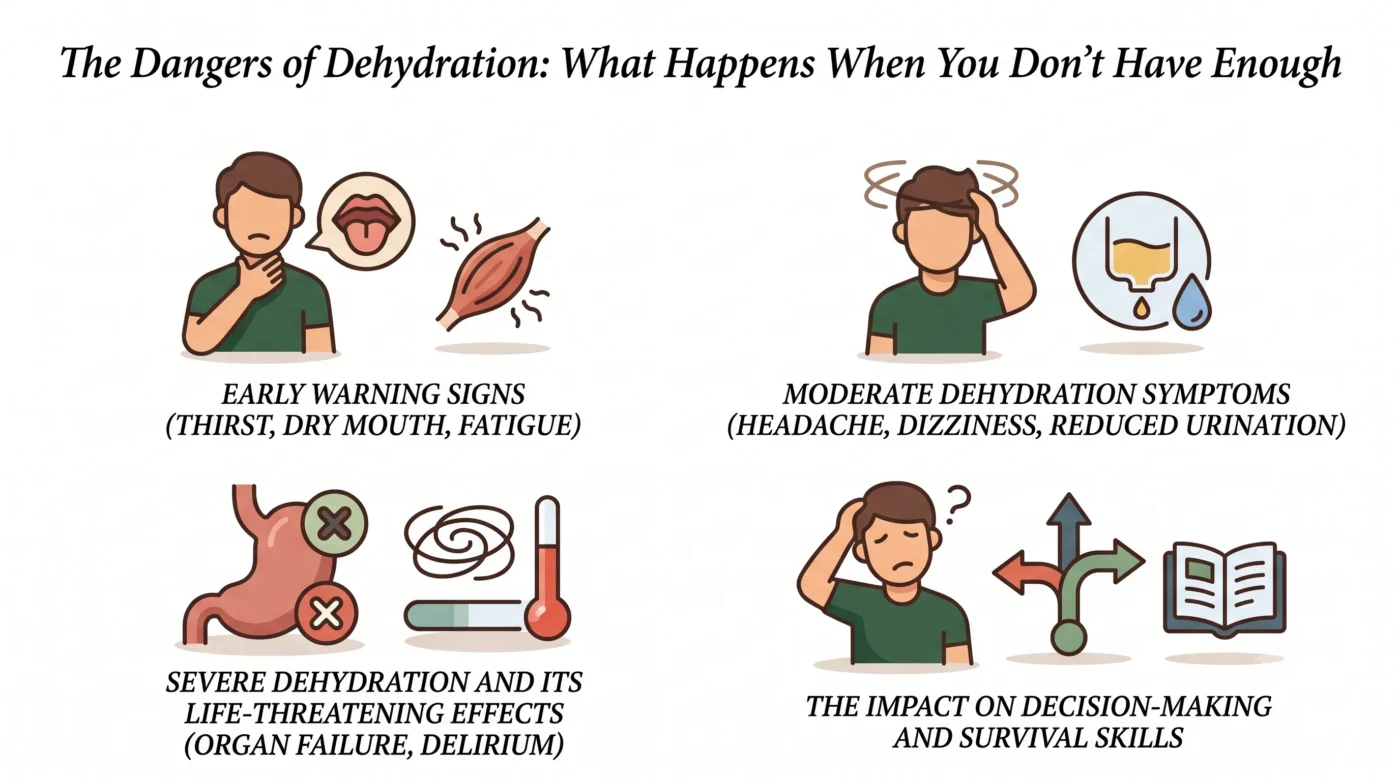
Dehydration isn’t just about feeling thirsty; it’s a progressive decline in your body’s functions that can quickly become life-threatening.
Early Warning Signs (Thirst, Dry Mouth, Fatigue)
Pay attention to these initial signals. Your body is telling you it needs water. You’ll feel thirsty, your mouth might feel dry or sticky, and you might experience mild fatigue or a slight headache. Your urine might also be darker than usual.
Moderate Dehydration Symptoms (Headache, Dizziness, Reduced Urination)
As dehydration progresses, symptoms become more pronounced. Headaches intensify, you might feel dizzy or lightheaded, especially when standing up. Muscle cramps can occur, and your urine output will significantly decrease, becoming very dark yellow or amber. You’ll feel lethargic and irritable.
Severe Dehydration and Its Life-Threatening Effects (Organ Failure, Delirium)
This is the critical stage. Your body is shutting down. Symptoms include extreme thirst, lack of urination, sunken eyes, shriveled skin, rapid heartbeat and breathing, confusion, delirium, and loss of consciousness. Without immediate rehydration, severe dehydration leads to organ failure, shock, and ultimately, death.
The Impact on Decision-Making and Survival Skills
One of the most insidious dangers of dehydration in a survival situation is its impact on your cognitive abilities. Even mild dehydration can impair your concentration, judgment, and problem-solving skills. As it worsens, you become disoriented, make poor decisions, and lose the ability to perform essential survival tasks. Your chances of rescue or self-extrication plummet when your mind isn’t sharp.
Smart Strategies for Water Conservation in a Survival Scenario
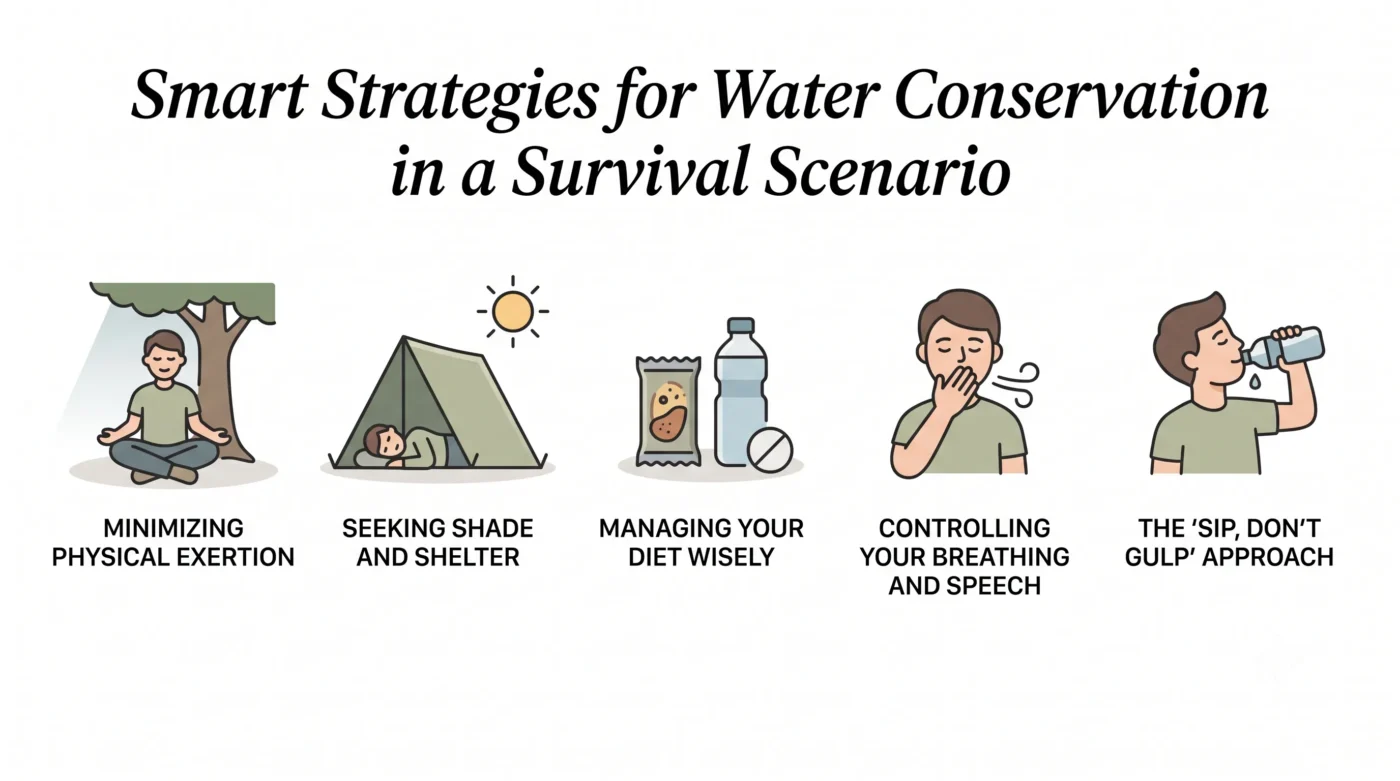
When water is scarce, every action you take needs to be geared towards conserving your precious supply and minimizing your body’s water loss.
Minimizing Physical Exertion
This is paramount. Avoid unnecessary movement, especially during the hottest parts of the day. If you must travel, do so during cooler hours – dawn, dusk, or even at night if safe. Move slowly and deliberately. Rest frequently.
Seeking Shade and Shelter
Direct sunlight is your enemy. Find or create shade immediately. A simple lean-to or even huddling under a large tree can significantly reduce your body temperature and slow down sweat production. If you’re in a vehicle, stay inside with windows cracked slightly to create a shaded, slightly cooler environment.
Managing Your Diet Wisely
Avoid salty foods, as they increase your thirst. If you have food, prioritize items with high water content, like fruits or certain plants (if you’re absolutely sure they’re safe to eat). If you’re eating protein-heavy foods, understand that they will increase your water needs. It’s often better to conserve water than to eat if you have a very limited supply.
Controlling Your Breathing and Speech
Believe it or not, every breath you exhale carries water vapor. Rapid, heavy breathing, especially through your mouth, increases this loss. Try to breathe slowly and deeply through your nose. Excessive talking also dries out your mouth and increases water loss through respiration. Conserve your words as much as your energy.
The ‘Sip, Don’t Gulp’ Approach
When you do have water, resist the urge to gulp it down. Your body can only absorb so much at once, and chugging water can lead to rapid urination, effectively wasting some of your intake. Instead, take small, frequent sips. Moisten your mouth and throat, then swallow. This allows your body to absorb the water more efficiently and makes your supply last longer.
Prepping Your Water Supply: Beyond Daily Needs
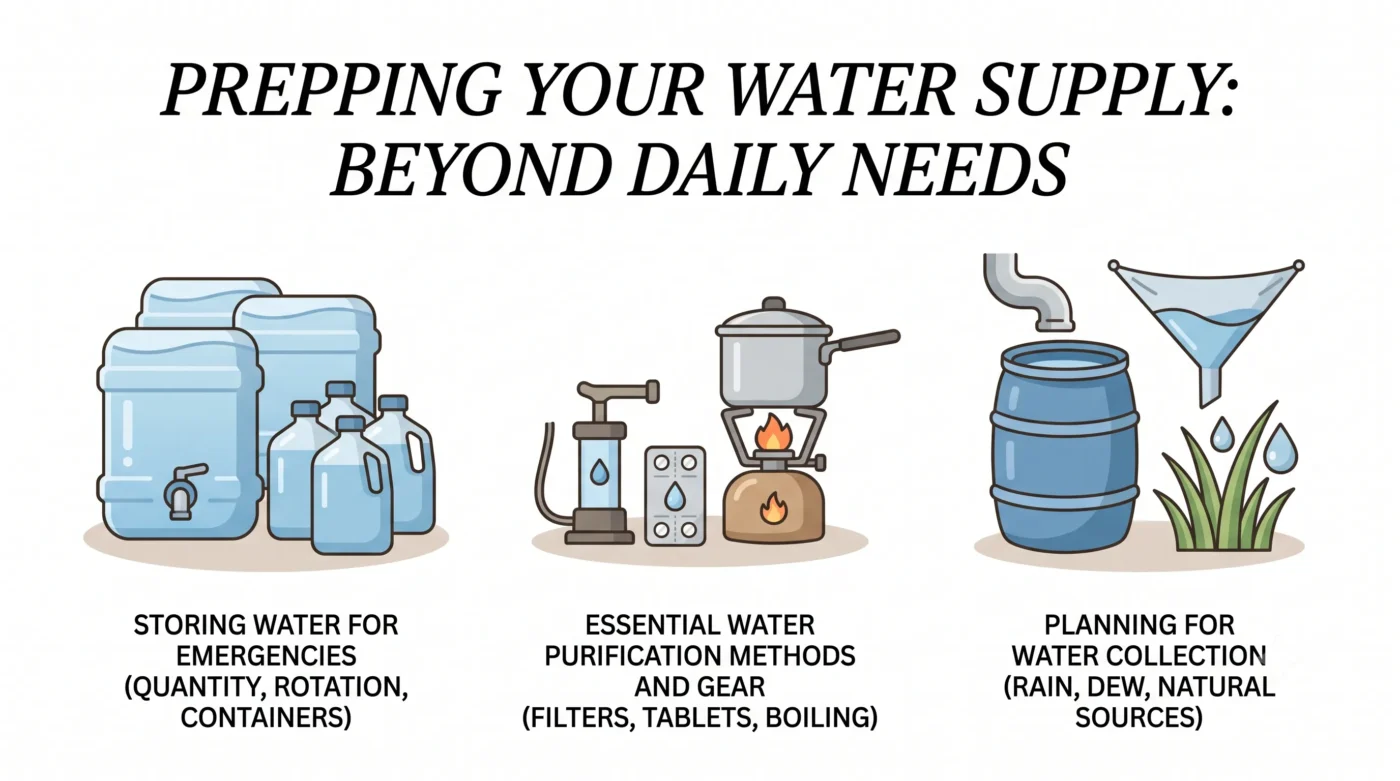
True preparedness means having a plan for water long before a crisis hits.
Storing Water for Emergencies (Quantity, Rotation, Containers)
- Quantity: A general recommendation is to store at least 1 gallon (3.8 liters) of water per person, per day, for a minimum of three days. For long-term preparedness, aim for two weeks or more. Remember, this is for drinking and basic hygiene.
- Rotation: Stored water doesn’t last forever. Rotate your supply every 6-12 months. Mark containers with the date of storage.
- Containers: Use food-grade plastic containers. Old soda bottles or milk jugs aren’t ideal for long-term storage as they can degrade or leach chemicals. Dedicated water storage containers are best.
Essential Water Purification Methods and Gear (Filters, Tablets, Boiling)
Never assume natural water sources are safe to drink. Always purify.
- Filters: Portable water filters (like Sawyer Mini, Lifestraw) are excellent for removing bacteria, protozoa, and some sediment. Carry one in your bug-out bag.
- Tablets: Chemical purification tablets (iodine or chlorine dioxide) kill viruses, bacteria, and protozoa. They are lightweight and have a long shelf life.
- Boiling: The most reliable method. Bring water to a rolling boil for at least one minute (three minutes at altitudes above 6,500 feet) to kill all pathogens. You’ll need a heat source and a metal container.
Planning for Water Collection (Rain, Dew, Natural Sources)
- Rain: Collect rainwater using tarps, ponchos, or any available containers. It’s usually safe to drink directly, but purification is always safer.
- Dew: In arid environments, dew can be a lifesaver. Lay out a clean cloth or tarp overnight and wring out the collected moisture in the morning.
- Natural Sources: Rivers, streams, lakes, and springs are potential sources, but always purify this water. Look for moving water rather than stagnant pools, and try to collect upstream from human or animal activity.
Conclusion
Understanding your body’s dynamic water needs is paramount for survival. It’s not just about a number, but about recognizing the factors that change that number and adapting your strategies accordingly. Prioritize water in your preparedness plans, learn effective conservation techniques, and master purification methods. Your ability to survive often hinges on your knowledge and respect for this most vital resource. Stay hydrated, stay prepared.