
Learn to recognize the critical signs of dehydration, from mild thirst to severe organ failure. This guide equips you with essential survival knowledge to prevent and respond to fluid loss.
Water is more than just a drink; it’s the very foundation of life, especially when you’re facing the unpredictable challenges of survival, preparedness, or demanding outdoor activities. In these scenarios, your body’s need for water isn’t just about comfort—it’s about survival. Dehydration is a silent, insidious threat that can quickly escalate from a minor inconvenience to a life-threatening emergency. It doesn’t announce itself with a siren; instead, it subtly erodes your capabilities, judgment, and ultimately, your will to survive.
This article isn’t just a list of symptoms. It’s your essential guide to understanding how dehydration progresses, equipping you with the knowledge to identify its signs at every stage—from the first whispers of discomfort to the critical moments when your body is truly failing. Knowing these indicators, and what to do about them, is a fundamental skill that can save your life or the lives of those with you.
The Unseen Threat: Why Hydration is Your Lifeline
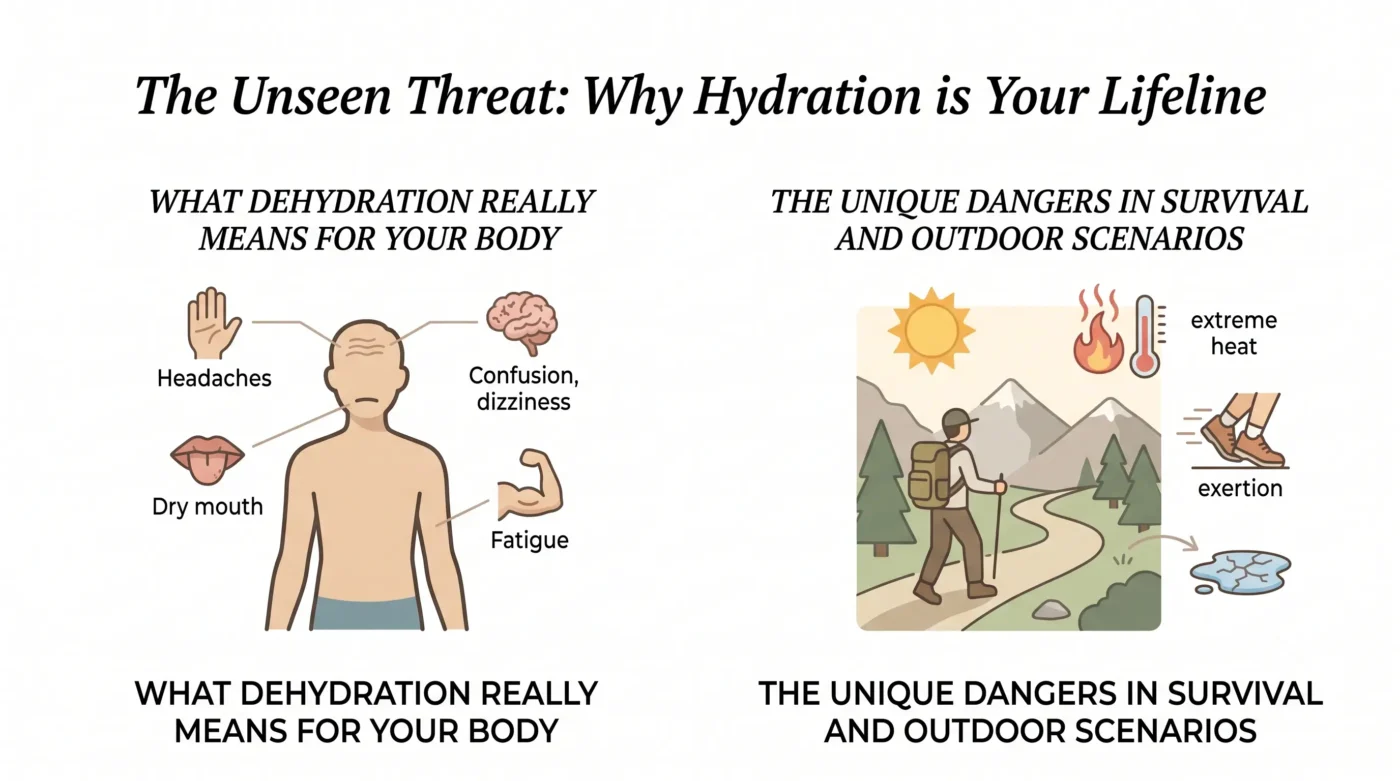
What Dehydration Really Means for Your Body
Simply put, dehydration occurs when your body loses more fluids than it takes in. It’s not just about feeling thirsty; it’s a systemic imbalance. Water makes up a significant portion of your body weight and is crucial for countless essential bodily functions. It regulates your temperature, transports nutrients to your cells, flushes out waste products, lubricates your joints, and keeps your organs functioning properly. When you’re dehydrated, these vital processes begin to falter, leading to a cascade of problems that impact everything from your physical strength to your mental clarity.
The Unique Dangers in Survival and Outdoor Scenarios
In a survival situation, during an emergency, or deep in the backcountry, the risks of dehydration are dramatically amplified. Factors like intense physical exertion (hiking, building shelter, foraging), exposure to extreme temperatures (scorching sun or biting cold), and limited access to clean drinking water create a perfect storm. Add to this the absence of immediate medical help, and a seemingly minor fluid deficit can rapidly spiral into a critical condition. Your ability to think clearly, make sound decisions, and perform necessary survival tasks diminishes with every drop of fluid lost.
Early Warning Signals: Recognizing Mild Dehydration
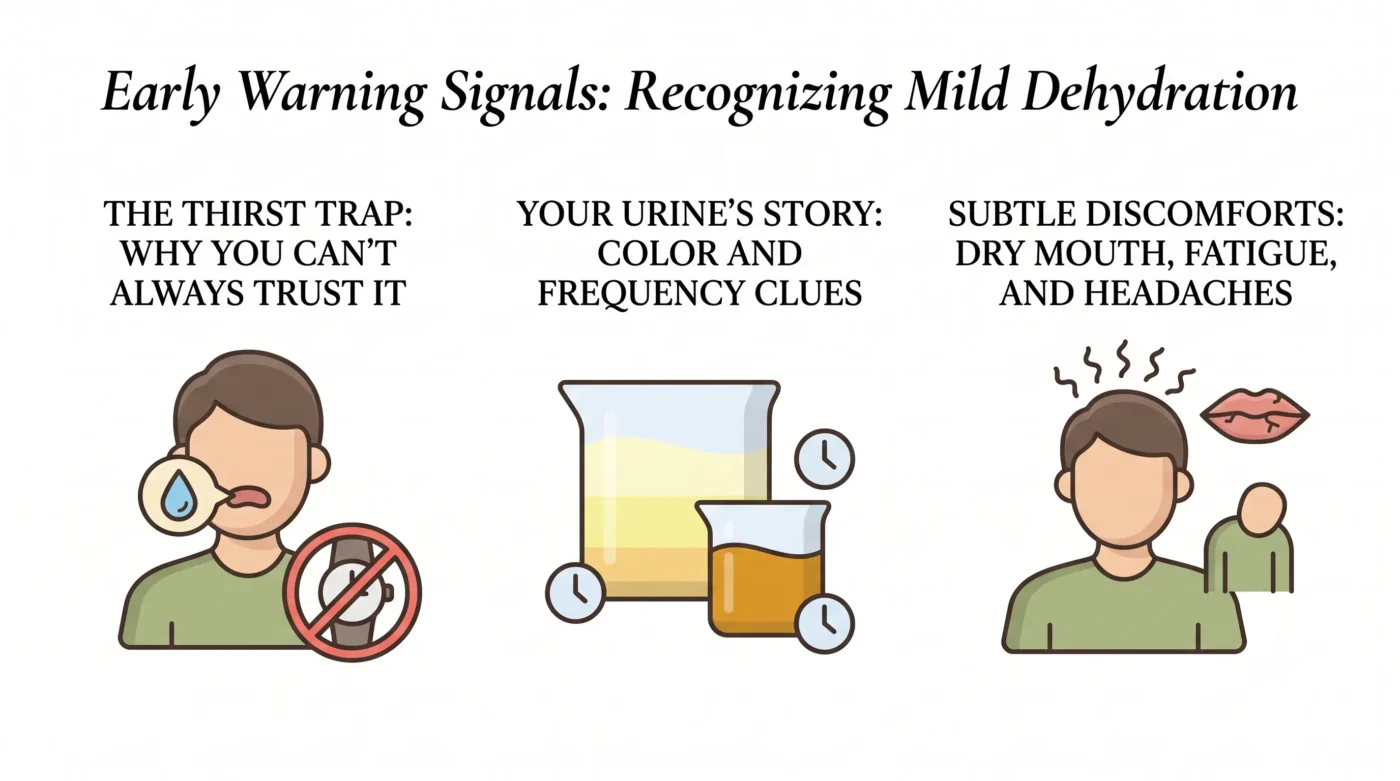
Catching dehydration early is your best defense. These are the subtle cues your body sends before things get serious.
The Thirst Trap: Why You Can’t Always Trust It
Here’s a critical survival lesson: by the time you feel thirsty, you’re already mildly dehydrated. Thirst is your body’s alarm system, but it’s not always an early warning. In cold environments, you might not feel as thirsty, even when your body is losing significant fluid through respiration. During intense focus or high-stress situations, your brain can also override or mask the sensation of thirst. Don’t wait for thirst; drink proactively.
Your Urine’s Story: Color and Frequency Clues
Your urine is one of the most reliable, immediate indicators of your hydration status. Pay attention to it. If your urine is pale yellow, like lemonade, you’re likely well-hydrated. If it’s dark yellow or amber, like apple juice, you’re dehydrated and need to drink water. If it’s dark brown, you’re severely dehydrated and need immediate attention. Also, note the frequency: if you’re urinating less often than usual, or producing very little urine, that’s another clear sign you’re not getting enough fluids.
Subtle Discomforts: Dry Mouth, Fatigue, and Headaches
These are the common, early signs that many people overlook or attribute to other causes. A dry, sticky mouth is a direct result of reduced saliva production. Feeling unusually tired or sluggish, even after adequate rest, can be your body telling you it’s struggling with fluid balance. Headaches, often described as a dull ache or throbbing sensation, are also a frequent companion to mild dehydration. Don’t dismiss these; they’re your body’s first calls for help.
When Things Get Serious: The Signs of Moderate Dehydration
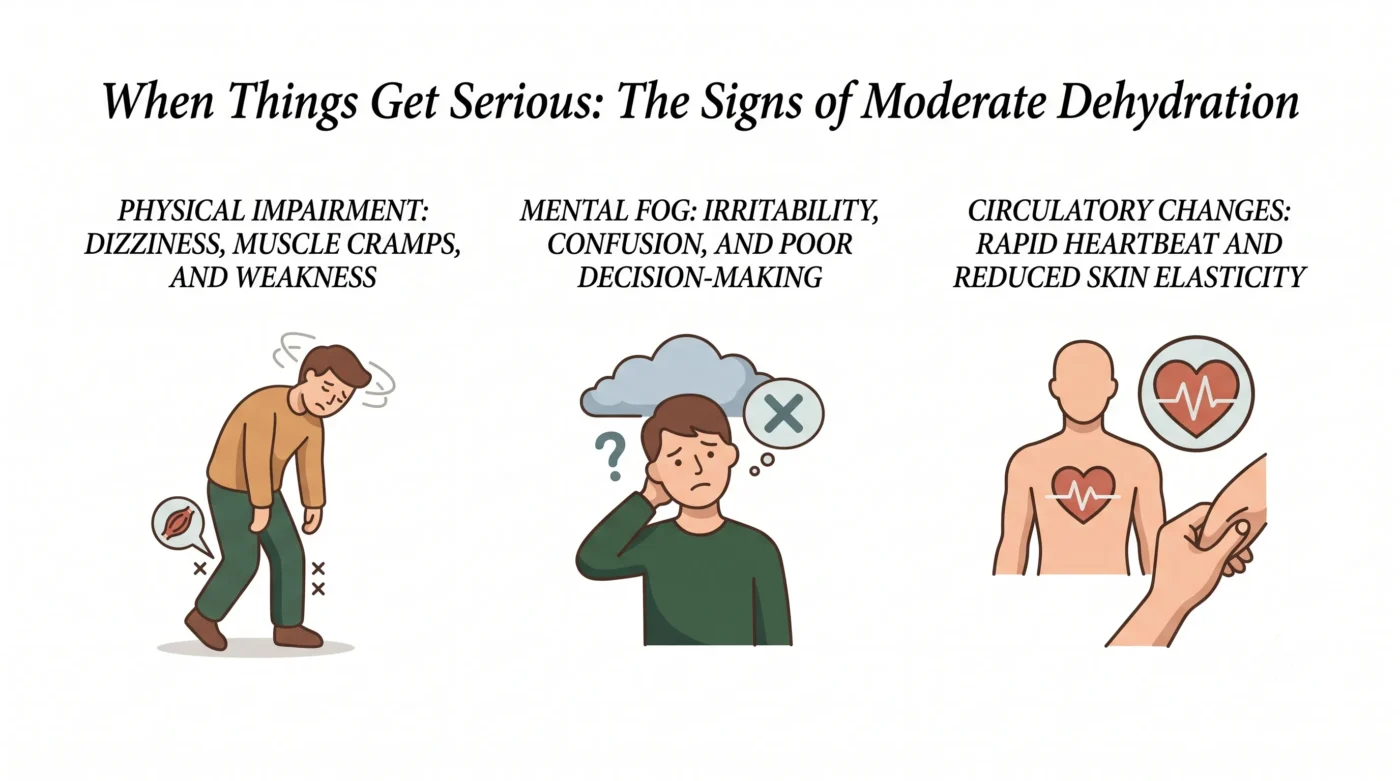
As dehydration progresses, its effects become more pronounced, impacting your physical and mental capabilities significantly. This is where your survival chances begin to diminish if you don’t act.
Physical Impairment: Dizziness, Muscle Cramps, and Weakness
Moderate dehydration directly impacts your physical performance and coordination. You might experience lightheadedness or dizziness, especially when standing up quickly, as your blood pressure struggles to compensate. Muscle cramps, particularly in your legs or abdomen, can become frequent and painful, signaling an electrolyte imbalance exacerbated by fluid loss. Overall weakness and a noticeable drop in strength make even simple tasks feel incredibly difficult and dangerous.
Mental Fog: Irritability, Confusion, and Poor Decision-Making
Your brain is highly sensitive to fluid levels. As you become moderately dehydrated, you’ll likely notice a significant mental fog. You might become irritable, easily frustrated, or unusually moody. Confusion can set in, making it hard to concentrate or follow instructions. Most dangerously, your ability to make sound decisions—a critical skill in any survival scenario—becomes severely impaired. You might overlook obvious dangers or make choices that put yourself and others at risk.
Circulatory Changes: Rapid Heartbeat and Reduced Skin Elasticity
With less fluid in your system, your blood volume decreases. To compensate and ensure oxygen reaches your vital organs, your heart has to work harder, leading to a noticeably rapid heartbeat. You can often feel your pulse racing. Another indicator is reduced skin elasticity, sometimes called “skin turgor.” If you gently pinch the skin on the back of your hand or forearm and it takes more than a couple of seconds to return to its normal flat position, it’s a strong sign of moderate to severe dehydration.
The Body’s Breaking Point: Critical Signs of Severe Dehydration
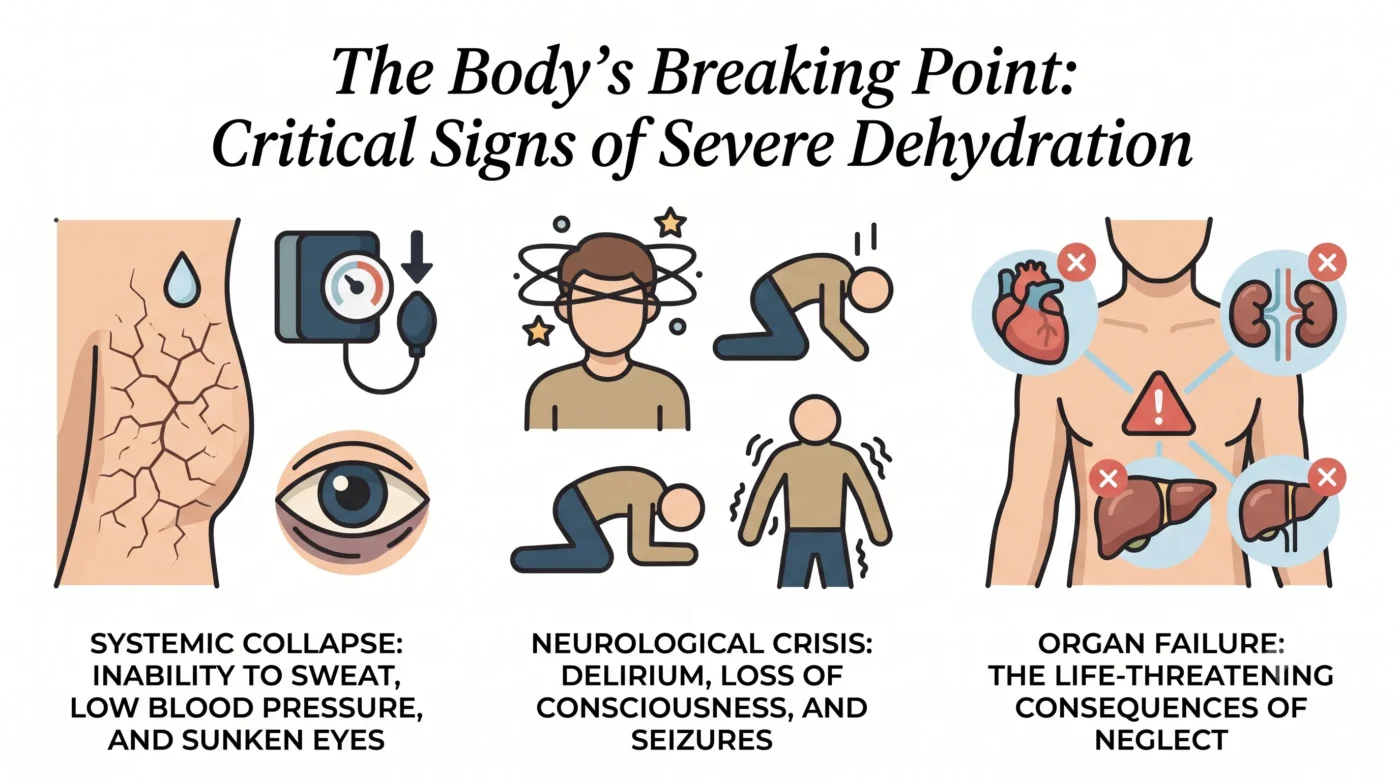
This is the danger zone. Severe dehydration means your body’s systems are beginning to shut down. At this stage, immediate intervention is not just recommended; it’s absolutely critical for survival.
Systemic Collapse: Inability to Sweat, Low Blood Pressure, and Sunken Eyes
When your body reaches severe dehydration, its ability to regulate temperature is compromised. A terrifying sign is the cessation of sweating, even in hot conditions. This means your body can no longer cool itself, leading to a rapid and dangerous rise in core temperature (heatstroke). Blood pressure drops significantly, making you feel faint and weak. Your eyes might appear sunken, and your skin can become cool, clammy, and mottled as blood flow is diverted from the extremities to vital organs.
Neurological Crisis: Delirium, Loss of Consciousness, and Seizures
Severe fluid loss profoundly affects the brain. You might experience extreme confusion, disorientation, and even hallucinations or delirium. Speech can become slurred, and coordination will be severely impaired. Without intervention, this can progress to loss of consciousness, where the individual becomes unresponsive. In the most critical cases, severe electrolyte imbalances can trigger seizures, indicating a life-threatening neurological crisis.
Organ Failure: The Life-Threatening Consequences of Neglect
At this stage, the body is truly failing. Prolonged severe dehydration can lead to acute kidney failure, as the kidneys can no longer filter waste products effectively. Heatstroke, a medical emergency where the body’s core temperature rises uncontrollably, becomes a very real and deadly threat. Hypovolemic shock, caused by a drastic reduction in blood volume, can lead to organ damage and death. These are not just symptoms; they are critical conditions that signify the body is at its breaking point and requires immediate, professional medical intervention.
Your Action Plan: Preventing and Responding to Dehydration
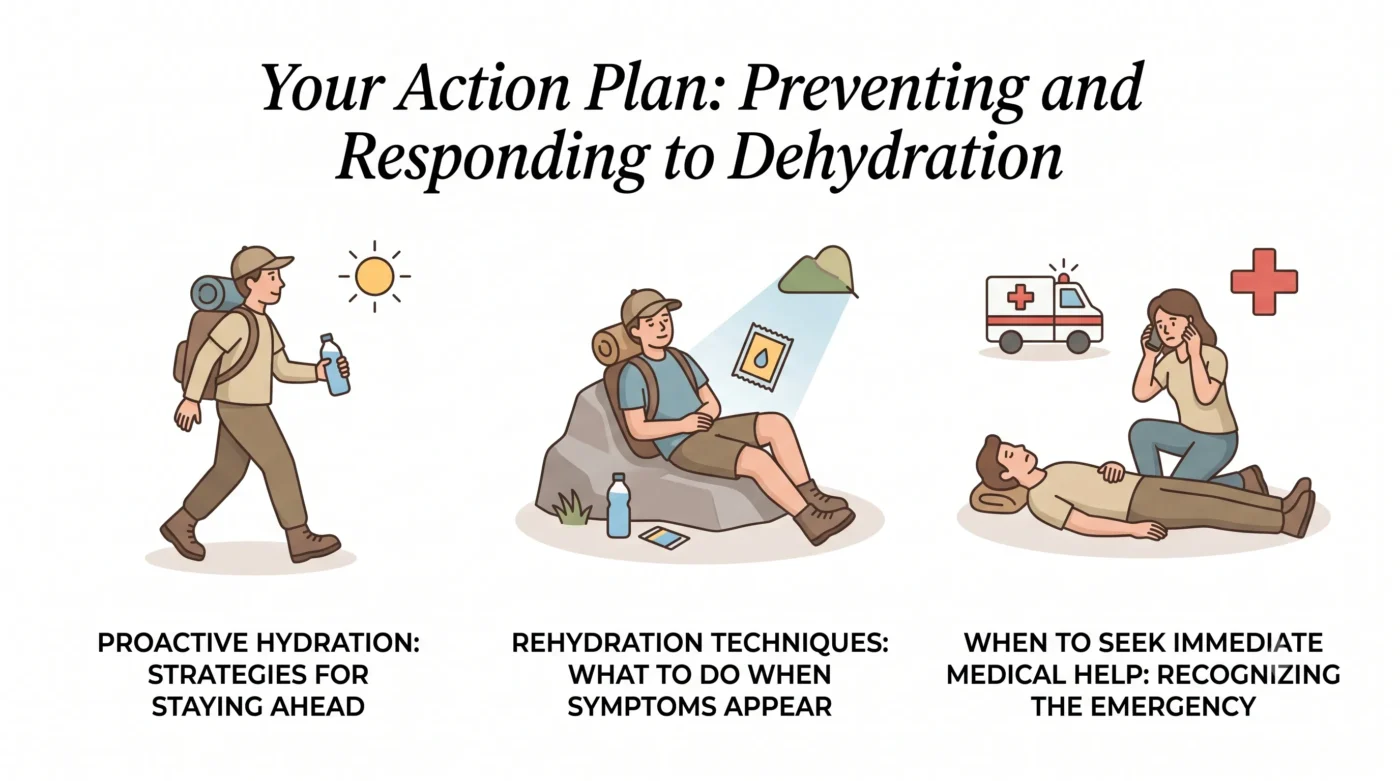
Knowing the signs is only half the battle. You need a plan.
Proactive Hydration: Strategies for Staying Ahead
The best defense against dehydration is prevention. Don’t wait until you’re thirsty. Drink water regularly throughout the day, especially when active or in challenging environments. Carry more water than you think you’ll need, and know how to find and purify additional sources. Plan your hydration strategy for any outdoor activity or emergency scenario, factoring in exertion levels, temperature, and individual needs. A good rule of thumb is to sip water consistently, aiming for clear or pale yellow urine.
Rehydration Techniques: What to Do When Symptoms Appear
For mild to moderate dehydration, the goal is safe, gradual rehydration. Move to a shaded, cool area and rest. Begin drinking water in small, frequent sips, rather than gulping large amounts, which can cause nausea or overwhelm your system. If available, an electrolyte solution (like an oral rehydration solution or a sports drink) is better than plain water, especially after prolonged sweating, as it replenishes essential salts. Avoid sugary drinks, alcohol, and caffeine, which can worsen dehydration.
When to Seek Immediate Medical Help: Recognizing the Emergency
Severe dehydration is a medical emergency. If you or someone else exhibits critical signs like loss of consciousness, severe confusion, inability to keep fluids down (vomiting), no urination for many hours, or seizures, you need to seek immediate professional medical help. Call for emergency services if possible, or evacuate the individual to the nearest medical facility without delay. Time is critical in these situations.
Beyond the Basics: Special Considerations for the Prepared
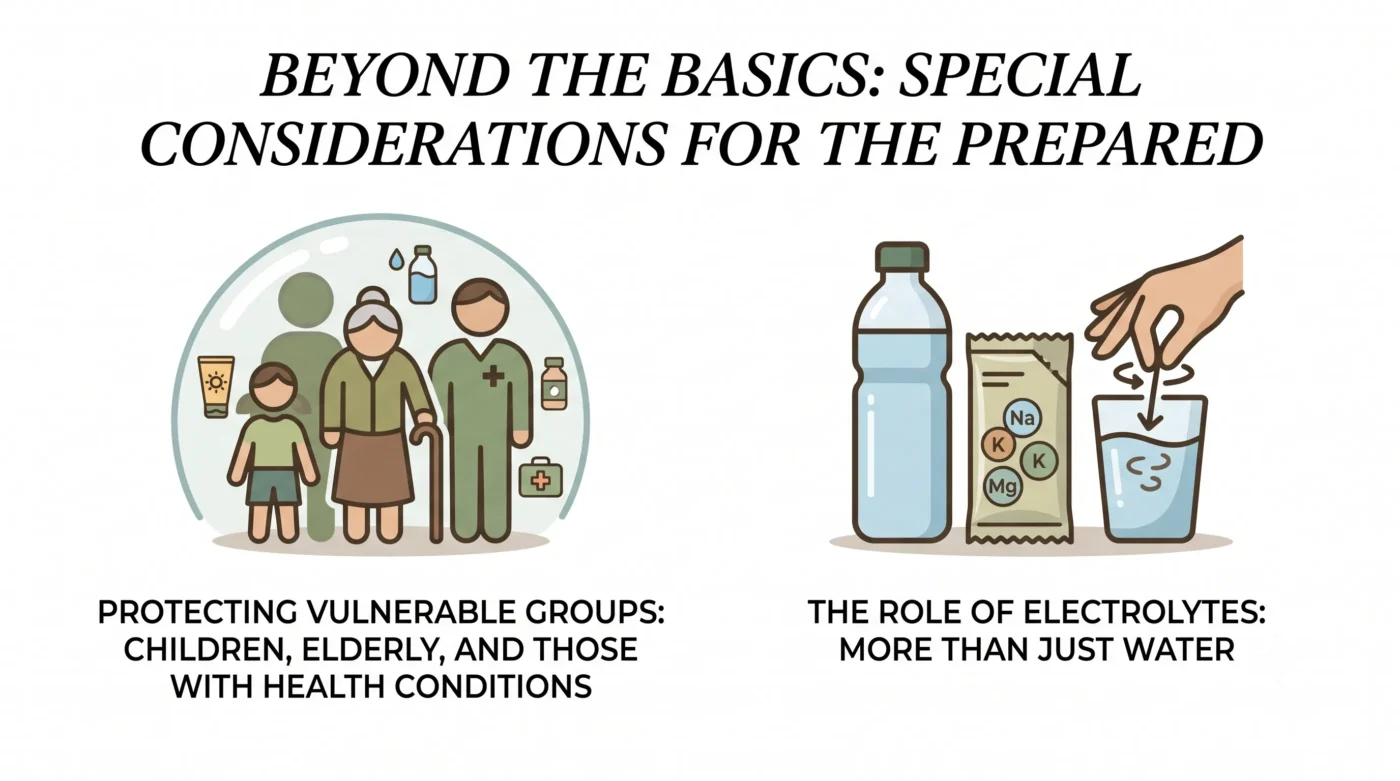
Protecting Vulnerable Groups: Children, Elderly, and Those with Health Conditions
Certain groups are at a much higher risk of dehydration and require extra vigilance. Children, especially infants, have a higher surface area to body mass ratio and can dehydrate quickly. The elderly often have a diminished sense of thirst and may be on medications that affect fluid balance. Individuals with chronic health conditions (like diabetes or kidney disease) or those taking certain medications are also more susceptible. Monitor these individuals closely and ensure they are proactively hydrating.
The Role of Electrolytes: More Than Just Water
While water is paramount, electrolytes (minerals like sodium, potassium, and chloride) are equally important, especially during prolonged physical exertion, in hot environments, or when experiencing vomiting or diarrhea. These minerals help your body absorb water and maintain crucial bodily functions. Replenish them through electrolyte-rich foods, specialized drinks, or oral rehydration salts. Relying solely on plain water after significant fluid loss can sometimes dilute existing electrolytes, leading to further complications.
Conclusion
Understanding the progressive signs of dehydration is not just theoretical knowledge; it’s a fundamental survival skill that can mean the difference between life and death. From the subtle hints of a dry mouth to the critical indicators of organ failure, your body communicates its needs. Your job is to listen, interpret, and act promptly.
Maintain constant vigilance, especially in challenging environments. Prioritize proactive hydration, know how to safely rehydrate when symptoms appear, and recognize when a situation demands immediate medical intervention. By mastering these insights, you empower yourself to protect your most vital resource—your own body—and ensure you’re prepared for whatever challenges lie ahead.