Being prepared isn’t about paranoia; it’s about peace of mind. Understanding common risks and the benefits of readiness is your first step.
Common Emergencies You Might Face
Life throws curveballs. You might face:
- Natural disasters (hurricanes, earthquakes, floods, wildfires)
- Power outages and utility disruptions
- Personal emergencies (job loss, medical crisis)
- Economic instability
The Peace of Mind Preparedness Brings
When you’re ready, you gain:
- Reduced stress and anxiety during crises
- Increased confidence in your ability to protect your family
- Faster recovery from unexpected events
Taking Responsibility for Your Safety
Preparedness means:
- Moving beyond reliance on external systems
- Empowering yourself and your loved ones
The Prepared Mindset: Your Most Important Tool
Gear is helpful, but your mental fortitude and ability to think clearly are paramount in any emergency. Your mind is your primary survival tool.
Cultivating Awareness and Observation
Start by sharpening your senses:
- Situational awareness: know your surroundings, always.
- Identify potential threats and resources around you.
- Develop a ‘what if’ mentality – it’s not about fear, but proactive thinking.
The Power of Adaptability and Problem-Solving
When things go wrong, you need to:
- Think on your feet when plans go awry.
- Be resourceful: make do with what you have.
- Stay calm under pressure – it’s a skill you can build.
Overcoming Fear and Panic
Fear is natural, but you can manage it:
- Understand the physiological response to stress; it helps you control it.
- Learn techniques for managing anxiety and maintaining focus.
- Training and practice are key to building confidence and reducing panic.
Mastering the Basics: Water, Food, Shelter, and First Aid
These are the fundamental pillars of survival, often called the ‘Rule of Threes’. Prioritizing them is crucial for your immediate safety.
Water: The Ultimate Priority
You can survive three minutes without air, three hours without shelter in extreme conditions, three days without water, and three weeks without food. Water is critical.
- How much water do you need? A good rule of thumb is one gallon per person per day for drinking and basic sanitation.
- Safe water storage solutions for home: Store commercially bottled water, or use food-grade containers. Keep it in a cool, dark place.
- Basic water purification methods: Know how to boil water (a rolling boil for one minute), use a quality water filter, or chemical treatments like iodine tablets or bleach (follow instructions carefully).
Food: Sustaining Your Energy
While not as immediate as water, food keeps your energy up and morale high.
- Building a resilient pantry: Stock non-perishable food essentials like canned goods, dried fruits, nuts, granola bars, and freeze-dried meals.
- Food rotation strategies: Use the “first-in, first-out” method. Eat older items first and replace them to keep your stock fresh.
- Emergency cooking methods without power: Consider a propane camp stove, a charcoal grill (outdoors only!), or even a solar oven.
Shelter: Staying Safe and Warm
Your home is your primary shelter. Protect it and know how to create temporary alternatives.
- Securing your home: Basic weatherproofing (sealing drafts) and security measures (strong locks) are always wise.
- Creating a ‘safe room’ or designated emergency area: This could be an interior room away from windows, stocked with essentials.
- Temporary shelter considerations: Keep tarps, blankets, and sleeping bags accessible for warmth or if you need to create a makeshift shelter.
First Aid: Handling Injuries and Illnesses
Small injuries can become big problems without proper care.
- Assembling a comprehensive home first aid kit: Include bandages, antiseptic wipes, pain relievers, allergy medication, and any personal prescription medications.
- Basic first aid skills everyone should know: Learn CPR, how to treat wounds (cuts, scrapes), manage burns, and recognize signs of shock.
- Managing prescription medications during an emergency: Keep at least a 7-day supply of essential medications on hand, if possible, and consult your doctor about emergency refills.
Building Your Emergency Kits: Go-Bags and Home Supplies
Having the right tools and supplies readily available can make all the difference when seconds count.
The ‘Bug-Out Bag’ (BOB): Your Grab-and-Go Kit
- What is a BOB and why do you need one? A Bug-Out Bag is a portable kit designed to help you survive for at least 72 hours if you need to evacuate quickly. It’s your lifeline.
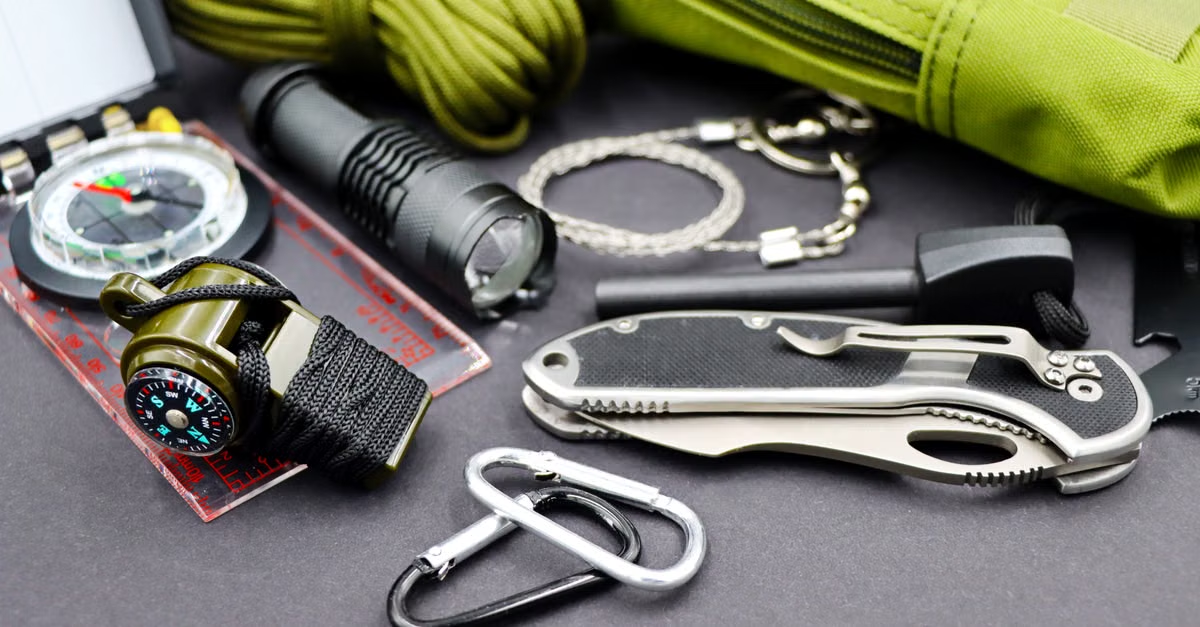
- Essential items for a 72-hour bag: Pack clothing, hygiene items, a multi-tool, a flashlight, a first aid kit, copies of important documents, and enough food and water for three days.
- Customizing your BOB for individual needs: Don’t forget specific items for children (diapers, toys), pets (food, leash), or medical conditions (medications, specific supplies).
The Home Emergency Kit: For Staying Put
This kit supports sheltering in place for longer durations.
- Extended supplies for sheltering in place: Stock more food, water, power sources (batteries, power banks), and sanitation supplies (garbage bags, wet wipes).
- Tools for home repairs and utility shut-offs: Include a wrench for gas lines, a pry bar, duct tape, and a basic tool kit.
- Entertainment and comfort items for long-term outages: Books, board games, and comfort items can significantly boost morale.
Vehicle Kits: Prepared on the Road
Don’t forget your car.
- Essentials for car breakdowns and roadside emergencies: Jumper cables, a spare tire, a basic tool kit, flares, and a reflective triangle.
- Winter survival items for cold climates: Add blankets, extra warm clothing, a shovel, and sand/cat litter for traction.
Customizing Your Kits for Your Family and Location
Your kits aren’t one-size-fits-all.
- Considering local risks: Tailor your supplies for earthquakes, hurricanes, blizzards, or wildfires specific to your area.
- Special needs: Account for infants, the elderly, or individuals with disabilities (e.g., extra formula, specific medical devices).
- Regular review and rotation: Check expiration dates on food and medicine, test batteries, and update clothing seasonally.
Home & Family Preparedness: Securing Your Sanctuary
Your home is your primary shelter. Preparing it and your family for emergencies is a critical step.
Creating a Family Emergency Plan
Everyone needs to be on the same page.
- Designating meeting points: Have one inside your home (for fire) and one outside (for neighborhood emergencies).
- Establishing out-of-state contacts: A relative or friend outside your immediate area can be a central point for family members to check in.
- Practicing evacuation routes and shelter-in-place procedures: Walk through these scenarios so everyone knows what to do.
Communication Strategies When Systems Fail
When phones are down, you need alternatives.
- Low-tech communication methods: Simple hand signals, pre-arranged messages, or a whiteboard can be effective.
- Emergency radios: A NOAA weather radio keeps you informed. FRS/GMRS radios allow short-range family communication.
- Understanding cell service limitations and alternatives: Cell towers can go down. Text messages often go through when calls don’t.
Utility Shut-Offs and Basic Home Security
Empower yourself with practical knowledge.
- Knowing how to turn off water, gas, and electricity: Locate your main shut-off valves and breakers, and know how to operate them safely.
- Basic home hardening techniques: Securing windows and doors can deter intruders and protect against weather.
- Fire safety and extinguisher placement: Have working smoke detectors and know where your fire extinguishers are and how to use them.
Financial Preparedness: Cash and Important Documents
Access to funds and information is vital.
- Keeping an emergency fund in small denominations of cash: ATMs and credit card machines may not work during power outages.
- Securing copies of vital documents: Store IDs, insurance policies, deeds, and birth certificates off-site (e.g., a safe deposit box) or digitally on an encrypted drive.
- Creating a financial ‘go-bag’ with essential records: This ensures you have critical information if you need to evacuate.
Essential Survival Skills for Everyone
Knowledge is power. Learning basic skills empowers you to handle situations even without your gear.
Basic First Aid and CPR
- Why formal training is invaluable: Take a certified course. It provides hands-on experience and confidence.
- Hands-on practice for common injuries: Practice bandaging, splinting, and applying pressure to wounds.
Fire Starting and Management
Fire provides warmth, light, and a way to cook.
- Multiple methods for starting a fire: Master lighters, ferro rods, and waterproof matches. Practice friction fire if you’re ambitious.
- Building and maintaining a safe fire: Learn about tinder, kindling, and fuel wood. Always have a way to extinguish it.
Water Purification Techniques
Beyond your stored water, know how to find and treat more.
- Beyond filters: Understand boiling, solar stills (for distilling water), and chemical treatments for various scenarios.
- Identifying safe water sources in the wild: Look for clear, flowing water, but always treat it.
Navigation Basics (Map & Compass)
Don’t rely solely on GPS.
- Understanding topographical maps: Learn to read contour lines, symbols, and scales.
- Using a compass for basic direction finding: Practice orienting a map and taking bearings.
- The importance of knowing your local area: Walk your neighborhood, learn landmarks, and understand local terrain.
Self-Defense Fundamentals
Your safety is paramount.
- Situational awareness as your first line of defense: Avoid trouble by being aware of your surroundings.
- Basic self-defense moves for personal safety: Consider a basic self-defense class to learn simple, effective techniques.
- Understanding legal considerations: Know the laws regarding self-defense in your area.
Beyond the Basics: Practice, Plan, and Community
Preparedness is a journey, not a destination. Continuous learning and community involvement strengthen your resilience.
Regular Drills and Scenario Practice
Practice makes perfect, or at least better.
- Testing your family emergency plan regularly: Run through fire drills, evacuation scenarios, and communication checks.
- Practicing skills like fire starting or first aid: Don’t just learn them; do them. Repetition builds muscle memory.
- Identifying weaknesses in your plans and kits: Every drill reveals areas for improvement.
Expanding Your Knowledge and Gear
Keep growing.
- Exploring advanced survival skills: Look into foraging, trapping, advanced navigation, or bushcraft.
- Investing in quality gear as your budget allows: Prioritize essential items first, then upgrade or add specialized tools.
- Staying informed about new threats and preparedness strategies: The world changes, and so should your plans.
Connecting with Your Community and Neighbors
You’re stronger together.
- Forming neighborhood watch groups or preparedness networks: Share knowledge, resources, and support.
- Sharing resources and skills with trusted individuals: A community that helps each other is more resilient.
- Understanding local emergency services and resources: Know who to call and what services are available in your area.
The Journey of Lifelong Preparedness
This is a marathon, not a sprint.
- Embracing preparedness as an ongoing lifestyle choice: It becomes part of how you live, not just a reaction to fear.
- Teaching preparedness to others: Share your knowledge and encourage others to start their own journey.
- Finding balance and avoiding burnout: Don’t let preparedness consume you. It should bring peace, not stress.
Conclusion
Congratulations, you’ve taken the first crucial steps on your preparedness journey! Remember, ‘Survival 101’ isn’t about becoming a wilderness expert overnight, but about building a solid foundation of knowledge, skills, and supplies to face life’s uncertainties with confidence. Start small, focus on the basics, and gradually expand your capabilities. Every step you take, no matter how minor, contributes to your overall resilience and peace of mind. Keep learning, keep practicing, and stay prepared – your future self will thank you for it!