
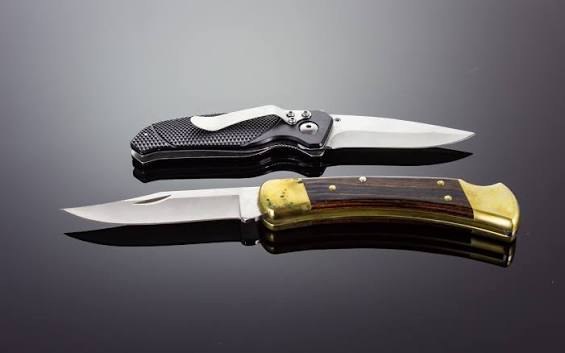
A reliable knife is not merely a tool; it is an extension of your will to survive. Selecting the wrong blade can compromise your ability to build shelter, process game, or defend yourself. This guide cuts through the marketing noise, providing the critical criteria for choosing a knife that will perform when your life depends on it.
Understanding the Core Purpose of a Survival Knife
A survival knife serves as a multi-purpose tool, not a specialized weapon. Its primary roles revolve around utility and practical application, not combat. Prioritize robust construction and versatility over aesthetic appeal or specialized combat features when making your selection. A knife must perform reliably across a spectrum of tasks in austere environments.
Beyond basic cutting, a survival knife must handle a range of demanding functions. It needs to withstand prying open containers or stubborn objects without snapping. Batoning wood, a technique for splitting larger logs by striking the spine of the blade, requires immense structural integrity. The knife must also strike a ferro rod effectively to generate sparks for fire starting, necessitating a sharp, ninety-degree spine.
Digging small holes for latrines or fire pits, constructing shelters from natural materials, and preparing food safely are all critical tasks. Furthermore, a survival knife plays a role in first aid, from cutting bandages to preparing splints. These diverse applications underscore the necessity of a full tang and a thick spine, which distribute stress evenly and prevent catastrophic failure under duress. A knife that fails in any of these roles becomes a liability.
Select a knife with a full tang and a spine at least 0.15 inches thick to ensure it withstands batoning and prying without catastrophic failure. This construction provides the necessary strength for heavy-duty tasks. A thinner tang or spine will compromise the blade’s integrity under significant lateral or impact stress, leading to potential breakage when you need it most. Consider the cumulative stress a knife endures during prolonged survival scenarios.
Field Note: Many modern survival knives incorporate a lanyard hole. Ensure this hole is integrated into the full tang itself, not merely drilled into the handle material. This prevents the lanyard from pulling free under load, which could result in losing your primary tool.
Fixed Blade vs. Folder: The Uncompromising Choice
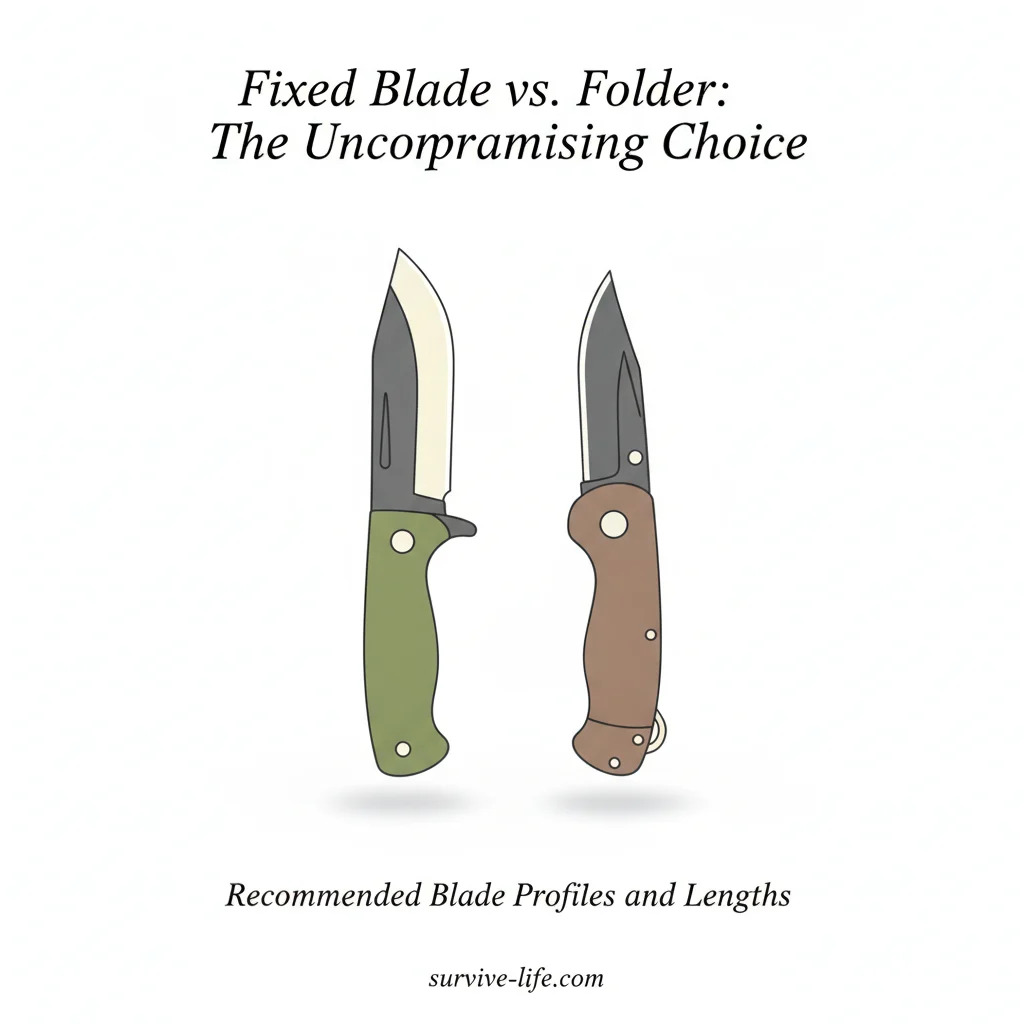
For true survival scenarios, a fixed blade knife stands as the only reliable option. Folding knives, by their very design, introduce inherent failure points that compromise their suitability as a primary survival tool. The hinge mechanism, locking system, and pivot pin are all potential areas for breakage, jamming, or loosening under the harsh conditions of a survival situation. Invest in a high-quality fixed blade knife for your primary survival kit.
Reserve folding knives for everyday carry (EDC) utility tasks, where convenience and compactness outweigh the need for absolute structural integrity. While a folder can be useful for opening packages or light cutting, it cannot endure the same abuse as a fixed blade. When your life depends on your tools, eliminate every possible point of failure. A fixed blade offers unparalleled reliability and strength, making it the superior choice for any serious survivalist.
Fixed blades dominate the survival landscape due to their superior strength and durability. Their monolithic construction, where the blade and tang are a single piece of steel, eliminates the weak points found in folding mechanisms. This design allows for greater force application without fear of the blade collapsing or the lock failing. Furthermore, fixed blades are significantly easier to clean and maintain in the field.
Without intricate moving parts, debris, dirt, or grime cannot accumulate in critical areas, ensuring consistent performance. A fixed blade will not clog with mud or freeze solid in extreme cold, issues that can render a folding knife useless. This simplicity translates directly to reliability when conditions are at their worst. The absence of moving parts also means less wear and tear over time, contributing to a longer service life under demanding use.
Recommended Blade Profiles and Lengths
For optimal versatility and strength, select a drop point or spear point blade profile. These designs offer a strong tip for piercing and fine work, combined with a robust belly for slicing and general utility. Avoid highly specialized blade shapes like tanto or recurve for a primary survival knife, as they often excel in one niche while compromising overall utility.
An optimal blade length for a survival knife ranges from 4 to 6 inches. This length provides an excellent balance of control for detailed tasks and sufficient power for heavier work like batoning or chopping small branches. Blades longer than 6 inches become unwieldy and difficult to control for fine tasks, while shorter blades lack the leverage and reach required for many survival applications. A 5-inch blade often represents the sweet spot for many users.
Consider proven models like the ESEE-4, known for its robust 1095 carbon steel construction and excellent ergonomics. The Benchmade Bushcrafter offers premium S30V stainless steel and a comfortable handle, suitable for those prioritizing corrosion resistance. For a more budget-friendly yet highly capable option, the Mora Garberg provides a full tang carbon steel blade with a durable polymer sheath. These examples represent reliable choices across different price points and material preferences.
Never compromise on the full tang construction of a fixed blade; it is the single most critical factor for ensuring structural integrity under extreme stress. A partial tang will inevitably fail when subjected to the prying, batoning, or impact forces common in survival tasks. This foundational element dictates the knife’s ability to perform when your life depends on it.
Blade Steel and Handle Materials: Durability Under Duress
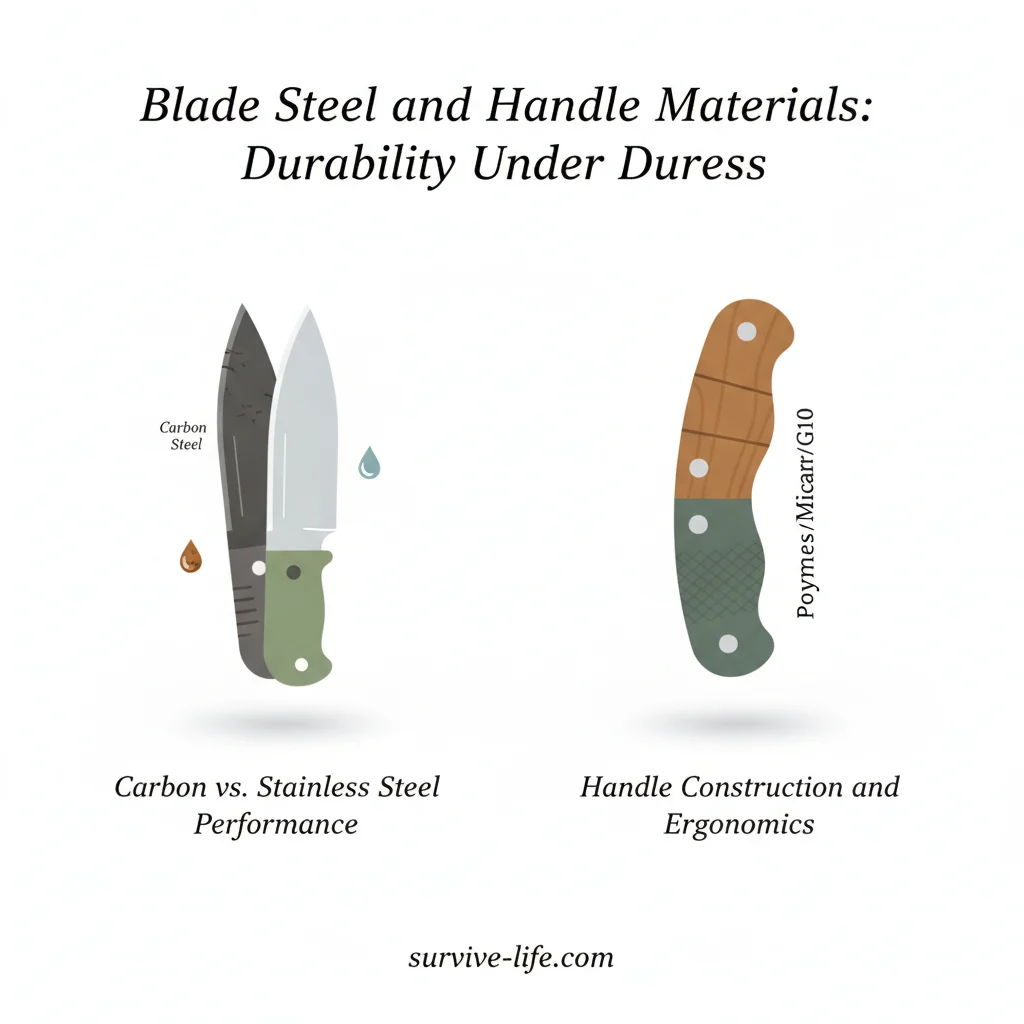
The choice of blade steel dictates the knife’s edge retention, toughness, and corrosion resistance, directly impacting its performance and longevity in the field. Similarly, the handle material significantly affects grip security, comfort during prolonged use, and overall durability. Understanding the trade-offs between different materials is crucial for selecting a knife that will perform reliably under duress. Choose handle materials that offer a secure grip whether wet, dry, or gloved.
Carbon vs. Stainless Steel Performance
Carbon Steel (e.g., 1095, O1): Carbon steels are renowned for their superior toughness and impact resistance, making them less prone to chipping or breaking under heavy use. They are generally easier to sharpen in the field, allowing a keen edge to be restored with basic tools. Carbon steels also tend to hold a very keen working edge. However, they are highly prone to rust and require diligent maintenance, including regular cleaning and oiling, especially in humid or wet environments. Their ability to spark a ferro rod effectively is another advantage.
Stainless Steel (e.g., S30V, 440C): Stainless steels offer excellent corrosion resistance due to their higher chromium content, making them ideal for marine environments or areas with high humidity. They are often harder than carbon steels, which can translate to longer edge retention for fine cutting tasks. However, this increased hardness often makes them more challenging to sharpen in the field without specialized diamond abrasives. Some stainless steels can also be more brittle than carbon steels, increasing the risk of chipping under extreme impact or prying forces. For general survival, a good carbon steel is often preferred for its toughness and ease of field sharpening, provided you commit to its maintenance.
Handle Construction and Ergonomics
Handle materials like Micarta, G10, or textured rubber provide a secure, non-slip grip even when wet, cold, or covered in blood. These materials are durable, resistant to temperature changes, and offer excellent tactile feedback. Avoid smooth, polished handles that can become slippery and dangerous during critical tasks. The handle must facilitate a firm, controlled grip in all conditions.
Full tang construction remains non-negotiable for handle strength. The steel of the blade should extend fully through the handle, often visible as a spine along the back or as scales bolted to the sides. This design prevents the handle from separating from the blade under stress. Ergonomic design is also paramount; the handle should fit comfortably in your hand without creating hot spots or pressure points during prolonged use, such as carving or batoning. Test the grip with and without gloves to ensure versatility.
Always prioritize a handle material that provides a secure, non-slip grip in all conditions, as a lost grip can lead to serious injury or loss of the tool. Textured surfaces like Micarta or G10 offer superior purchase compared to smooth, polished alternatives. This ensures control during demanding tasks.
Field Note: When selecting a knife, pay attention to the pommel. A robust, exposed full tang pommel can serve as an effective hammer or striking tool for breaking glass or light pounding tasks. Ensure it is not merely a decorative cap.
Sheath Systems and Carry Methods: Secure Access When It Counts
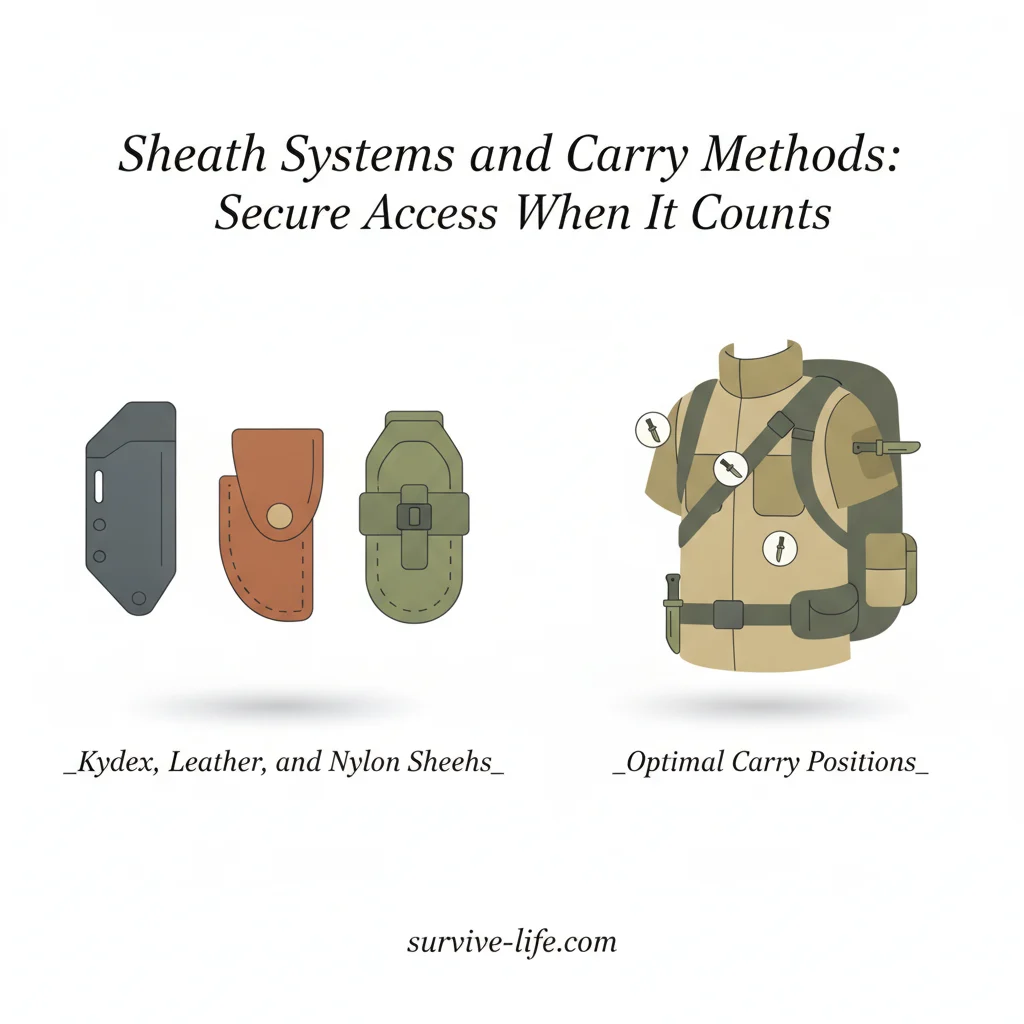
A knife is only useful if it is securely carried and readily accessible when needed. The sheath system is as critical as the blade itself, acting as the protective housing and primary interface for deployment. Prioritize retention, durability, and versatile carry options when evaluating a sheath. A poorly designed sheath can lead to loss of the knife or, worse, accidental injury.
Kydex, Leather, and Nylon Sheaths
Kydex: Kydex sheaths offer excellent retention, often with an audible click when the knife is seated correctly. They are highly weather-resistant, impervious to moisture, and extremely durable, resisting abrasion and impact. Kydex sheaths frequently feature multiple mounting points, allowing for various carry configurations and attachment to MOLLE systems or custom rigs. Their rigid construction protects the blade and prevents accidental punctures.
Leather: Traditional leather sheaths are quiet, comfortable against the body, and develop a unique patina over time. They offer good blade protection and can be aesthetically pleasing. However, leather requires maintenance to prevent drying, cracking, or mildew, especially in wet environments. It is less weather-resistant than Kydex and can absorb moisture, potentially leading to rust on carbon steel blades if not properly dried. Retention can also degrade over time as the leather softens.
Nylon: Nylon sheaths are often lighter and more flexible, but can be less rigid and potentially noisy during movement. Look for reinforced designs that incorporate internal plastic liners to prevent the blade from cutting through the fabric. Ensure the retention strap is robust and positioned to secure the knife effectively. Many nylon sheaths offer modular attachment options, similar to Kydex, but their overall durability and retention may be inferior to a well-made Kydex or thick leather sheath.
Optimal Carry Positions
Strong-side hip carry remains a popular choice for quick, intuitive draw. This position keeps the knife readily accessible and generally out of the way during movement. Scout carry, which involves carrying the knife horizontally on the back, offers excellent comfort when wearing a backpack or sitting for extended periods. It keeps the knife clear of hip belts and other gear, but can be slower to draw.
Neck carry is suitable for smaller, lighter blades, offering discreet and immediate access. However, ensure the retention system is exceptionally secure to prevent the knife from falling out, and use a break-away chain or cord for safety. Regardless of the chosen position, practice drawing and re-sheathing your knife until it becomes second nature. This muscle memory is vital for rapid deployment under stress. Ensure the sheath allows for one-handed re-sheathing without looking.
Always ensure your sheath provides positive retention, preventing the knife from falling out during strenuous activity or inversion. A knife that is easily lost is useless in a survival situation. Test the retention by shaking the sheathed knife vigorously upside down.
Field Note: When selecting a Kydex sheath, check for drainage holes at the bottom. These prevent water and debris from accumulating inside, which can lead to rust or dulling of the blade edge over time.
Field Maintenance and Sharpening: Keeping Your Edge
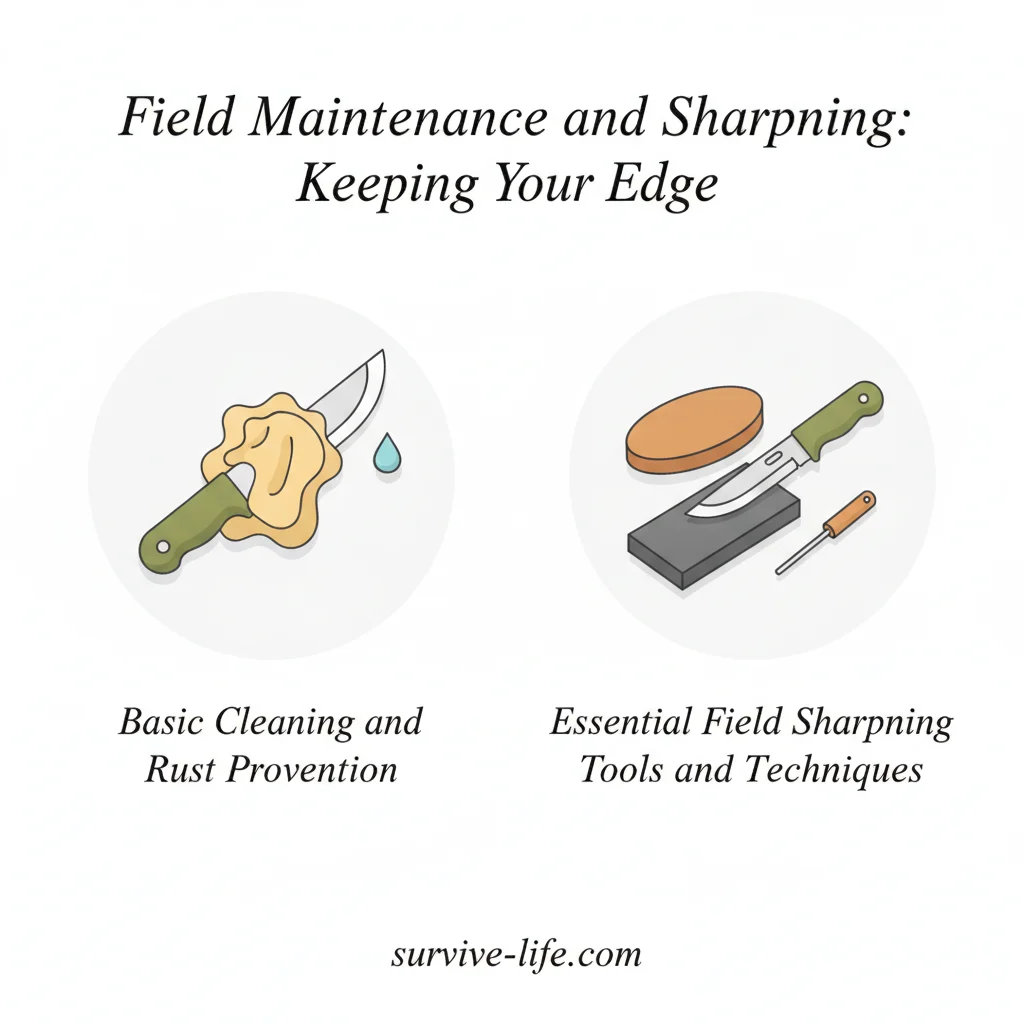
A dull knife is a dangerous knife, requiring more force to cut and increasing the risk of slippage and injury. Proper field maintenance extends the life of your tool and ensures its readiness for any task. Commit to regular cleaning and learn basic field sharpening techniques to keep your edge keen. A well-maintained knife is a reliable partner in survival.
Basic Cleaning and Rust Prevention
Wipe down your blade after every use, removing any moisture, sap, blood, or debris. This simple step prevents corrosion and keeps the blade clean for food preparation. For carbon steel blades, apply a thin coat of oil (mineral oil, gun oil, or even cooking oil in a pinch) to the blade surface, especially in humid environments or after exposure to moisture. This creates a protective barrier against rust. Clean handle scales regularly to prevent debris buildup, which can compromise grip or harbor bacteria. Use a small brush or cloth to remove dirt from textured surfaces.
Essential Field Sharpening Tools and Techniques
Carry compact, effective sharpening tools. A small diamond stone, a ceramic rod, or a leather strop with compound are excellent choices for field use. Diamond stones offer aggressive material removal and can sharpen any steel type. Ceramic rods refine the edge, while a strop polishes it to razor sharpness. For general field use, a sharpening grit range of 600 to 1000 is recommended for achieving a robust working edge that balances sharpness and durability. This range allows for efficient material removal and a good cutting edge without requiring excessive time or effort.
When sharpening, maintain a consistent angle against the abrasive surface. This is the most critical aspect of achieving a sharp edge. Use light pressure, allowing the abrasive to do the work. Focus on forming a burr along the opposite side of the edge. Once a burr is present along the entire length of one side, switch to the other side and repeat the process. Finally, remove the burr by alternating light strokes on each side or by stropping. Practice sharpening on a non-critical blade until you can consistently achieve a working edge. This skill is fundamental for long-term knife utility.
Always clean and oil your carbon steel blade immediately after use, especially in wet conditions, to prevent rust and maintain its integrity. Neglecting this simple step can lead to irreversible damage and compromise the blade’s performance. Rust can quickly pit and weaken the steel.
Field Note: When sharpening in the field, use a stable surface. If no workbench is available, brace the sharpening stone against your knee or a log. This stability helps maintain a consistent angle, which is crucial for effective sharpening.
Your Life, Your Blade
Choosing a survival knife is a critical decision that demands careful consideration of materials, construction, and intended use. Do not compromise on quality or functionality. Your knife is a primary tool for survival; select it with the gravity it deserves. A well-chosen and maintained knife will serve as a reliable extension of your will to survive, providing the capability to overcome challenges in any environment. Prioritize durability, versatility, and ease of maintenance to ensure your blade performs when it matters most.