
Hey there! Let’s chat about something super important: earthquakes. Earthquake preparedness isn’t just a fancy term; it’s about getting ready for when the ground shakes, knowing what to do when it happens, and figuring things out once it stops. It’s all about keeping you and your loved ones safe. This guide helps you understand these crucial steps.
Think about a family in California. They have an emergency kit with water and food. They also know where to meet outside their house if a quake hits. That’s being ready before the shaking. In Japan, a person quickly drops, covers, and holds on under a strong table when the ground starts to move. That’s acting right during the shaking. After a big quake in Turkey, people check on neighbors and turn off gas lines to prevent more danger. That’s what you do after the shaking stops.
Do you know what to do if the ground starts shaking right now? Is your home ready for a big earthquake? What will you do after the shaking stops and power is out? These questions are important for your safety.
Earthquake preparedness is a simple plan to protect yourself and others. It means preparing your home, acting correctly during the quake, and staying safe afterward. It helps you face the unexpected with confidence. Let’s dive in, shall we?
What is Earthquake Preparedness?
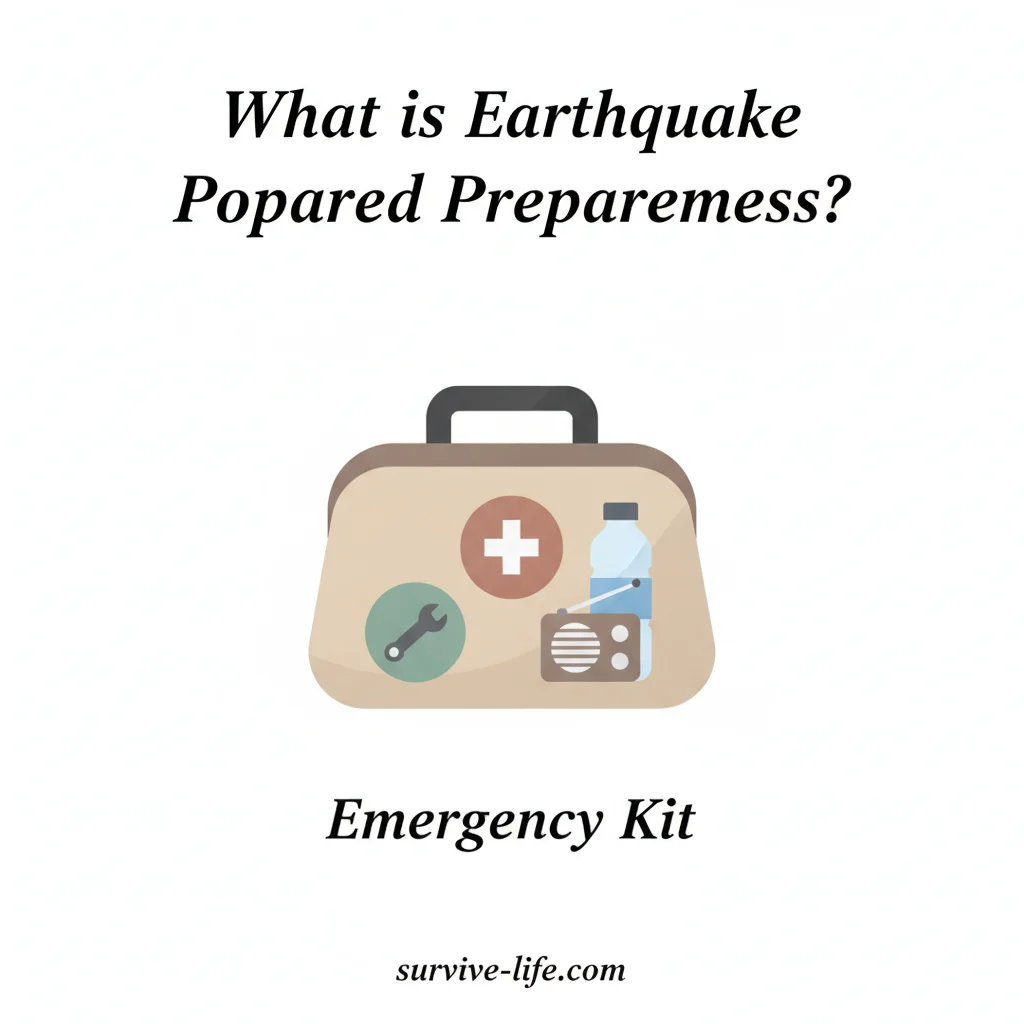
So, what exactly is earthquake preparedness? Well, it’s about making smart plans and taking practical steps to keep yourself safe from earthquakes. It means you’re getting ready for that moment when the ground decides to shake. This includes getting your home all set up, knowing what to do when the ground rumbles, and knowing your next moves once it stops. Think of it as your personal shield, a way to protect yourself, your family, and your belongings. When you’re prepared, you’ve got a much better shot at staying safe and bouncing back faster. It’s not about living in fear; it’s about being smart and ready for something that can happen in the blink of an eye. You learn the ropes so you can act quickly and clearly, facing the event with less worry and more control.
Being ready for an earthquake matters a lot because these things can pop up out of nowhere, without any heads-up. You can’t predict when or where they’ll hit. That’s why being prepared can literally save lives and prevent so many injuries. Plus, it helps you deal with problems like no power, no water, or impassable roads. If you’ve got your food, water, and a first-aid kit ready, you can take care of yourself and your family for a few days without waiting for outside help. That’s a huge relief! Being prepared gives you peace of mind. It means you’ve thought about what might happen and have a solid plan. This plan helps you stay calm and make good choices, even when things feel chaotic. It’s vital for living where earthquakes are a possibility.
Before the Shaking: Getting Ready
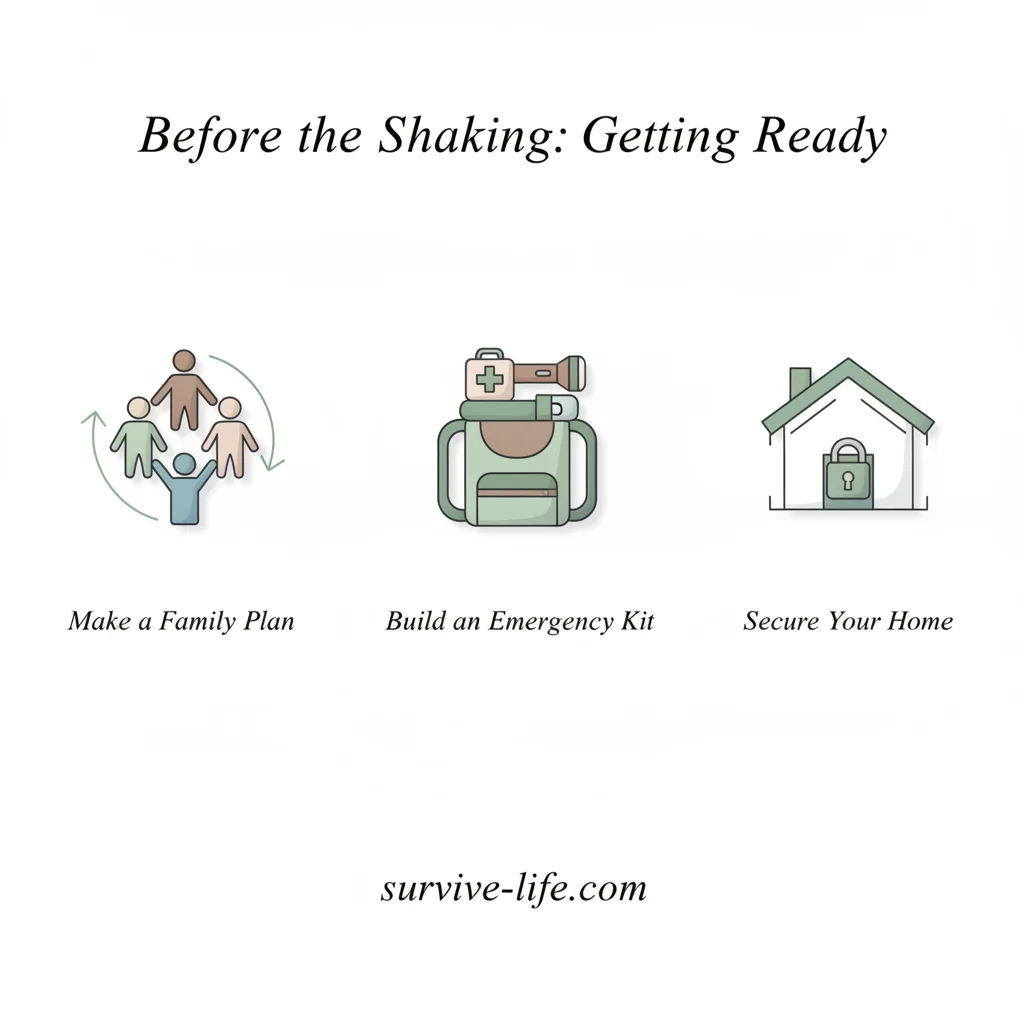
Alright, let’s talk about the ‘before’ part – getting ready before an earthquake even thinks about happening. This is the most important step you can take to protect yourself and your family. You’ll want to make a solid plan, put together an emergency kit, and make your home safer. These steps might seem simple, but they make a world of difference.
Make a Family Plan
First, sit down with your family and chat about what everyone should do. Decide on a specific spot outside your home where you’ll all meet up if separated. Pick a contact person who lives far away; everyone should know their number. If local phones are jammed, you can still reach someone. And here’s a critical one: know how to turn off the gas, water, and electricity in your home. This can stop fires or water damage. Practice these steps so everyone knows what to do quickly. Knowing your plan helps everyone stay calm and act fast.
Build an Emergency Kit
Next, your emergency kit! You’ll want a kit packed with enough essentials for at least three days. This kit needs water – one gallon per person, per day. Grab non-perishable food for three days. A first-aid kit is a must, along with any special medicines. Don’t forget a flashlight with extra batteries, a whistle, and a dust mask. A wrench or pliers can help turn off utilities. Tuck in local maps, some cash, and copies of important documents in a waterproof bag. Store this kit in a spot you can grab easily.
Secure Your Home
Finally, let’s make your home safer! Secure things that could fall and cause harm. Bolt tall furniture like bookcases and cabinets to the walls. Hang heavy items, like pictures or mirrors, away from beds and sofas. Store heavy items on lower shelves. And if you notice any cracks in your ceilings or foundation, get those fixed. These small steps can prevent injuries and damage. Taking a little time now means you’re a whole lot safer later.
During the Shaking: What to Do
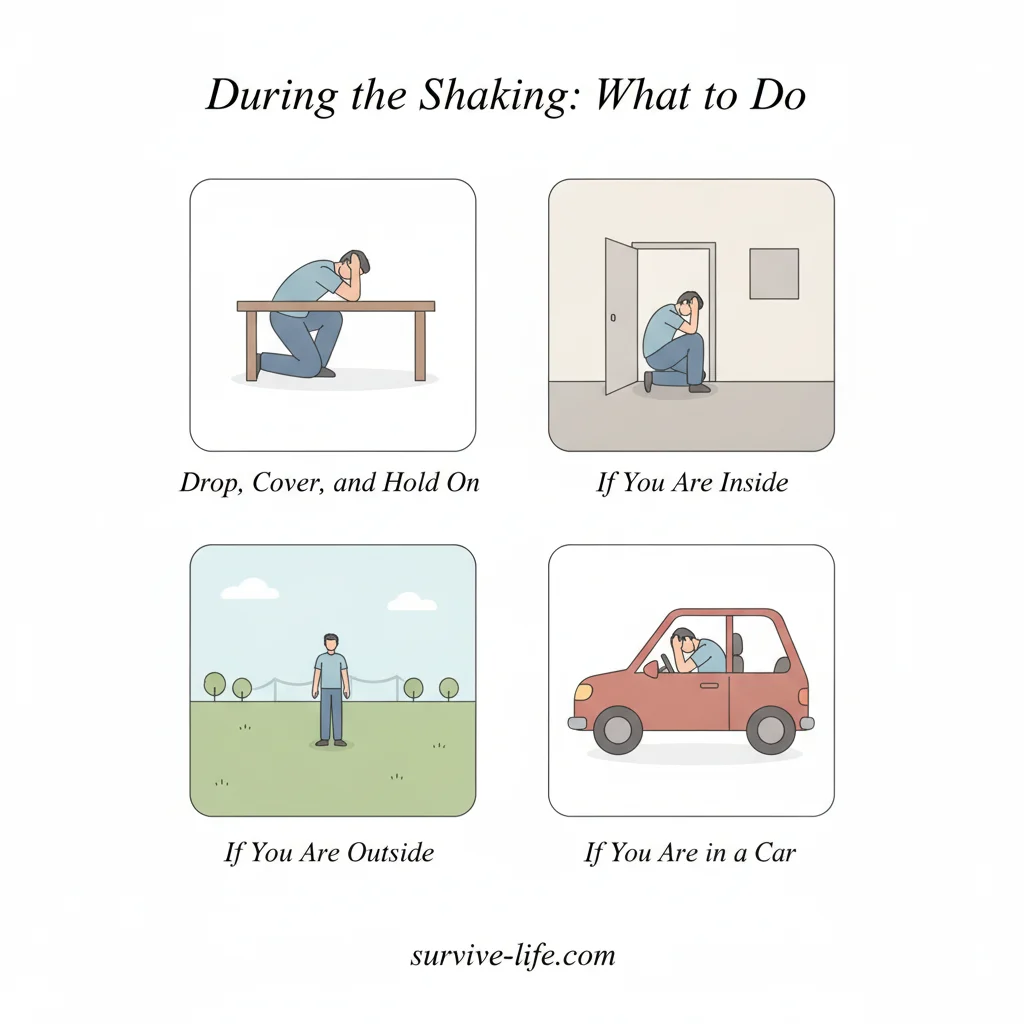
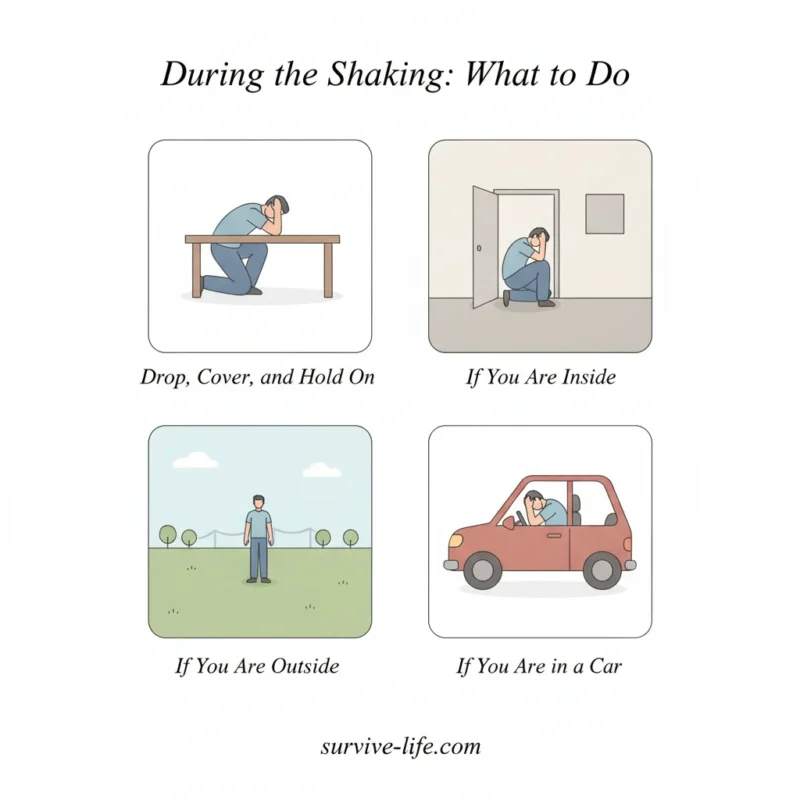
Okay, so the ground has started to shake. It’s happening! When an earthquake begins, things get intense, fast. Your immediate reaction is key. The most important rule is “Drop, Cover, and Hold On.” Knowing what to do, no matter where you are, will keep you safer. Try not to panic; take a deep breath and follow these simple steps.
Drop, Cover, and Hold On
This is the gold standard for protecting yourself during an earthquake.
- Drop: Get down on your hands and knees right away. This stops you from being knocked off your feet.
- Cover: Get under a sturdy table or desk. If there’s no strong furniture, quickly move next to an inside wall and cover your head and neck with your arms. This protects you from falling objects.
- Hold On: Once under shelter, hold onto it tightly. Stay there until the shaking stops. If your shelter moves, try to move with it.
If You Are Inside
If you’re inside when shaking starts, stay inside. Don’t try to run outside; it’s dangerous due to falling debris. Stay clear of windows, glass, and outside walls. If in bed, stay there, cover your head with a pillow. If in a wheelchair, lock wheels and cover your head and neck. Always try to get under something strong or next to an inside wall.
If You Are Outside
If you’re outside when the earthquake hits, move to an open area. Get away from buildings, tall trees, streetlights, and power lines. These are all potential hazards. Once in an open space, drop to the ground and stay put until shaking stops. Protect your head and neck with your arms. Don’t go back inside until shaking is completely over and safe.
If You Are in a Car
Driving when an earthquake hits can be unnerving. If behind the wheel, pull over to a clear spot as soon as safe. Stop the car. Stay inside until shaking stops; your car offers some protection. Avoid stopping near bridges, overpasses, tunnels, or power lines, as these could collapse. Once shaking stops, drive very carefully. Watch for cracks, fallen objects, and emergency vehicles. Traffic lights might not be working.
After the Shaking Stops: Next Steps
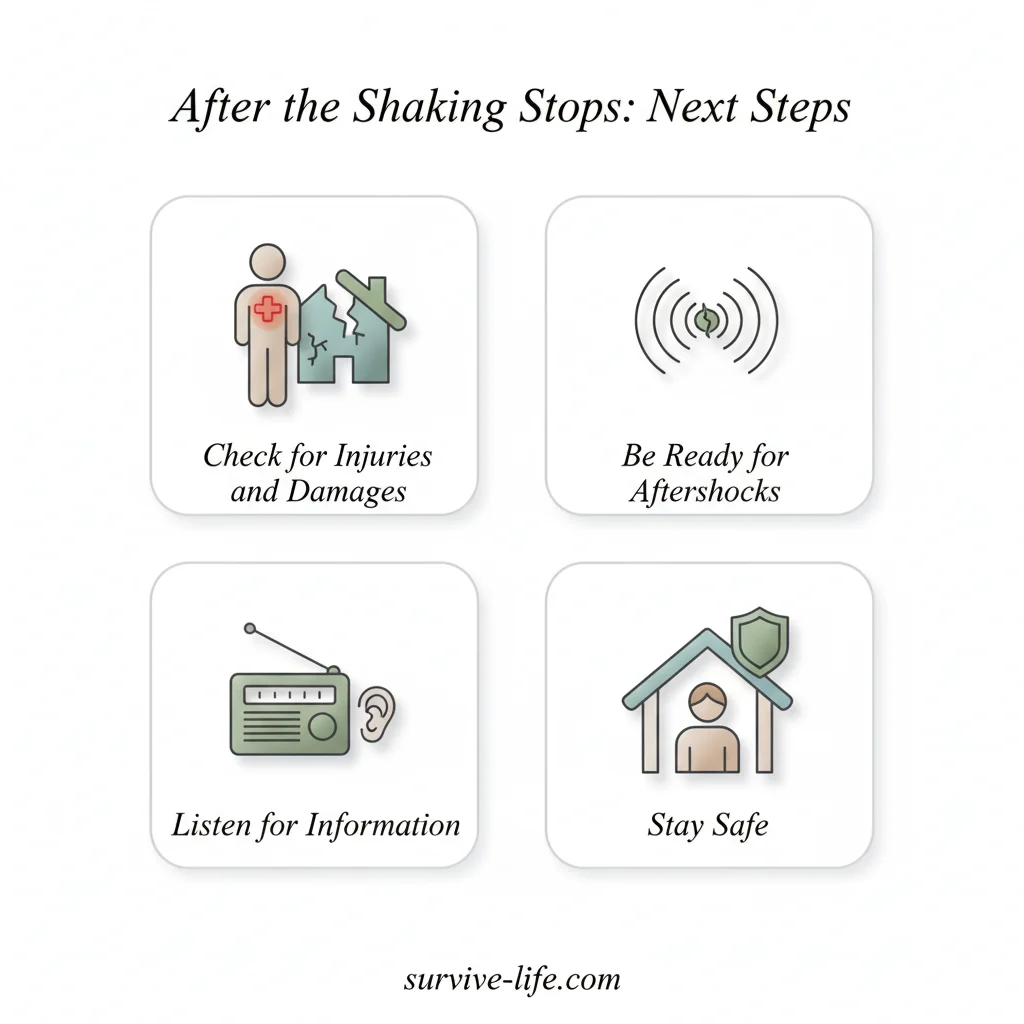
Whew! The ground has finally stopped shaking. But hold on, the danger isn’t quite over yet. You’ve still got important steps to take to stay safe and help others. Try to stay calm and think clearly. Your actions right after an earthquake are super important for your safety and recovery.
Check for Injuries and Damages
First, check yourself and anyone nearby for injuries. Give first aid if someone’s hurt. Don’t move seriously injured people unless in immediate danger. Then, look for dangers in your home. Check for fires, gas leaks (smell gas or hear a hiss), or damaged electrical wires. If you smell gas, and it’s safe, turn off the main gas valve. Open windows and leave the building right away. Do not use matches or lighters. If power lines are down, stay far away. Report serious dangers to emergency services if you can.
Be Ready for Aftershocks
Aftershocks are smaller earthquakes that can happen minutes, hours, or even days later. They can cause more damage to weakened buildings and make things fall. Stay alert and be ready to “Drop, Cover, and Hold On” again. Don’t go into damaged buildings; aftershocks could make them collapse. Always assume more shaking might come.
Listen for Information
Turn on a battery-powered radio for emergency news and instructions. Official information will tell you what areas are safe, where to get help, and what to do next. Don’t use your phone unless it’s an emergency; phone lines might be busy. Use text messages if possible, as they often work better than calls when networks are overloaded.
Stay Safe
Wear sturdy shoes to protect your feet from broken glass and debris. Do not enter damaged buildings; they might not be safe. Stay away from beaches and coastal areas. Big earthquakes can cause tsunamis, which are giant ocean waves. If you’re near the coast and feel a strong quake, or hear a tsunami warning, move to higher ground immediately. Do not use elevators. Use stairs if you need to leave a building. Be patient and help your neighbors if you can, but always put your safety first.
Conclusion
So, there you have it. Being ready for an earthquake is truly important for everyone. It means taking thoughtful steps to prepare your home and family before the shaking starts. It means knowing exactly what to do to protect yourself during the earthquake itself. And it means taking the right, smart actions to stay safe and recover after the shaking finally stops. Every part of this plan works together to keep you and your loved ones secure.
Your actions can make a huge difference in how safe you are when an earthquake hits. Please, don’t wait for an earthquake to happen. Take these steps now to protect yourself and everyone you care about. Be prepared, be safe, and let’s help our communities be ready too. You’ve got this!