
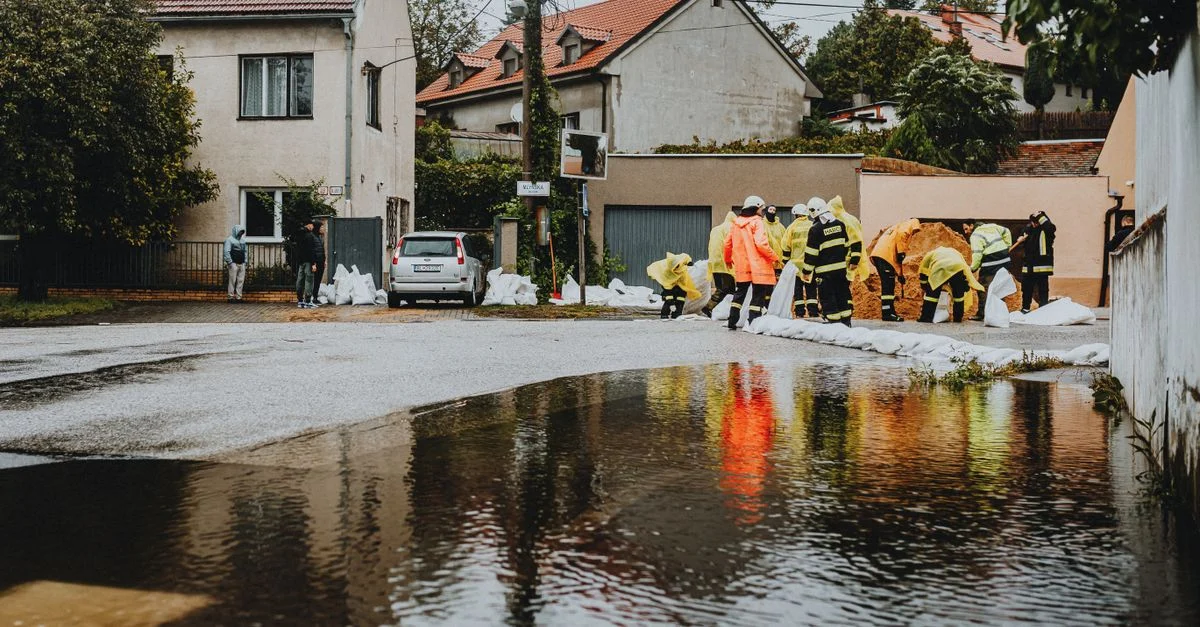
Living in the city, life moves at a million miles an hour, doesn’t it? We’re all rushing from one thing to the next, caught up in the daily grind. But have you ever stopped to think about what happens if that fast-paced rhythm suddenly grinds to a halt? What if the power goes out for days, or a massive storm hits, turning your familiar streets into something unrecognizable? It’s a scary thought, for sure, but it’s also why we need to chat about an “Urban Survival Guide: How to Prepare for Emergencies in the City.”
This isn’t about being a doomsday prepper, not at all. It’s simply about being smart, knowing what to do, and having what you need when normal life takes an unexpected pause. It’s about making sure you and your family stay safe, comfortable, and in control, even when everything around you feels chaotic.
Think back to Hurricane Sandy hitting New York City. So many people lost power, water, and heat for what felt like an eternity. Stores were shut tight, roads were blocked, and getting around was a nightmare. Or cast your mind to the big blackout in the Northeast back in 2003. Millions were plunged into darkness, and folks had to walk home for hours, sometimes miles, just to get back to their loved ones. These aren’t just stories; they’re real-life reminders that even in our bustling, modern cities, we can find ourselves completely on our own.
Let’s get real for a second: Do you know where you’d get clean water if your taps suddenly stopped working? What if your phone dies and there’s absolutely no signal? How would you feed your family if all the shops were closed and the ATMs were just big, silent boxes? These are the kinds of questions that can keep you up at night, but they don’t have to.
An Urban Survival Guide helps you answer these questions, giving you peace of mind. It teaches you simple, practical steps to prepare for those unexpected problems right here in your city home. It’s about being prepared, being smart, and definitely not about being scared. So, grab a coffee, and let’s dive in!
What is Urban Survival and Why Does it Matter?
Okay, so what exactly do we mean by “urban survival”? Simply put, it means being ready for the bad stuff that can happen when you’re living in a city. It’s about having the right tools, the right knowledge, and a solid plan to keep yourself and your loved ones safe when those everyday services we rely on – like electricity, water, or public transport – suddenly stop working. This could be because of natural disasters, you know, like those big floods, crazy storms, or even an earthquake. But it also covers other problems, like widespread power outages, burst water pipes that affect whole neighborhoods, or even large-scale accidents that just throw a wrench into daily life.
The goal here isn’t to pack up and leave the city. Nope! It’s about making sure you can live through those tough times right where you are, using what you have and what you know. It’s about being self-reliant for a short while, just until help arrives or those essential services come back online. Think of it as your personal city resilience plan.
Being ready for city emergencies matters a heck of a lot because cities are incredibly complex places. Everything is connected, like a giant, intricate web. When one part breaks, it can cause a domino effect, and suddenly, many other parts start to crumble too. Picture this: if the power goes out, traffic lights stop working, water pumps might fail, and your heating or cooling systems shut down. Stores can’t open their doors, ATMs become useless, meaning you can’t get cash. Public transport might stop dead, making it super hard to move around. You might not even be able to call for help right away if cell towers are down or overloaded.
Having a plan and some basic supplies means you’re not just sitting there, waiting for someone else to save you. It gives you control, helps you make smart choices, and brings a huge sense of peace of mind when things around you are chaotic and uncertain. It helps you protect your family and yourself from those common city risks that we often just ignore because, well, life’s usually pretty smooth, right? But when it’s not, you’ll be glad you took the time to prepare.
Building Your City Emergency Kit
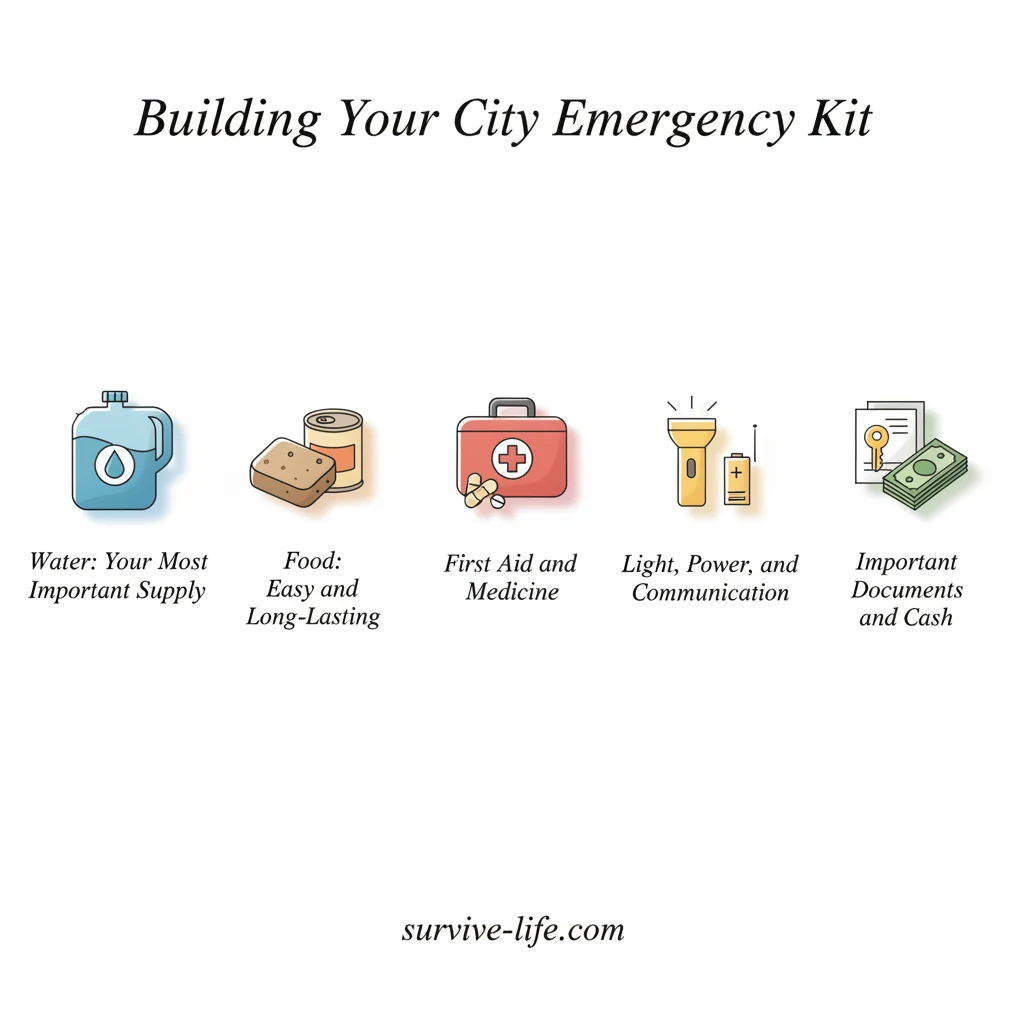
Alright, let’s talk about the heart of your urban survival strategy: your emergency kit. Think of this as your go-bag, your peace-of-mind box, your “I’ve got this” stash. It doesn’t have to be fancy, just practical.
Water: Your Most Important Supply
Let’s be real, you need clean water for drinking and for basic cleaning. It’s non-negotiable. The golden rule? Store at least one gallon of water per person per day. And for how long? Plan for three days minimum, but honestly, more is always better. Keep bottled water in a cool, dark place – like a closet or under the bed. You can also get water filters or purification tablets. These are lifesavers because they help make unsafe water safe to drink if you run out of your stored supply. Think about how much water you use daily for drinking, cooking, and washing. Double that amount for emergencies. It’s a heck of a lot, but trust me, you’ll thank yourself later.
Food: Easy and Long-Lasting
Next up, food! You’ll want to keep food that doesn’t need cooking or refrigeration. Canned goods like beans, vegetables, and fruit are fantastic choices. Energy bars, dried fruit, nuts, and peanut butter are also super smart. Oh, and this is crucial: make sure you have a manual can opener! Imagine trying to open a can of beans with a butter knife – not fun! Store enough food for at least three days for everyone in your home. And here’s a pro tip: check expiration dates often and replace old items. Choose foods your family actually likes to eat; it’ll make a stressful time a little bit easier.
First Aid and Medicine
A basic first aid kit is an absolute must. It should have bandages, antiseptic wipes, pain relievers, and any personal medicines you or your family need daily. This is super important: make sure you have a supply of prescription medicines for at least a week, maybe even more. Keep a list of all medicines and their doses written down. Also, don’t forget things like hand sanitizer, wet wipes, and garbage bags for hygiene. When water is scarce, these become invaluable.
Light, Power, and Communication
When the lights go out, you’ll want flashlights with extra batteries – they’re much safer than candles, which can be a fire hazard. A hand-crank or solar-powered radio is a game-changer; it helps you get news and emergency updates when the power is out. A portable power bank for your phone is also incredibly useful for those quick charges. And here’s a simple but vital tip: keep important phone numbers written down on paper, not just in your phone. A whistle can also be a simple but effective way to signal for help if you’re in trouble.
Important Documents and Cash
Last but not least for your kit: important papers and cash. Keep copies of important documents like your ID, insurance policies, and birth certificates in a waterproof bag. You don’t want these getting ruined! And have some small cash on hand. ATMs might not work, and stores might not be able to take cards during a power outage. Small bills are always best; you don’t want to be trying to pay for a bottle of water with a hundred-dollar bill.
Making a Plan for City Emergencies
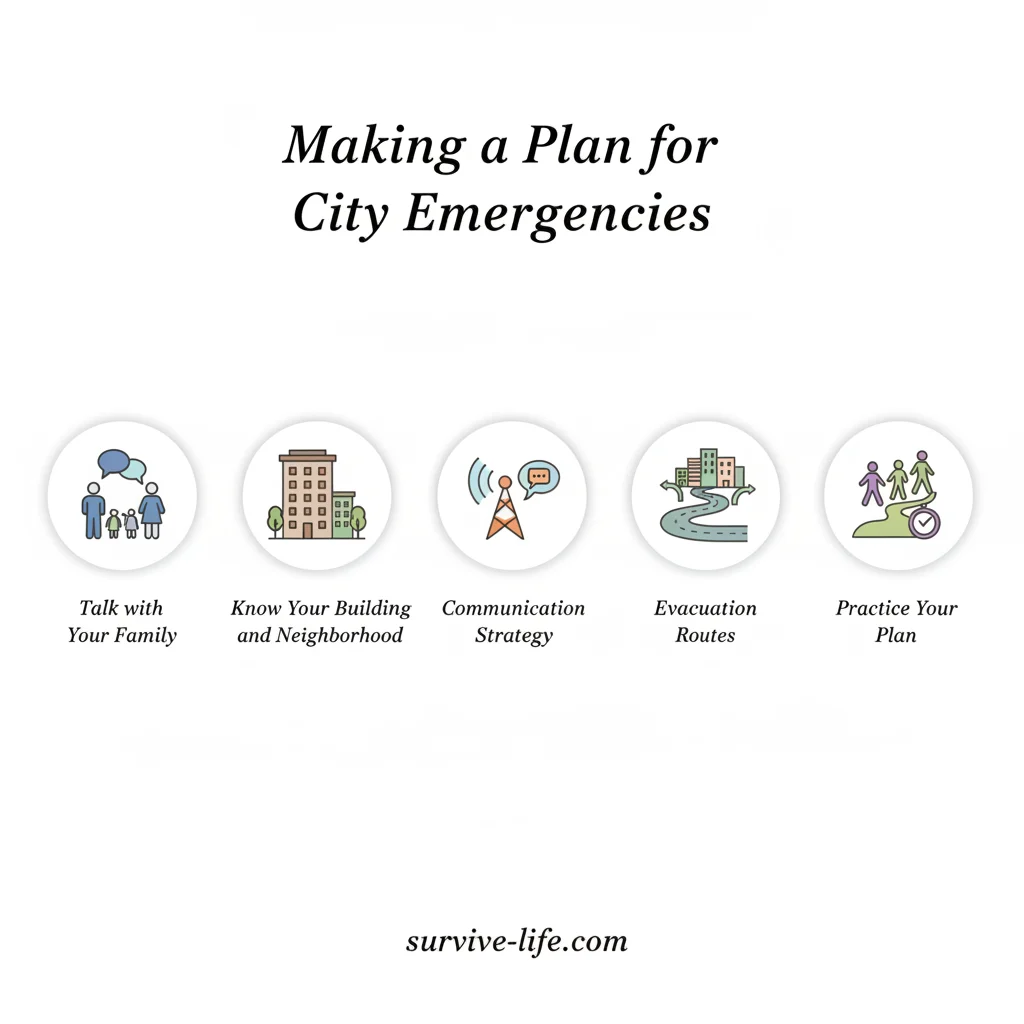
Having a kit is great, but a kit without a plan is like having a map but no idea where you’re going. Let’s get your family plan sorted.
Talk with Your Family
This is step one, and it’s super important. Sit down with everyone in your home – kids included! Talk about what you’ll do if an emergency happens. Where will you meet if you’re not together when something goes down? What if you’re at work or school? Pick two meeting places: one close to home for small problems, and one further away if you need to leave your neighborhood entirely. Make sure everyone knows these spots by heart. It’s not about scaring the kids; it’s about empowering them with knowledge.
Know Your Building and Neighborhood
Being a local expert on your own turf is a superpower. Find out where the emergency exits are in your apartment building or home. Know where the main water shut-off valve is, and how to turn off gas or electricity if needed. This knowledge can prevent bigger problems. Also, learn about your neighborhood’s specific risks. Is it prone to flooding? Are there safe places nearby, like a community center or a higher ground? Knowing these things helps you act fast and smart.
Communication Strategy
Decide how you’ll contact each other if phones don’t work. Text messages often go through when calls don’t, so try that first. Have an out-of-state contact person everyone can call to check in. This person can be a central point for family updates, especially if local lines are jammed. And again, write down those important phone numbers on paper – a dead phone is useless for contacts.
Evacuation Routes
Sometimes, you might need to leave your home. It’s a tough thought, but it’s better to be prepared. Plan different ways to get out of your neighborhood and city. Think about walking routes if roads are blocked or public transport is down. Keep a physical map of your area, not just relying on your phone’s GPS – because what if your phone’s just a fancy brick? Know where official shelters might be located, too.
Practice Your Plan
Just like fire drills at school, practice your emergency plan! Walk to your meeting spots. Check your emergency kit to make sure everything is there and not expired. The more you practice, the more natural it will feel when a real emergency happens. This makes you calmer, more effective, and less likely to panic. It builds muscle memory for safety.
Staying Safe and Connected in a Crisis
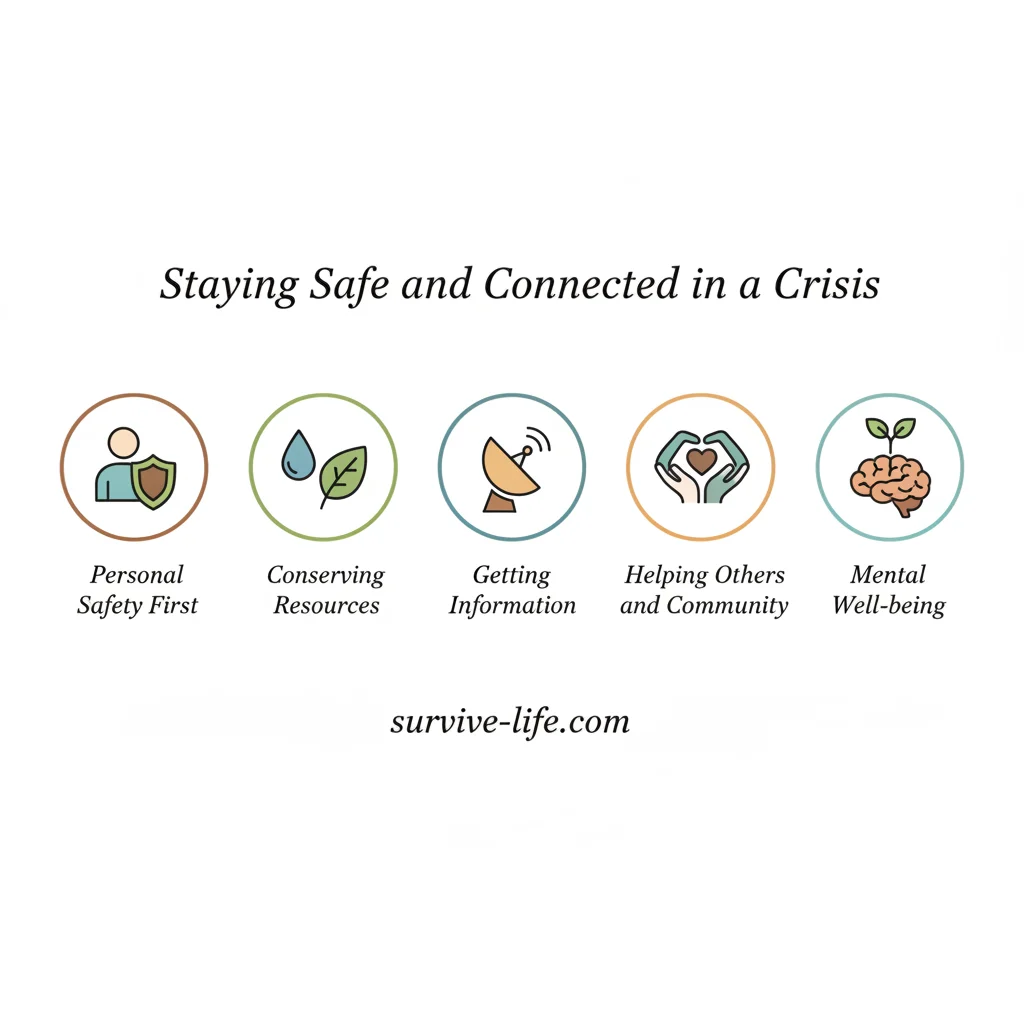
When an emergency hits, it’s not just about having stuff; it’s about how you act and think. Let’s talk about staying safe and connected.
Personal Safety First
In an emergency, your safety is always the top priority. Stay calm and try to think clearly. If you need to leave your home, tell someone where you are going if possible. Avoid dangerous areas – trust your instincts. If something feels wrong, it probably is. Keep a small personal alarm or whistle with you; it’s a simple tool that can make a big difference if you need to draw attention.
Conserving Resources
When services are down, every drop, every byte, every gallon counts. Make your supplies last! Use water carefully, primarily for drinking. Eat food that doesn’t need cooking to save fuel. Turn off lights and unplug electronics to save battery life on your devices. If you have a car, try to keep the gas tank at least half full. This helps if you need to leave quickly or even use it for charging small devices in a pinch.
Getting Information
Remember that hand-crank or battery-powered radio? It’s your lifeline for getting news and emergency updates. Local radio stations often share crucial information. If your phone works, use it for short texts rather than calls to save battery. Check official city or emergency service websites if you happen to have internet access. And please, please, please: do not spread rumors; only trust official sources. Misinformation can be just as dangerous as the emergency itself.
Helping Others and Community
We’re all in this together, right? Check on your neighbors, especially older people or those who live alone. A strong community is a safe community. Share information and resources if you can, but always make sure your own family is safe first. Working together makes everyone stronger and more resilient during tough times. A friendly face and a helping hand can make all the difference.
Mental Well-being
Emergencies can be incredibly stressful, and it’s okay to feel that way. Try to keep a routine as much as possible. Read a book, play a game, or just talk with your family. Staying positive and calm helps you make better decisions. Remember that the emergency will pass, and things will eventually get back to normal. Focus on what you can control, and don’t let fear take over.
Conclusion
So, there you have it. Getting ready for city emergencies isn’t about living in fear or imagining the worst-case scenario every day. It’s about being smart, being proactive, and taking simple, practical steps to protect yourself and your loved ones. We’ve talked about building a good emergency kit, making a clear family plan, and staying safe and informed when things go wrong.
Don’t wait for a crisis to hit. Start today. Even small steps make a big difference. Maybe you’ll check your water supply, or finally sit down to talk with your family about a meeting spot, or just find out where your building’s emergency exits are. Being prepared gives you peace of mind and helps you protect yourself and those you care about most. Your city survival guide starts now. You’ve got this!