
Life can hit you hard, can’t it? Sometimes, you need to make big choices when everything feels wrong. Your heart beats fast. Your mind races. This is stress, and making good choices then is very, very hard. But guess what? There’s a way. It’s called the Decision Making Under Stress: A Survivors Framework. This framework helps you think clear when things are tough. It’s like a simple map for your mind, guiding you through the fog.
Think of a time when a parent had to act fast because their child was in danger. They didn’t have time to think long. They just acted. Or a person in a sudden car crash. They had to decide in a second what to do. These are real-life moments where people used a quick way to decide, even if they didn’t know it. They used a survivor’s way of thinking. How do you make smart choices when fear takes over? How do you keep calm when the world is shaking around you? Can you train your mind for these hard times? Yes, you absolutely can. The Survivors Framework is a simple guide. It helps you make the best choice when stress is high. It helps you act, not freeze.
What is Decision Making Under Stress A Survivors Framework?
The Decision Making Under Stress: A Survivors Framework is a clear, easy-to-follow method for making choices when you’re under a lot of pressure. It’s a mental tool designed to help you think straight when your body and mind are reacting to danger or high stress. This framework isn’t about being fearless; it’s about being effective. When stress hits, your brain can get foggy. You might feel panic or confusion. This framework helps you cut through that fog. It gives you a few simple steps to follow, so you don’t freeze or make a quick, bad choice. It helps you focus on what truly matters in that moment, guiding you to a better outcome. The core idea is to make complex, scary situations feel more manageable by giving you a structured way to think. It helps you move from a state of reaction to a state of thoughtful action, even if that action must be very fast.
This framework works by simplifying the complex process of decision-making during a crisis. It helps you move past the initial shock or fear. Instead of letting stress control you, you use this framework to take back some control. It teaches you to quickly size up a situation, understand what resources you have, and then choose the most helpful action. It’s built on the idea that even in chaos, you can find a path forward. The framework helps you prioritize. It makes you ask, “What is the most important thing right now?” By doing this, you can avoid getting overwhelmed. It’s a practical guide for anyone who needs to act wisely when time is short and the stakes are high. It helps you respond with purpose, not just reaction. It helps you see the next small step you can take, rather than getting lost in the big picture of the problem. This makes the whole process less scary and more doable, even when your heart is pounding.
Why is This Framework Important for You?
When you’re under stress, your body changes. Your heart beats faster. Your breath gets short. Your mind might feel like it’s running in circles. This is your body’s natural way to get ready for danger. But sometimes, this natural reaction can make it harder to think clearly. It can make you freeze or make a bad choice without thinking. This is why the Survivors Framework is so important for you. It gives you a way to work with your body’s stress response, not against it. It helps you use that energy to make smart choices, not just react in fear.
It Helps You Stay Calm
One big reason this framework matters is that it helps you stay calmer. When you have a clear plan, even a simple one, your mind feels more secure. You know what to do next. This reduces the feeling of being lost or helpless. When you feel calmer, you can see things more clearly. You can notice details you might miss if you were just panicking. This calmness isn’t about not feeling fear; it’s about managing that fear so it doesn’t stop you from acting. It gives you a mental anchor in a storm.
It Helps You Make Better Choices
Without a framework, you might just react. You might do the first thing that comes to mind, even if it’s not the best thing. The Survivors Framework makes you pause, even for a second. It makes you quickly look at your options. This small pause can make a big difference. It helps you pick the choice that has the best chance of keeping you safe or solving the problem. It helps you think about the results of your actions before you take them. This means you’re more likely to make a choice that truly helps you, not one that makes things worse.
It Builds Your Confidence
Knowing you have a tool to use in tough times gives you confidence. You know that if stress hits, you’re not helpless. You have a method. This confidence can help you face challenges head-on. It makes you feel more ready for whatever comes your way. The more you understand and practice this framework, the stronger your ability to handle stress becomes. It’s like building a muscle for your mind. This confidence isn’t just for big emergencies. It helps you in everyday stressful moments too, making you a stronger person overall.
How to Use the Survivors Framework: Step-by-Step Guide
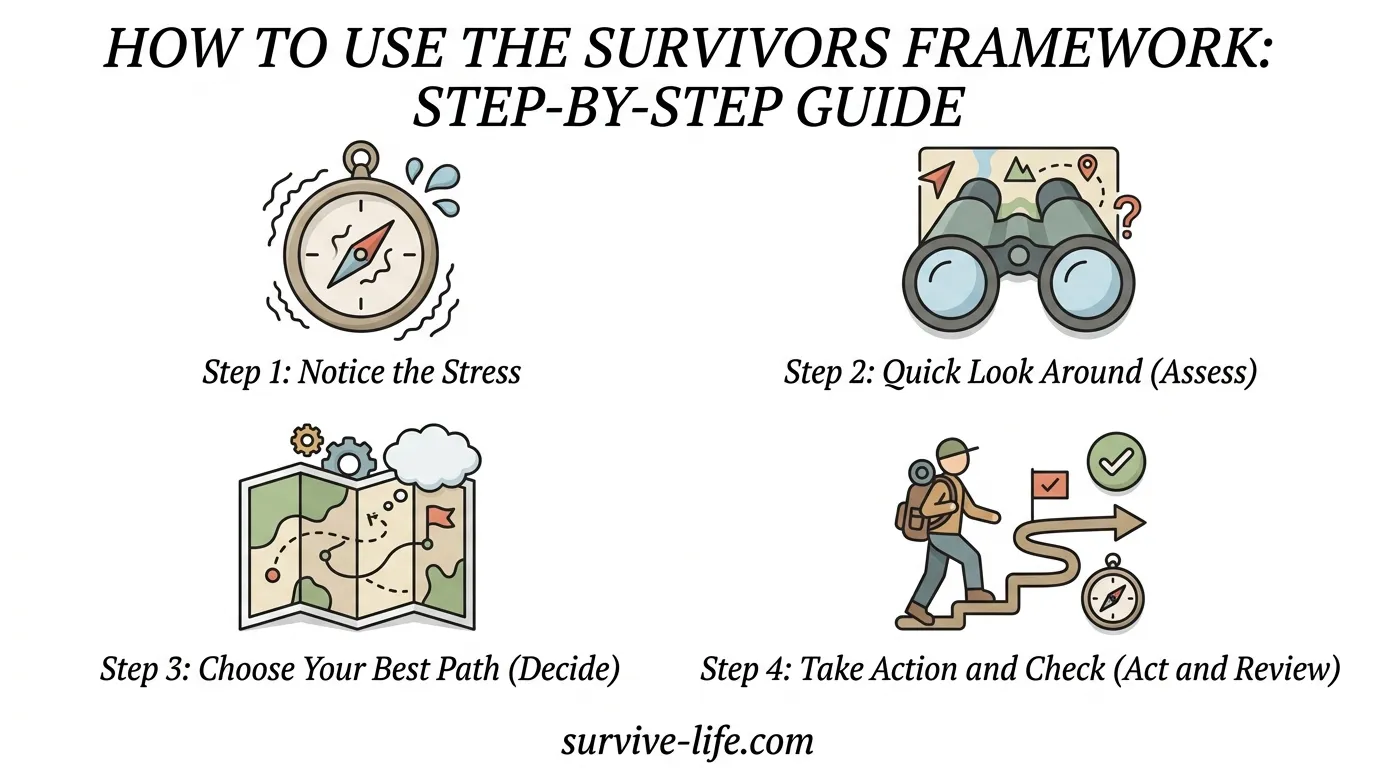
Using the Survivors Framework is about following a few simple steps. These steps help you move through a stressful situation with purpose. It’s not about being perfect, but about doing your best with what you have.
Step 1: Notice the Stress
The first thing you do is simply notice that you’re stressed. Your heart is racing? Your breath is fast? Your mind is foggy? Say to yourself, “Okay, I’m feeling stressed now.” Just naming it helps you take a small step back from the feeling. It stops the stress from fully taking over. This step is about becoming aware. It’s like turning on a light in a dark room. You cannot fix a problem if you don’t know it’s there. This awareness is your starting point for taking control.
Step 2: Quick Look Around (Assess)
After you notice the stress, quickly look at what is happening. What is the main problem? What do you have to work with? What is the biggest danger right now? This isn’t a long, deep thought. It’s a fast check. Think about what is most important to protect or fix. Do you need to move? Do you need to call for help? Do you need to grab something? This step helps you get a quick picture of your situation. It helps you see the most urgent things. Don’t get lost in small details. Focus on the big, important parts.
Step 3: Choose Your Best Path (Decide)
Now, with your quick look done, think about one or two simple things you can do. What is the best action you can take right now? It might not be the perfect solution, but it should be the best possible one in this moment. Do you run? Do you hide? Do you try to fix something? Pick the action that seems most likely to make things better or safer. Don’t wait for a perfect answer. A good, fast choice is often better than a perfect, slow one. Trust your quick judgment based on your quick look.
Step 4: Take Action and Check (Act and Review)
Once you’ve chosen, act. Do what you decided to do. Do it with purpose. As you act, keep checking what is happening. Did your action help? Did it make things better? If yes, keep going. If no, or if things change, go back to Step 2. Quickly look around again. What is different now? What is the new main problem? Then choose a new best path and act again. This is a cycle. You keep doing these steps until the stress is less, or the problem is solved. It’s about being flexible and always moving forward.
Common Mistakes to Avoid When Under Stress
Even with a good framework, it’s easy to make mistakes when you’re under stress. Your body and mind aren’t working normally. Knowing what these common mistakes are can help you avoid them. It helps you be more ready to use the Survivors Framework well.
Freezing Up
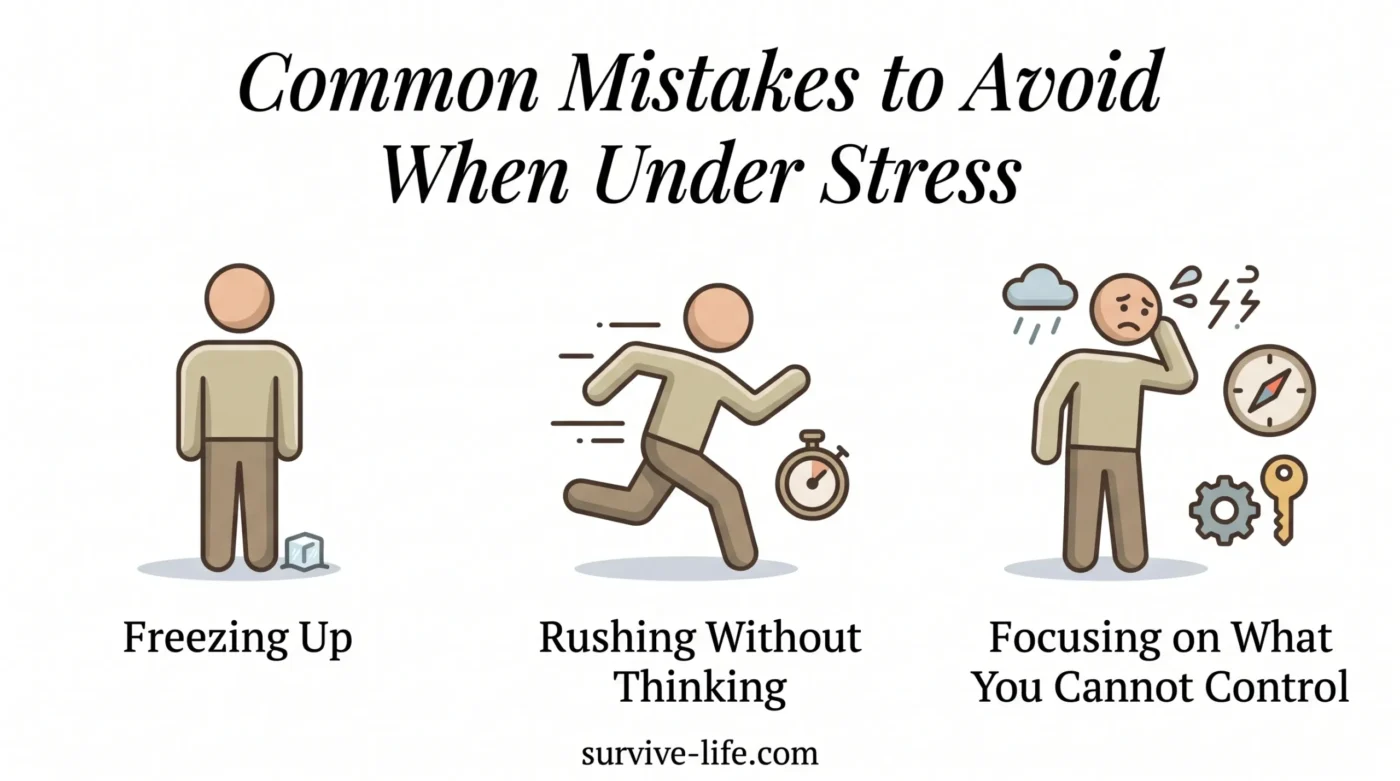
One of the most common mistakes is to freeze. This means you do nothing. You get so overwhelmed by the situation that you cannot move or think. Your mind just stops. This happens because your brain is trying to protect you, but it can make things worse. To avoid freezing, remember Step 1 of the framework: “Notice the Stress.” Just naming the feeling can help you break out of the freeze. Then, force yourself to do Step 2, even if it’s just a very quick look around. Any small action is better than no action.
Rushing Without Thinking
On the other side of freezing is rushing. This means you act too fast without any thought. You might grab the first idea that comes to your mind, even if it’s not smart. This can lead to more problems. The Survivors Framework helps here too. Step 2, “Quick Look Around,” and Step 3, “Choose Your Best Path,” are there to make you pause. It’s not a long pause, but it’s enough to make sure your action has some purpose. Don’t just react; respond with a tiny bit of thought.
Focusing on What You Cannot Control
When stress is high, it’s easy to get stuck thinking about all the bad things you cannot change. “Why did this happen?” “I wish I had done something else.” This kind of thinking wastes precious time and energy. It takes your focus away from what you can do. The Survivors Framework tells you to focus on “What is the main problem?” and “What do you have to work with?” This means you look at what is in your power. You focus on the next small step you can take. Let go of what you cannot control and put your energy into what you can. This shift in focus is very powerful for survival.
Practicing Your Stress Decision Skills
You don’t wait for a fire to learn how to use a fire extinguisher, do you? The same is true for making decisions under stress. You need to practice. The more you practice the Survivors Framework, the easier it will be to use when you really need it. It builds a path in your brain, making it faster to follow when stress hits.
Practice with Small Stresses
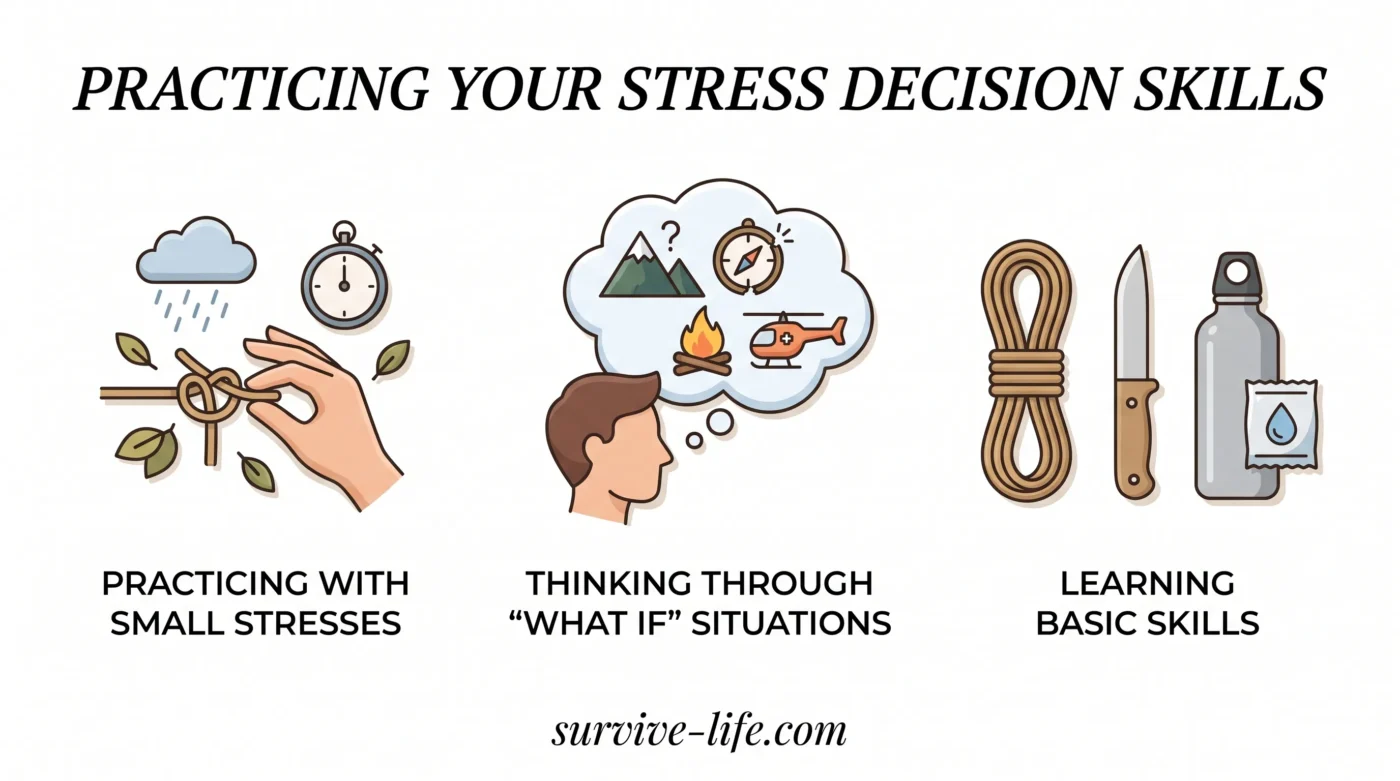
You don’t need a big emergency to practice. Start with small, everyday stresses. Maybe you’re late for work. Maybe you spilled coffee. Maybe you have too many things to do. Use these moments to quickly run through the framework. Notice the stress. What is the main problem? What is the best thing to do right now? Then do it. This helps you get used to the steps. It makes the framework feel natural, not like something you have to force. The more you use it for small things, the better you’ll be for big things.
Think Through “What If” Situations
Another good way to practice is to think about “what if” situations. What if your car breaks down on a lonely road? What if there’s a power cut at night? What if you lose your wallet? For each situation, quickly go through the Survivors Framework in your mind. What would be Step 1? What would be Step 2? What would be your best path? You don’t need to act it out. Just thinking through the steps helps your brain get ready. It helps you see possible problems and think about solutions before they happen. This mental practice is very strong.
Learn Basic Skills
Having basic skills also helps you use the framework better. If you know basic first aid, or how to change a tire, or how to find your way with a map, you have more “tools” for Step 2 (“Quick Look Around”) and Step 3 (“Choose Your Best Path”). The more you know how to do, the more options you have when stress hits. So, take a class, read a book, or watch a video about useful skills. These skills give you more choices and make your decisions stronger. They give you more confidence to act when it matters most.
Conclusion
Making good choices when you’re under stress is a skill. It’s not something you’re just born with. The Decision Making Under Stress: A Survivors Framework gives you a clear, simple way to build this skill. We talked about what this framework is: a way to cut through fear and confusion. We saw why it’s important, helping you stay calm, make better choices, and feel more confident. We walked through the steps: notice the stress, quickly look around, choose your best path, and then act and check.
Remember, this framework is a tool for you. It helps you take control when things feel out of control. It helps you move from panic to purpose. Start practicing it today, even with small daily stresses. Think about “what if” situations. Learn new skills that can help you. Your ability to make smart choices under pressure will grow. You’ll be more ready for whatever life throws your way. Be prepared, be calm, and be a survivor. Your ability to act wisely when it counts the most is a powerful strength.
Keywords: decision making under stress, stress management, survival mindset, crisis decision making, stay calm under pressure, emergency preparedness skills