
Access to safe drinking water is non-negotiable for survival. Waterborne pathogens are a constant threat in any wilderness or disaster scenario. Understanding the capabilities and limitations of your personal water filtration system is critical. This analysis cuts through the marketing to provide a direct, field-tested comparison between the LifeStraw and the Sawyer Squeeze, equipping you with the knowledge to make an informed decision for your essential gear.
Filtration Efficacy: Pathogen Removal and Micron Standards
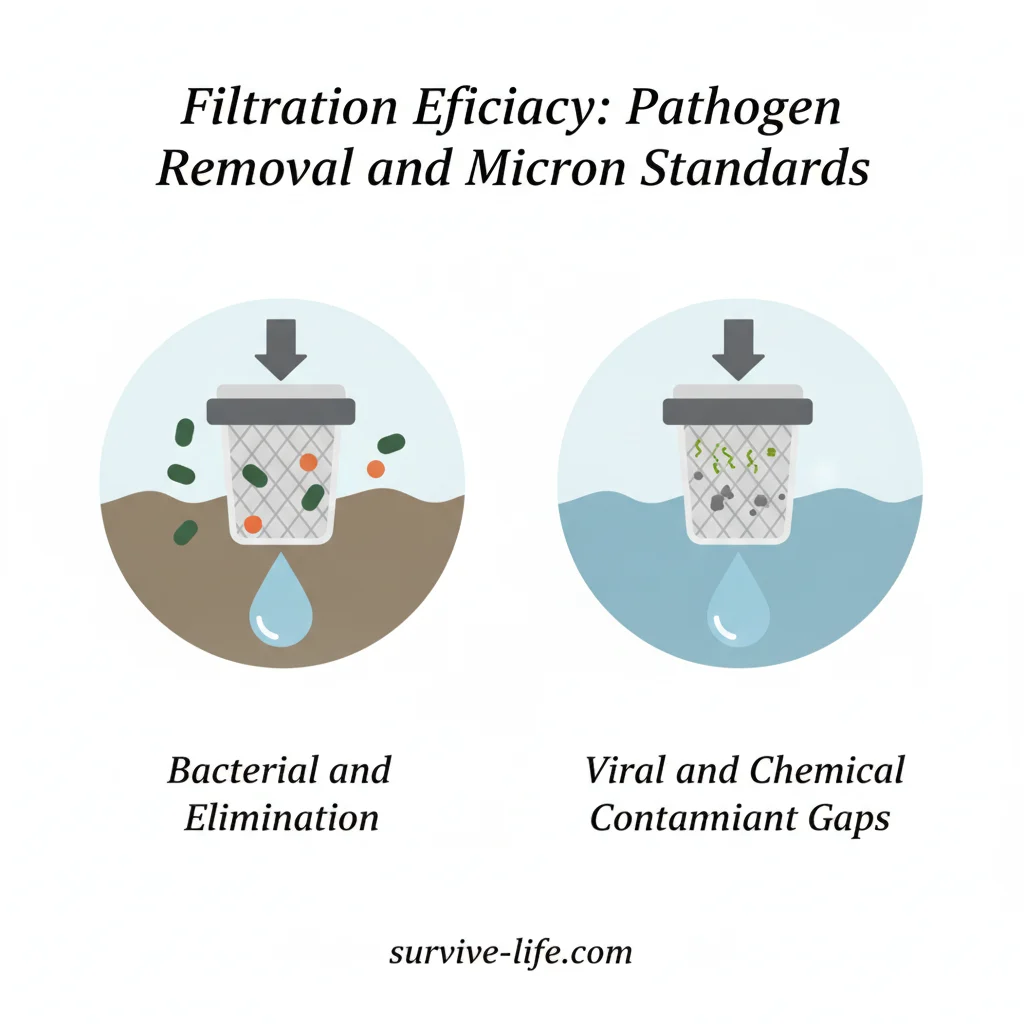
The primary function of any survival filter is to eliminate harmful microorganisms. This section details the specific pathogens each filter is designed to remove and their respective micron ratings. Understanding these specifications is crucial for assessing true water safety in the field.
Bacterial and Protozoan Elimination
Both the LifeStraw and the Sawyer Squeeze utilize hollow fiber membrane technology to physically block contaminants. The LifeStraw filters down to 0.2 microns, while the Sawyer Squeeze filters to an absolute 0.1 micron. This difference is significant for comprehensive pathogen removal.
Both filters are highly effective against common waterborne bacteria such as E. coli, Salmonella, and Cholera, achieving a 99.99999% reduction as per manufacturer specifications. Furthermore, they effectively remove protozoa like Giardia lamblia and Cryptosporidium parvum, with a stated 99.9999% reduction. These figures represent industry-standard performance for personal water filters of this type.
The Sawyer Squeeze’s finer 0.1-micron absolute filtration offers a marginally broader safety margin against some of the smallest bacteria. However, both filters meet or exceed U.S. Environmental Protection Agency (EPA) standards for removing bacteria and protozoa from drinking water, making them reliable choices for these specific threats.
Viral and Chemical Contaminant Gaps
It is imperative to understand the limitations of these filters. Neither the LifeStraw nor the Sawyer Squeeze are designed to remove viruses, heavy metals, or chemical pollutants. Viruses, being significantly smaller than bacteria and protozoa, can pass through the hollow fiber membranes.
For viral threats, such as Hepatitis A or Rotavirus, supplementary treatment is essential. This typically involves chemical purification tablets (like iodine or chlorine dioxide) or boiling the water. Similarly, agricultural runoff, industrial waste, or naturally occurring heavy metals like lead or arsenic will not be removed by these mechanical filters. If chemical contamination is suspected, a different purification method or source is required.
Always assume viral or chemical contamination requires additional treatment beyond mechanical filtration. This layered approach ensures maximum water safety in diverse and unpredictable environments. Relying solely on a mechanical filter when viruses or chemicals are present can lead to severe health consequences.
Field Durability and Flow Rate Performance
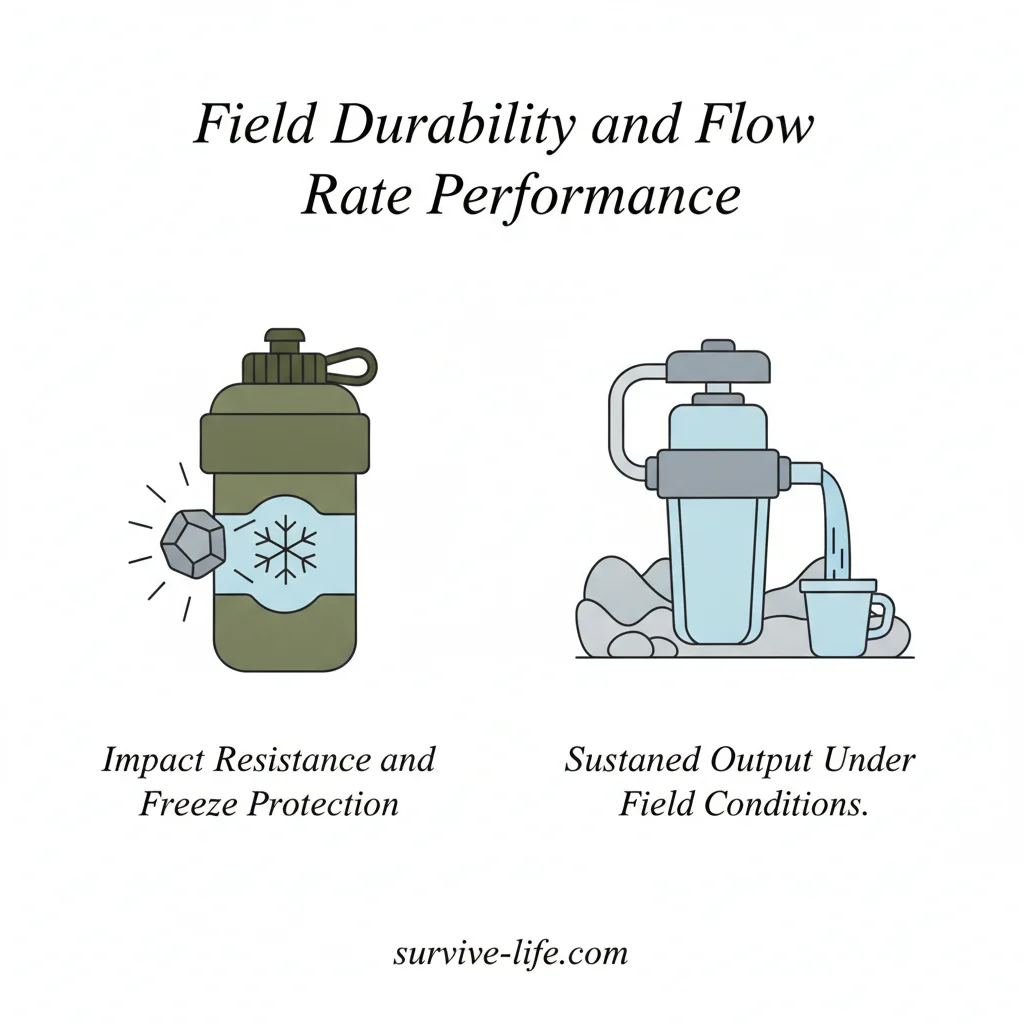
A filter’s reliability under stress and its ability to deliver water efficiently are paramount in a survival situation. This section covers physical resilience and sustained output, critical factors when conditions are less than ideal.
Impact Resistance and Freeze Protection
Survival gear must withstand abuse. The LifeStraw, designed as a direct-sip straw, is generally robust but can be susceptible to internal damage if dropped forcefully on hard surfaces. Its plastic casing protects the filter element, but extreme impacts can compromise seals or the filter matrix itself. The Sawyer Squeeze, with its compact, cylindrical design, is also durable. It is often used inline with hydration systems, which can offer some protection from direct impact.
Freezing is a critical threat to both hollow fiber filters. Water trapped within the microscopic pores expands when frozen, rupturing the delicate fibers. This damage is often invisible but renders the filter unsafe, as pathogens can then pass through the compromised membranes. Manufacturers, including Sawyer and LifeStraw, explicitly warn against freezing. If a filter freezes, it must be replaced immediately. To prevent freezing, store the filter close to your body or inside your sleeping bag in cold conditions. After use, backflush the filter to remove as much water as possible before temperatures drop.
Sustained Output Under Field Conditions
Initial flow rates can be misleading. The LifeStraw offers a direct-sip experience, meaning its flow rate is largely dependent on the user’s lung power and the water’s turbidity. It provides immediate access to water but is not ideal for filling containers quickly. Its flow rate can diminish noticeably with turbid water or extended use without cleaning.
The Sawyer Squeeze, by contrast, boasts a significantly higher and more consistent flow rate, especially when paired with a squeeze bag or gravity system. Manufacturer specifications claim a lifespan of up to 100,000 gallons (approximately 378,541 liters) for the Sawyer Squeeze, a testament to its robust design and backflushing capability. The LifeStraw is rated for 1,000 gallons (approximately 3,785 liters). These figures highlight the Sawyer’s long-term utility for sustained water procurement.
In turbid water, both filters will experience reduced flow. However, the Sawyer Squeeze’s design allows for more effective backflushing in the field, restoring flow rate more readily than the LifeStraw. Pre-filtering turbid water through a cloth or bandana before using either filter significantly extends their effective lifespan and maintains optimal flow.
Operational Integration: Versatility in Water Collection Systems
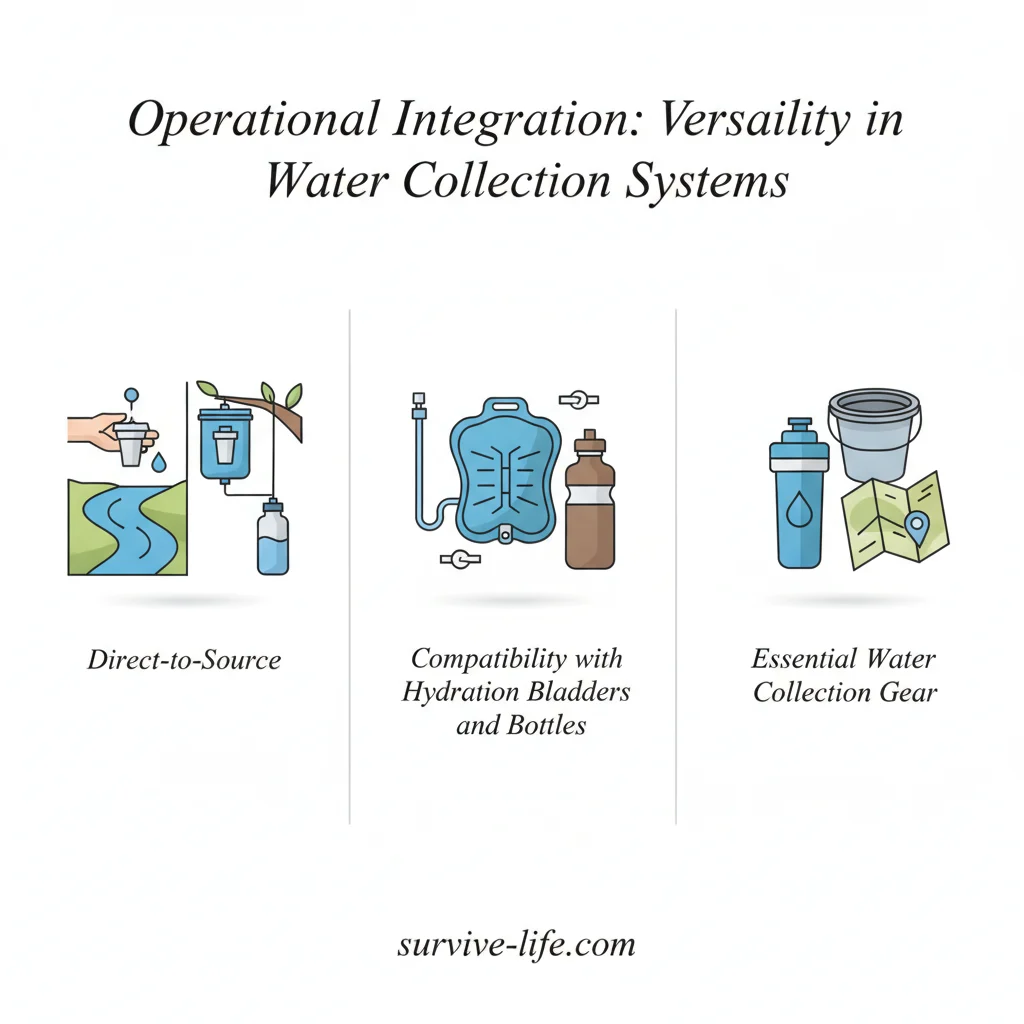
A filter’s true value is often in its adaptability to various water sources and collection methods. This section examines how each filter integrates into a broader water procurement strategy, highlighting their strengths in different scenarios.
Direct-to-Source vs. Gravity Filtration Setups
The LifeStraw excels in direct-to-source hydration. Its straw design allows immediate drinking from puddles, streams, or any accessible water body. This is invaluable for quick hydration during movement or in situations where setting up a more elaborate system is impractical or unsafe. Its simplicity is its strength for individual, immediate needs.
Conversely, the Sawyer Squeeze truly shines in gravity filtration setups. While it can be used for direct-sip if attached to a bottle, its design is optimized for processing larger volumes. By connecting it to a dirty water bag and hanging it, gravity does the work, allowing you to purify water hands-free while attending to other tasks. This method is highly efficient for groups, base camps, or when needing to fill multiple containers for cooking and drinking.
A gravity system reduces physical effort and allows for continuous water production. This is a significant advantage over direct-sip methods when sustained water supply is required. The ability to process water passively frees up valuable time and energy in a survival scenario.
Compatibility with Hydration Bladders and Bottles
The LifeStraw is primarily a standalone direct-sip device. While some newer models offer limited compatibility with bottles, its core design is for direct use. This limits its versatility for filling other containers or integrating into existing hydration systems.
The Sawyer Squeeze offers superior compatibility. It threads directly onto standard soda bottles (PET bottles) and comes with collapsible squeeze pouches. Furthermore, it can be easily integrated inline with most hydration pack hoses, allowing you to drink filtered water directly from your bladder. This adaptability makes it a highly versatile component of any water collection strategy. Its threaded design ensures secure connections, minimizing leaks and contamination risks.
Essential Water Collection Gear
For a robust gravity system, I consistently carry a 2-liter Cnoc Vecto water container and a Sawyer Squeeze, paired with a Platypus 4-liter dirty bag for collection and pre-filtering. For direct hydration, a Nalgene bottle with a wide mouth is indispensable. This combination provides flexibility for both immediate hydration and bulk water processing, ensuring a reliable water supply in diverse environments.
Maintenance, Weight, and Long-Term Readiness
The practicalities of carrying, maintaining, and storing a filter directly impact its utility in a long-term survival scenario or bug-out bag. These factors often determine a filter’s true readiness when it matters most.
Backflushing Protocols and Field Cleaning
Proper maintenance is critical for extending filter lifespan and maintaining flow rate. The Sawyer Squeeze excels in this regard with its straightforward backflushing protocol. It comes with a syringe specifically designed to force clean water back through the filter, dislodging trapped particles. This process is simple to perform in the field and effectively restores flow. Regular backflushing, especially after filtering turbid water, prevents clogging and ensures consistent performance.
The LifeStraw, being a direct-sip device, has a more limited cleaning procedure. It typically involves blowing air back through the straw after use to clear residual water and some particles. While this helps, it is not as effective as the Sawyer’s pressurized backflush for clearing deeply embedded sediment. Consequently, the LifeStraw’s flow rate can degrade more permanently over time with heavy use in silty conditions.
Always backflush your Sawyer Squeeze after each significant use to prevent irreversible clogging. This simple step dramatically extends its operational life and maintains optimal flow. Neglecting this can lead to premature filter failure.
Minimalist Pack Weight and Volume Impact
For minimalist loadouts or bug-out bags, weight and volume are critical considerations. The LifeStraw is exceptionally lightweight, typically weighing around 2 ounces (approximately 57 grams). Its compact, cylindrical shape makes it easy to slip into a pocket or a small pouch, adding minimal bulk to a pack. This makes it an excellent choice for ultralight hikers or as a backup filter.
The Sawyer Squeeze is also remarkably light and compact, weighing approximately 3 ounces (around 85 grams). While slightly heavier than the LifeStraw, its superior flow rate and longevity often justify the marginal weight increase. When considering the entire system, including collapsible dirty water bags for the Sawyer, the overall weight might be slightly more, but the added functionality for bulk water processing is a significant trade-off.
Both filters represent excellent choices for minimizing pack weight while ensuring access to safe water. The decision often comes down to the intended use and the volume of water required.
Storage Longevity and Pre-Deployment Checks
Proper storage is essential for long-term readiness. The Sawyer Squeeze, if stored dry and unfrozen, has an indefinite shelf life according to manufacturer claims. It is crucial to backflush it thoroughly with clean water, then allow it to air dry completely before storage. Some users also recommend storing it with a few drops of food-grade mineral oil to prevent the fibers from drying out and becoming brittle, though this is not a universal manufacturer recommendation.
The LifeStraw has a stated shelf life of five years once opened, but significantly longer if kept in its original sealed packaging. Like the Sawyer, it must be stored dry and protected from freezing. Before deployment, always perform a quick check. For the Sawyer, ensure the O-rings are intact and the filter threads are clean. For the LifeStraw, inspect for any cracks in the casing. A test sip from a known clean water source can confirm functionality before relying on it in a critical situation.
The Verdict: Situational Superiority and Essential Gear Integration
No single piece of gear is universally superior. This section provides a definitive expert verdict, outlining the optimal scenarios for each filter and how they can complement a comprehensive water strategy.
Optimal Use Cases for Each Filter
The LifeStraw excels as a personal, immediate hydration tool. It is ideal for solo adventurers, day hikes, or as an emergency backup in a 72-hour kit where quick, direct access to water is paramount. Its simplicity means there are no parts to lose, and it requires minimal setup. For situations demanding rapid, on-the-go hydration without the need to fill multiple containers, the LifeStraw is an excellent choice. It serves well as a primary filter for individual use or as a secondary, easily accessible option.
The Sawyer Squeeze is the superior choice for sustained water procurement, group use, or when a reliable, high-volume water source is needed. Its ability to integrate into gravity systems, attach to bottles, and its impressive lifespan make it invaluable for base camps, multi-day expeditions, or bug-out bags. If you need to process water for cooking, cleaning, and multiple people, the Sawyer Squeeze’s efficiency and durability are unmatched. It is a robust workhorse for serious wilderness survival or disaster preparedness.
Complementary Filtration Strategies
Achieving maximum water safety often requires a layered approach. While the LifeStraw and Sawyer Squeeze effectively remove bacteria and protozoa, they do not address viruses or chemical contaminants. Therefore, combining these filters with other purification methods is a prudent strategy.
Chemical treatments, such as chlorine dioxide tablets, are highly effective against viruses and can also kill bacteria and protozoa. Using a filter first to remove sediment and larger pathogens, then treating the filtered water with chemicals, provides a robust defense against a wider spectrum of threats. Boiling water for one minute at a rolling boil is another highly effective method for killing all pathogens, including viruses. This method is energy-intensive but offers absolute certainty when fuel is available.
Consider carrying both a Sawyer Squeeze for primary, high-volume filtration and a small bottle of chemical purification drops or tablets as a backup and for viral protection. This redundancy ensures you have options regardless of the water source or the specific contaminants present. A comprehensive water strategy integrates mechanical filtration, chemical treatment, and the knowledge of when to boil, ensuring potable water in any scenario.