Hey there! You know, some things just seem small, but they’re actually a heck of a lot important. And knowing how to tie a few good knots? That’s definitely one of those things. It’s not hard, I promise. You can learn them fast, and they’re not just for folks who climb mountains or sail boats. Nope, these are for you, for everyday life, and for those moments when things go a little sideways.
When you need to tie something tight, or hold a broken part together, or even help someone up, a good knot is absolutely key. It can make a huge difference, really. Think about it: Do you know how to tie a strong rope quickly? What if you need to secure something fast, like a tarp in a sudden storm or a wobbly fence gate? Can a simple knot truly make a difference in a tough spot? Many people don’t even think about knots until they desperately need one. But when that moment comes, having this skill in your back pocket can be a real helper. It can keep things safe, help you fix problems, and honestly, it can even save a life.
And here’s the cool part: Yes, you can learn three very useful knots in less than ten minutes. Seriously! These knots are super strong and can help you in so many different situations. They’re simple to understand, and even simpler to do. You don’t need to be an expert or have any special gear. You just need a piece of rope and a few minutes of your time. This small effort gives you a big skill, a real sense of control when things are uncertain, and it makes you so much more ready for whatever life throws your way. Let’s get tying!
Why Knowing Knots Helps You
Now, I know what you might be thinking: “Knots? Aren’t those just for sailors or climbers?” And you know what? That’s a common thought, but it’s just not true. Knots are for everyone, my friend. They help you in your everyday life and, crucially, in times of trouble. A good, reliable knot keeps things safe. It stops things from falling apart when you really need them to hold. It can even help you move heavy things or hold them perfectly still.
You might need to tie down a load in the back of your car, making sure nothing flies out on the highway. Or maybe you’re camping, and you need to secure your tent in a strong, unexpected wind. Perhaps you even need to make a temporary repair around the house, like holding a broken handle in place until you can properly fix it. In these moments, you definitely don’t want to be guessing or hoping a flimsy knot holds. You want to know a knot that works, one you can trust with confidence. This knowledge gives you power, a quiet confidence, and a whole lot of peace of mind.
It’s not about being some kind of rope expert, not at all. It’s about having a basic, fundamental skill that gives you more control over your environment and your immediate problems. You’ll feel more ready for different things, more capable. This small skill adds a big layer of safety to your life. It’s like a quiet helper, always there, tucked away in your memory, ready when you need it most. Think about securing a garden gate that keeps blowing open, or tying up a pet safely when you’re out and about, or even just making a sturdy clothesline in your backyard. These are simple tasks, but a strong, reliable knot makes them so much easier and, more importantly, much safer. You absolutely don’t want a knot that slips or comes undone when it matters most, do you?
Knowing these knots means you’re prepared. It means you have a tool right in your hands, even when you have no other tools around. You can use a rope to lift something, to pull something heavy, or to hold something firmly in place. The knot is what makes the rope useful. Without the right knot, a rope is just a piece of string, really. But with the right knot, it becomes a powerful helper, an extension of your will. This readiness gives you confidence. It makes you feel capable, like you can handle whatever comes. You’ll honestly find yourself using these knots more often than you think, making your life a little bit easier and a whole lot safer.
The Three Life-Saving Knots: Your Fast Guide
Alright, let’s get down to business! Here are three knots you can learn very fast. They’re strong, they’re incredibly useful, and you’ll see just how simple they are to make. Each one has a special job, a specific purpose where it shines. Learning them takes only a few minutes each, and you can practice them with any piece of rope you have lying around. We’ve chosen these knots because they’re easy to remember and super effective in a wide variety of situations. They’re truly basic tools for any kind of rope work, giving you a solid start for both safety and practical tasks.
The Bowline: The Loop That Will Not Slip
This knot is a real superstar. It makes a strong, fixed loop at the end of a rope, and here’s the best part: that loop does not get smaller or bigger, no matter how much tension you put on it. It’s fantastic for pulling things, creating a secure anchor point, or even making a rescue loop if you ever needed to help someone. It’s incredibly reliable and, even after it’s been pulled super tight, it’s surprisingly easy to untie. A true friend in a pinch!
- How to tie it:
- First, make a small loop in the main rope (the long part). Think of it like a little rabbit hole.
- Take the working end (the short end of the rope). Go up through this small loop, like the rabbit coming out of its hole.
- Now, go around the main rope (the long part, the “tree”).
- Bring the working end back down through the small loop, back into the rabbit hole.
- Finally, pull the main rope and the working end tight, making sure it forms a neat, secure loop.
The Clove Hitch: Quick Tie-Down
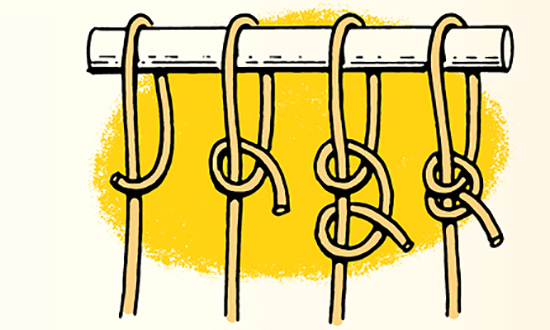
Need to tie a rope around a pole or post super fast? The Clove Hitch is your go-to knot. It’s excellent for holding things still, like securing a boat to a dock (temporarily, mind you!) or tying a tarp to a tree. It’s easy to adjust if you need to tighten or loosen it, and it’s also a breeze to untie when you’re done. It’s a quick, reliable way to secure a rope to an object, perfect for temporary ties or when you need a steady pull.
- How to tie it:
- Wrap the rope around the pole or object you’re tying to.
- Cross the rope over itself, making an “X” shape.
- Wrap it around again, right next to your first wrap.
- Now, tuck the working end under the second wrap you just made.
- Pull both ends of the rope tight to secure it firmly around the object.
The Sheet Bend: Joining Two Ropes
Sometimes, you just need a longer rope, or you have two ropes of different sizes that you need to connect. That’s where the Sheet Bend comes in! This knot is specifically designed to join two ropes together, and it works incredibly well even if the ropes are different thicknesses. It’s very strong and much more reliable than a simple square knot when you’re dealing with ropes of varying diameters. It’s a fundamental knot for extending your reach.
- How to tie it:
- Take the thicker rope (or one of them if they’re similar). Make a loop, like a “U” shape.
- Take the thinner rope (the other one). Go up through the loop of the first rope.
- Now, go around the back of the loop of the first rope, wrapping it around the main part of the thicker rope.
- Tuck the end of the thinner rope under itself, creating a little bite.
- Pull both ropes tight, making sure the knot cinches down securely.
Practice Makes Perfect: How to Get Good
Learning a knot is one step, right? But doing it fast and right every single time, without even thinking? That’s the next step, and it needs practice. You don’t need any special tools, just a piece of rope. Any old piece of rope will do to start. Begin by practicing when you’re calm and relaxed. Then, once you’ve got the hang of it, try tying them when you’re a bit rushed, or even with your eyes closed. This helps your hands remember the movements, and your brain will also remember better under pressure. The more you do it, the more natural it feels. It becomes part of you, like riding a bike or tying your shoes.
This muscle memory is absolutely key. It means your hands know exactly what to do without you having to think too much about each step, which is super vital in a real-life situation where speed and accuracy can really matter. You can practice while you’re watching TV, waiting for dinner, or even just sitting around. Try practicing with different types of rope, too. A thick, stiff rope feels different from a thin, soft one, and getting used to those variations will make you even more adaptable.
Try tying the knots around different things. A chair leg, a broom handle, your own arm – anything that gives you a real-world object to work with. This makes the skill feel more real and practical for you. Don’t just tie them once and say, “Got it!” Tie them ten times. Tie them twenty times. The repetition is what makes the skill stick. It moves the knowledge from your head right into your hands, making it second nature.
Think of it like learning to ride a bike. At first, it’s hard, and you think about every single move: balance, pedaling, steering. But after practice, you just do it, without conscious thought. Knots are the same way. The more you practice, the less you have to think. You’ll be able to tie these knots quickly and correctly, even in the dark or under pressure. This confidence comes only from doing it over and over. So, make it a small habit. Keep a piece of rope nearby, maybe on your desk or in your car. Every now and then, pick it up and tie your three knots. This small, consistent effort will make you truly ready for anything.
Conclusion
So, there you have it! You’ve now seen three incredibly useful knots that can help you a heck of a lot: the Bowline, the Clove Hitch, and the Sheet Bend. They’re not hard to learn, they’re super strong, and they’re incredibly versatile. These knots give you a quiet power, a practical ability to secure things, join ropes, and make safe, reliable loops. This knowledge is a small thing, yes, but it makes a truly big difference in your safety and your ability to handle all sorts of situations. It’s a skill that empowers you, making you more capable and prepared for the unexpected.
This isn’t just about tying rope, my friend. It’s about being ready. It’s about having a simple skill that can solve real problems, big and small. You absolutely don’t need to be an outdoor expert or a seasoned adventurer to benefit from these knots. They are for anyone who wants to add a solid layer of practical safety and self-reliance to their life. From securing items around your home to helping out in an emergency, these three knots cover a wide range of needs. They are truly fundamental.
So, please, don’t wait. Get a piece of rope today. Spend ten minutes, maybe even less, and learn these knots. You’ll immediately feel more ready, more confident. You’ll have a skill that truly matters, one that stays with you for life. It’s a small effort for a big, big gain. Your safety, and potentially the safety of others, can genuinely depend on it. Start tying now. Make these knots your own. This simple action can bring you great peace of mind and real-world usefulness that you’ll appreciate more than you can imagine.