
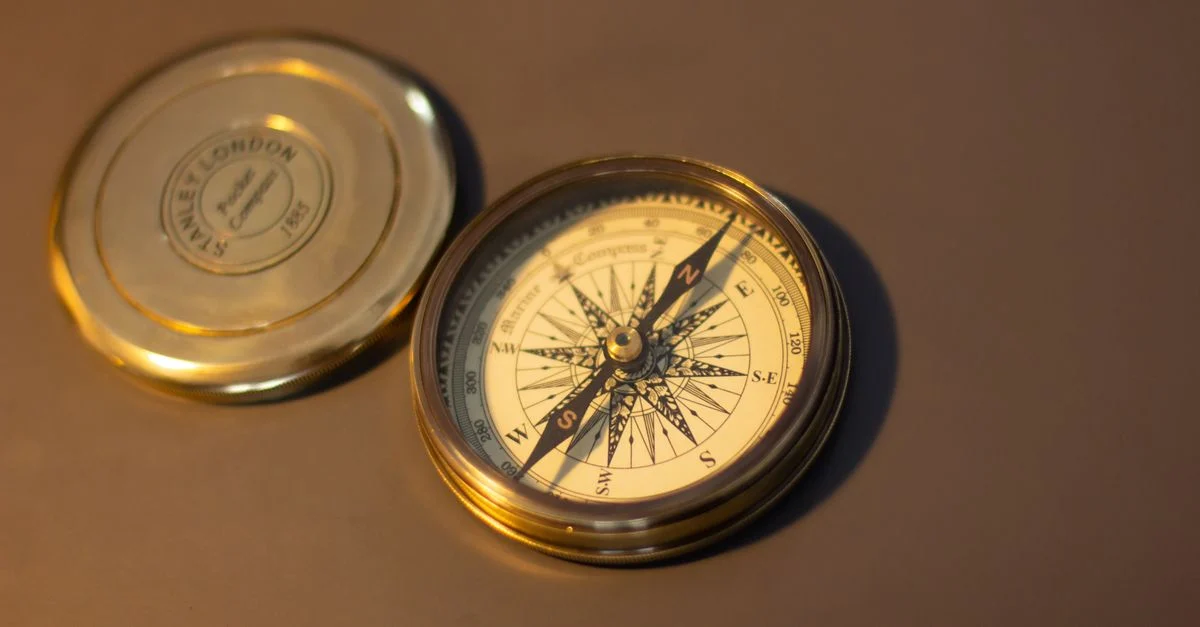
Hey there, ever wondered how folks found their way before GPS, maps, or even roads? It’s a pretty cool thought, right? Well, for thousands of years, people looked up. They used the sun and stars as their ultimate guide, a natural compass always there, day or night. This isn’t just some ancient history lesson; it’s a super practical skill that connects you to the world in a really profound way.
This skill is incredibly useful, whether your phone dies on a hike, your map gets lost, or you’re just curious about the amazing world around you. It’s like tapping into the wisdom of ancient travelers, sailors, and explorers who navigated vast oceans and uncharted lands. Imagine a sailor crossing a big ocean, an explorer finding new territory, or even a hiker who takes a wrong turn in the woods. They all might look up at the sky to get back on track. A farmer might use the sun’s path to know the time of day for chores, and a traveler in a new city might use the sun to keep their bearings. It’s a universal language the sky speaks.
So, let’s get real for a second: Do you know which way is north right now? What if you were in a place with no signs, no roads, and no cell service? How would you know which way to go? Don’t worry, it’s simpler than you think! You can use the sun’s predictable path across the sky during the day and certain star patterns at night to point you in the right direction. The sun always rises in the east and sets in the west, giving you a basic guide. And stars like the North Star stay in one place, showing you north, like a cosmic beacon.
What You Need to Know About the Sun for Direction
The sun is a powerful guide because it moves in a wonderfully predictable way every single day. Think of it as your daily celestial clock and compass all rolled into one. The sun always appears to rise in the east and set in the west, no matter where you are on Earth (mostly, we’ll get to the nuances in a bit!). This basic rule is your first, most reliable step to finding direction.
Now, we know the sun isn’t actually moving around us; it’s our Earth spinning that makes it look like the sun travels across the sky. But from our perspective, this daily journey is a constant guide, always moving from east to west. You can use where the sun is in the sky to tell general directions. It starts low in the morning, rises high around noon, and then goes low again in the evening. Even if you can’t see the sun directly, the brightness in a certain part of the sky can give you a clue about its general location. This basic understanding is the foundation for all sun-based navigation.
The sun’s path does change a little with the seasons and where you are on Earth. But for most places, especially in the Northern Hemisphere, the sun rises in the east, is highest in the south around midday, and sets in the west. If you’re in the Southern Hemisphere, the sun is highest in the north around midday. Knowing this general path is key. It means if you see the sun coming up, you know that direction is east. If you see it going down, that’s west. This rule is very reliable. For example, if you’re hiking and the sun is on your right side in the morning, you’re likely walking north. If it’s on your left, you’re walking south. The sun is a natural clock too; when it’s highest in the sky, it’s usually around noon, giving you a sense of time and direction at once. This simple knowledge makes the sun a powerful tool for anyone needing to find their way without modern gadgets.
How to Use the Sun to Find Direction
There are some really simple, clever methods to use the sun’s position to find the cardinal directions. You don’t need any fancy gear, just your eyes and a little patience. The stick and shadow method is a classic, reliable way to find east and west, and then north and south.
The Shadow Stick Method
This is a very old and simple way to find directions using just a stick and the sun. It’s super effective! First, find a straight stick, about 2 to 3 feet long. Push it into the ground so it stands up straight. Make sure the ground around it is flat and clear, so the shadow is easy to see. Now, mark the very tip of the shadow the stick makes. You can use a small stone, another stick, or even just scratch a line in the dirt. This is your first mark, and it points to the west.
Now, you need to wait. Give it about 15 to 20 minutes. During this time, the sun will move a little in the sky, and because of this, the shadow will also move and change its length. After waiting, mark the new tip of the shadow. This is your second mark. Now, draw a straight line between your first mark and your second mark. This line points roughly east-west. The first mark you made is west, and the second mark is east. Once you have this east-west line, finding north and south is easy. Stand with your left foot on the first mark (west) and your right foot on the second mark (east). You are now facing north. Behind you is south. This method works well in most places and doesn’t need any special tools, making it very useful in the wild.
Using Your Watch (Analog)
If you happen to have an analog watch with hands (not a digital one!), you can use it to find direction, especially in the Northern Hemisphere. It’s a neat trick! Hold your watch flat in your hand. Point the hour hand (that’s the shorter one) directly at the sun. Now, find the halfway point between the hour hand and the 12 o’clock mark on your watch. This imaginary line points south. For example, if it’s 4 o’clock in the afternoon and you point the 4 at the sun, the line halfway between 4 and 12 (which is 2) points south. Once you know south, north is directly behind you. East is to your left, and west is to your right.
If you are in the Southern Hemisphere, the method is a little different. You point the 12 o’clock mark at the sun. The halfway point between the 12 and the hour hand will point north. Remember to adjust for daylight saving time if it’s in effect, by using the 1 o’clock mark instead of 12 during that period. This method is a quick way to get a general direction, but it’s not as precise as a compass. It gives you a good estimate when you need to know which way to go quickly.
What You Need to Know About the Stars for Direction
When the sun goes down, the stars come out to play, and they can guide you at night because some stars appear to stay still or move in predictable circles. It’s like the night sky has its own built-in compass! The North Star (Polaris) is a very important star for finding north in the Northern Hemisphere because it hardly moves at all. It’s your steady beacon in the dark.
At night, the sky is full of stars. While many stars seem to move across the sky, just like the sun, some special stars or star groups can help you find direction. This is because Earth spins on an axis. The North Star, also called Polaris, is almost directly above Earth’s North Pole. So, as Earth spins, the North Star stays in nearly the same spot in the sky. This makes it a fixed point for direction in the Northern Hemisphere. It is like a permanent light in the sky that always shows you north. Knowing this star is a very old and reliable way for travelers to find their way when the sun is down. It has guided sailors and explorers for thousands of years.
In the Southern Hemisphere, there is no single bright star like Polaris that points directly to the South Pole. However, certain star patterns, like the Southern Cross, can be used to find south. The stars are very far away, but their patterns are constant. Learning these patterns helps you use the night sky as a compass. You just need a clear night sky away from city lights to see them well. Light pollution from cities makes it hard to see fainter stars. Finding a dark spot is key to using the stars for navigation. The stars offer a different kind of guide than the sun, one that is steady and unchanging through the night, giving you a constant reference point.
How to Use the Stars to Find Direction
Specific constellations act as natural compasses in both hemispheres, making the night sky a truly magical map. Finding the Big Dipper and Little Dipper helps you locate the North Star, which is your ultimate guide up north.
Finding North with the North Star (Northern Hemisphere)
To find north using the stars, your first step is to find the Big Dipper. It’s one of the easiest star patterns to spot in the night sky. It looks like a large spoon or ladle with a long handle. Once you find the Big Dipper, look at the two stars at the end of its “bowl,” opposite the handle. These are called the “pointer stars.” They are important because they point the way to the North Star.
Now, draw an imaginary straight line from these two pointer stars, going upwards from the bowl. Follow this line about five times the distance between the two pointer stars. The first bright star you come to along this line is the North Star, also called Polaris. It’s not the brightest star in the sky, but it is reliably in the north. If you face the North Star, you are facing north. Behind you is south, to your right is east, and to your left is west. This star is a reliable guide all night long, no matter the time or season, making it a powerful tool for night navigation.
Finding South with the Southern Cross (Southern Hemisphere)
If you’re in the Southern Hemisphere, you’ll look for the Southern Cross, also known as Crux. It’s a small but very bright constellation that looks like a kite or a cross. It’s usually easy to spot in a dark sky. Find the two brightest stars in the Southern Cross. Draw an imaginary line through these two stars, extending it about four and a half times their length towards the horizon. This line points towards the South Celestial Pole.
To make this more accurate, look for two other bright stars nearby, called the “Pointers” (Alpha Centauri and Beta Centauri). These two stars are usually easy to find near the Southern Cross. Draw an imaginary line between these two stars. Now, draw another imaginary line from the midpoint of the Pointers, straight down to the horizon. Where the first line (from the Southern Cross) and this second line meet, that general area points to the South Celestial Pole. While there isn’t a bright “South Star” like Polaris, this method helps you find the general direction of south. Once you know south, you can find north, east, and west. This method requires a bit more practice but is very effective.
Tips for Finding Direction Day and Night
Combining knowledge and practice makes you a heck of a lot better at finding direction. It’s like any skill; the more you do it, the more natural it becomes. Always check your directions with more than one method if possible – it’s a great way to build confidence and accuracy.
Practice Makes Perfect
The absolute best way to get good at finding direction with the sun and stars is to practice often. Go outside during the day and try the shadow stick method. See if you can find north, south, east, and west. Then, check with a real compass or a map to see how close you were. This helps you understand the small differences and get better at it. The more you do it, the more natural it will feel. It’s like learning any new skill; repetition helps your brain remember the steps and recognize the patterns in the sky more quickly. Try it in different seasons to see how the sun’s path changes slightly.
Be Aware of Your Surroundings
Remember that mountains, tall buildings, or thick trees can block your view of the sun or stars. If you’re in a forest or a city, you might need to find an open spot to get a clear view of the sky. Also, the sun’s path changes a little with the seasons. In summer, the sun is higher in the sky and stays out longer. In winter, it’s lower and sets earlier. This doesn’t change the basic east-west rise and set, but it can affect shadow lengths and how high the sun appears. Knowing these small changes helps you use the sky more accurately. Clouds can also hide the sun or stars, so these methods work best on clear days and nights.
Trust Your Instincts, But Verify
Sometimes, your gut feeling might tell you a direction. It’s good to listen to that, as our bodies often pick up on subtle cues from the environment. However, always try to confirm your feeling with the sun or stars. Using these natural guides gives you a reliable way to check your sense of direction. It builds confidence in your ability to navigate without modern tools. If your instinct and the sky methods disagree, trust the sky. The sun and stars follow fixed rules, while our instincts can sometimes be wrong, especially in unfamiliar places. Combining your natural sense with proven sky navigation techniques makes you a very capable navigator.
Conclusion
So, there you have it! Using the sun and stars to find your way is a timeless skill that connects you to ancient ways of travel. The sun’s daily path from east to west and the fixed position of the North Star or the pattern of the Southern Cross offer clear, natural guides. These methods are simple, reliable, and don’t need any special equipment. They’re always there, waiting for you to look up.
Knowing these simple methods gives you a powerful tool for self-reliance and a deeper connection to the natural world. It’s a skill that can keep you safe and help you explore with confidence, whether you’re in the wilderness or just trying to get your bearings in a new town. Look up, learn the sky, and you’ll always have a way to find your path, no matter where you are. Happy navigating!