
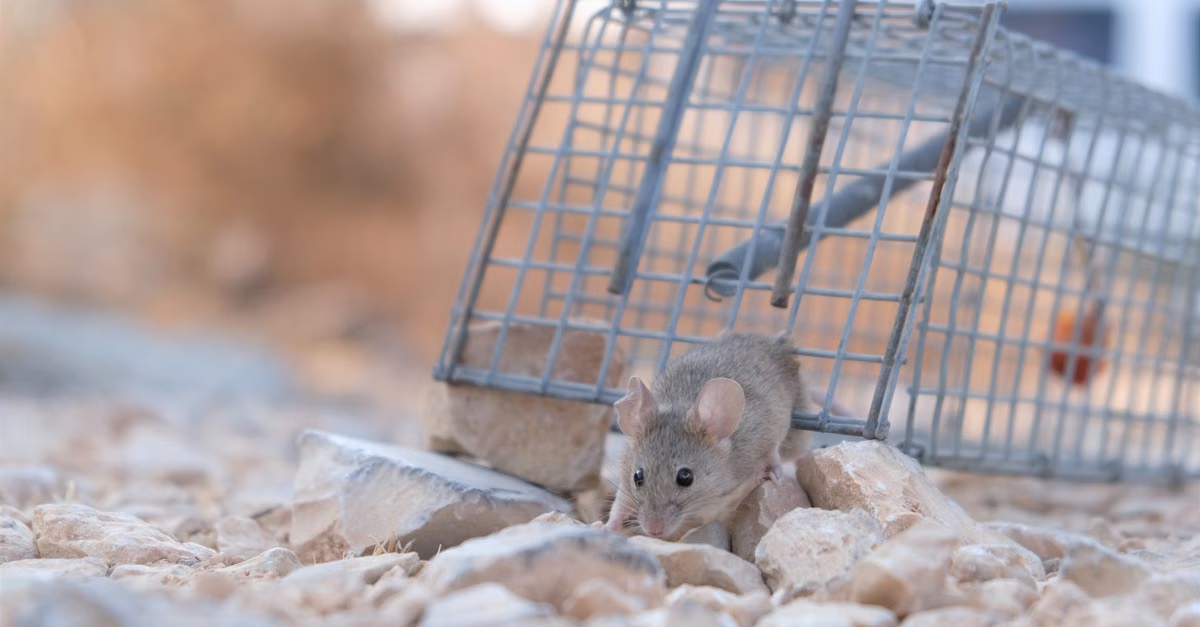
Learn essential survival trapping skills. This guide covers improvised traps, animal sign, baiting, and ethical considerations for securing food in the wild.
Understanding the Basics of Survival Trapping
Legality and Ethics: A Critical Disclaimer
Before you even consider setting a trap, you must understand a crucial point: trapping animals is illegal in most developed areas without specific licenses, during specific seasons, and often with regulated trap types. This guide is written strictly for a true, life-or-death survival scenario where conventional laws are superseded by the immediate need for sustenance. In any other context, you risk severe legal penalties. Ethically, trapping should always be a last resort, employed only when your survival depends on it, and with the utmost respect for the animal’s life.
The ‘Why’ and ‘When’ of Trapping for Food
Why trap? Because it’s an incredibly efficient way to gather food. Unlike hunting, which requires active pursuit and significant energy expenditure, a well-placed trap works for you while you focus on other survival priorities like shelter, water, or signaling. Trapping is most effective when you’re in a long-term survival situation, when other food sources are scarce, or when you need to conserve your energy. It’s a passive food procurement method that can yield consistent results if done correctly.
Key Principles: Location, Bait, Concealment, and Patience
Successful trapping boils down to four core principles:
- Location: Animals follow predictable patterns. Setting your trap where animals naturally travel or feed drastically increases your chances.
- Bait: A good bait attracts your target animal to the trap. It needs to be appealing and relevant to the animal’s diet.
- Concealment: Animals are wary. Your trap must blend into the environment, appearing as natural as possible, and free of human scent.
- Patience: Trapping isn’t instant. You might set many traps and check them repeatedly before you make a catch. Persistence is key.
Essential Tools and Materials for Improvised Traps
What You’ll Need: The Survival Kit Essentials
While you can improvise almost everything, a few items in your survival kit will make trap construction significantly easier and more effective:
- Strong Cordage: Paracord, bank line, or even heavy fishing line is invaluable for snares, triggers, and lashing.
- Multi-tool or Knife: Essential for cutting, shaping wood, and processing your catch.
- Snare Wire: A small roll of brass or stainless steel wire (20-24 gauge) is lightweight and perfect for durable, reusable snares.
Sourcing Materials in the Wild: Sticks, Stones, and Cordage
If your kit is empty, the wilderness provides. You’ll need to be resourceful:
- Sticks and Branches: Look for sturdy, straight sticks for trap frames, triggers, and deadfall components. Hardwoods are best for durability.
- Rocks and Stones: Heavy rocks are crucial for deadfall traps, providing the crushing weight needed to dispatch an animal.
- Natural Cordage: Vines (like wild grape), inner bark fibers (cedar, basswood), strong roots, or even twisted plant fibers can be processed into cordage for snares and lashings. This takes time but is a vital skill.
Common Small Game Animals to Target
Understanding your prey is fundamental. Look for animals that are abundant, relatively easy to catch, and provide a good caloric return.
Rodents: Mice, Rats, Squirrels, and Gophers
These are often the most common and accessible targets. They reproduce quickly and are found in almost every environment. Look for them near food sources, fallen logs, rock piles, and burrows. Squirrels are active during the day, while mice and rats are often nocturnal.
Rabbits and Hares: Masters of the Undergrowth
Rabbits and hares are excellent survival food due to their size and widespread distribution. They prefer dense brush, thickets, and forest edges. They create distinct ‘runways’ or trails through vegetation, which are prime locations for snares.
Ground-Dwelling Birds: A Smaller but Valuable Catch
While smaller, birds like quail, grouse, or even pigeons can supplement your diet. They often feed on the ground, leaving tracks and droppings. Look for them near water sources, berry bushes, or open clearings.
Identifying Animal Sign: Tracks, Runways, and Droppings
Your success hinges on your ability to read the landscape:
- Tracks: Fresh tracks in mud, dust, or snow tell you what animals are present and where they’re moving. Look for consistent patterns.
- Runways: These are well-worn paths animals create through grass, brush, or snow. They are essentially animal highways and ideal trap locations.
- Droppings: Fresh scat indicates recent animal activity. The size and shape can help identify the species.
- Chew Marks/Nests: Gnawed bark, fallen nuts, or active nests point to feeding areas or dens.
Simple and Effective Improvised Trap Designs
Focus on designs that are easy to build with minimal tools and materials, yet effective.
The Snare Trap: Versatile and Easy to Set
The snare is arguably the most fundamental and versatile survival trap. It’s essentially a loop of cordage or wire designed to tighten around an animal’s neck or body. You’ll need a strong anchor point (a sturdy tree, log, or stake) and a loop set at the appropriate height for your target animal. For rabbits, the bottom of the loop should be about 3-4 inches off the ground, with a loop diameter of 4-5 inches. For squirrels, set it higher on branches or logs they travel. The loop should be camouflaged and positioned directly in a runway.
The Deadfall Trap: Powerful and Primitive (Figure-4, Paiute)
Deadfalls use a heavy weight (a large rock or log) propped up by a delicate trigger mechanism. When the animal disturbs the trigger, the weight falls, crushing the animal. These are powerful but require careful construction for safety.
- Figure-4 Deadfall: This classic trigger uses three notched sticks that interlock to hold the weight. One stick acts as a vertical support, another as a horizontal bait stick, and the third connects them. It’s stable but requires precise carving.
- Paiute Deadfall: A more sensitive trigger, the Paiute uses a toggle stick, a vertical support, and a bait stick. It’s often preferred for its sensitivity and ease of resetting once you master it. Both require practice to build safely and effectively.
The Spring Snare: A More Active Method
A spring snare uses the tension of a bent sapling or springy branch to lift an animal off the ground once caught in a snare loop. This prevents the animal from chewing out of the snare or becoming prey for other animals. You’ll need a strong, flexible sapling, a snare loop, and a trigger mechanism (often a toggle stick and a notched upright) that releases the sapling’s tension when disturbed. Set these in runways or near feeding areas.
Basic Bird Snares and Netting Techniques
For ground-dwelling birds, simple ground snares can be effective. Create small wire or cordage loops (2-3 inches diameter) and scatter them lightly camouflaged in areas where birds feed or dust bathe. Anchor each loop individually. For larger numbers, a simple clap-trap net or a funnel trap made from branches can be improvised, but these are more complex and time-consuming to build.
Setting Your Traps for Success
Building a trap is only half the battle; setting it correctly is where skill truly shines.
Choosing the Right Location: Animal Runways and Water Sources
This is paramount. Look for:
- Animal Runways: These are the most productive spots. Animals consistently use the same paths. Look for worn-down trails, broken twigs, or flattened grass.
- Pinch Points: Areas where animal movement is naturally restricted, like gaps in fences, fallen logs, or narrow passages between rocks. These funnel animals directly into your trap.
- Water Sources: Animals need water daily. Trails leading to and from streams, ponds, or puddles are excellent locations.
- Feeding Areas: Near berry bushes, nut trees, or areas with abundant insects.
Effective Baiting Strategies: Natural Attractants and Scents
Bait should be something the target animal naturally eats. For rodents and squirrels, nuts, seeds, or berries work well. For rabbits, fresh greens, clover, or apple slices are good. You can also use a ‘scent trail’ by dragging a piece of bait from a distance to the trap.
Concealment and Scent Control: Don’t Spook Your Prey
Animals have keen senses. Your trap must blend in:
- Camouflage: Use local vegetation (leaves, twigs, dirt) to cover and blend your trap. Make it look like a natural part of the environment.
- Scent Control: Human scent is a major deterrent. Handle trap components as little as possible. Rub them with local dirt, leaves, or even animal droppings to mask your scent. Avoid smoking or strong perfumes before setting traps.
Setting Multiple Traps: Increasing Your Odds
Don’t rely on a single trap. Set as many as you can reasonably build and check. Trapping is a numbers game; the more traps you have out, the higher your statistical chance of success. Spread them out in different promising locations.
Checking Traps and Processing Your Catch
Once your traps are set, the work isn’t over. Responsible and efficient practice is key.
How Often to Check: Humane and Efficient Practice
Check your traps frequently – ideally every few hours, or at least twice a day (dawn and dusk). This is crucial for several reasons:
- Humane Practice: Minimizes the suffering of a caught animal.
- Predator Protection: Prevents scavengers from taking your catch.
- Freshness: Ensures the meat is as fresh as possible for consumption.
Humane Dispatch: Quick and Clean Methods
If you find an animal alive, you have an ethical responsibility to dispatch it quickly and humanely. A sharp blow to the back of the head or neck with a heavy stick or rock is typically the fastest method. This is not pleasant, but it’s a necessary part of survival trapping.
Field Dressing Small Game: Skinning, Gutting, and Hygiene
Processing your catch quickly prevents spoilage. You’ll need a sharp knife.
- Skinning: Make an incision down the belly, then carefully peel the skin back. For rabbits and squirrels, you can often ‘glove’ the skin off by pulling it like a sweater.
- Gutting: Open the belly cavity and remove all internal organs. Be careful not to puncture the intestines. The liver and heart are often edible.
- Hygiene: Wash your hands and tools thoroughly after processing. Keep the meat clean and cool.
Cooking Your Survival Food: Safety and Preparation
Always cook wild game thoroughly to kill parasites and bacteria. Roasting over an open fire, boiling, or stewing are common methods. Small animals cook relatively quickly. Ensure the meat reaches an internal temperature of at least 160°F (71°C). Don’t eat raw or undercooked meat.
Safety, Ethics, and Environmental Considerations
Trapping is a serious skill with serious responsibilities.
Trap Safety: Avoiding Self-Injury and Accidental Catches
Deadfall traps, in particular, can cause serious injury if they trigger prematurely. Always build and set them with extreme caution. Be aware of where you place traps to avoid catching non-target animals (like pets in a non-survival scenario, or protected species). Mark your trap locations clearly so you can find and disarm them later.
Minimizing Suffering: The Ethical Imperative
As mentioned, frequent checks and humane dispatch are non-negotiable. If you’re going to take a life for your survival, do so with respect and minimize any suffering. This is a core tenet of responsible wilderness practice.
Environmental Impact: Leave No Trace Principles
In a survival situation, you might need to use resources, but always strive to minimize your impact. When you leave an area, remove all trap components, natural or otherwise. Disarm any traps you’re not actively using. Leave the wilderness as undisturbed as possible.
When to Not Trap: Conservation and Non-Survival Situations
Remember the critical disclaimer: trapping is for survival only. Do not practice these skills outside of a genuine, life-threatening emergency. Respect wildlife laws, hunting seasons, and conservation efforts. The goal is to survive, not to exploit or harm animal populations unnecessarily.
Conclusion
Mastering the art of trapping small animals is an invaluable skill that can significantly boost your chances of survival in a wilderness emergency. While we hope you never face such a dire situation, understanding these techniques provides a profound sense of preparedness and self-reliance. Remember, practice these skills responsibly, respect wildlife, and always prioritize safety and ethical considerations. The knowledge gained here isn’t just about catching food; it’s about deepening your connection to the natural world and honing your ability to thrive when it matters most.