
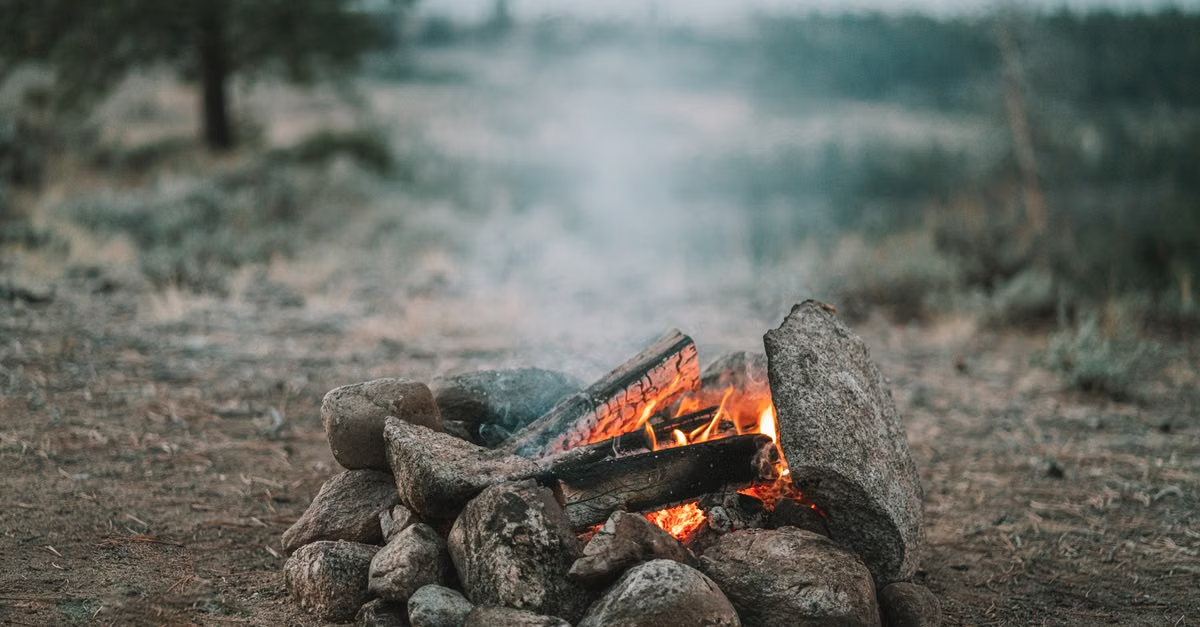
Master campfire safety in the wild. Learn essential planning, building, control, and extinguishing techniques to prevent wildfires and protect nature. Your guide to responsible outdoor fires.
Before You Strike a Match: Essential Pre-Fire Planning
Before you even think about striking a match, proper planning sets the foundation for a safe fire. Skipping these steps is a gamble you don’t want to take.
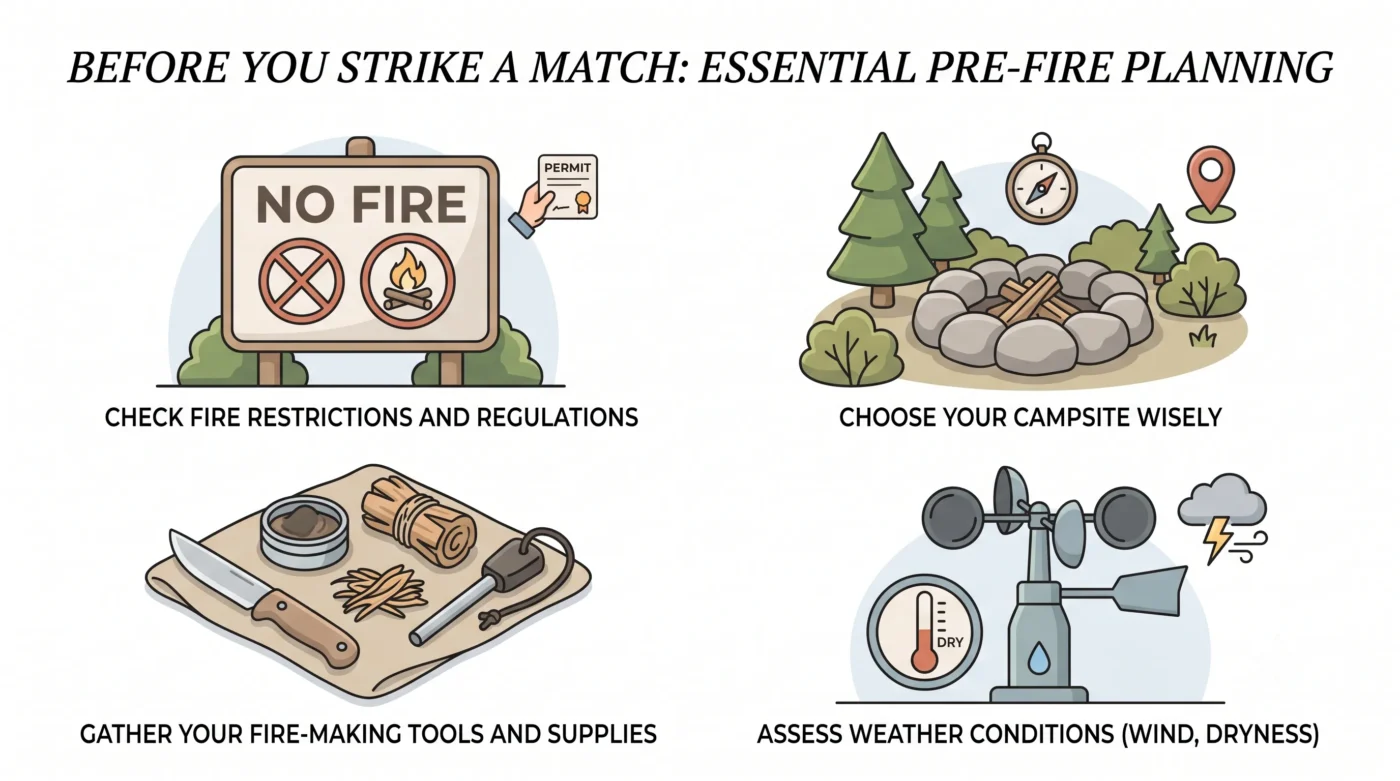
Check Fire Restrictions and Regulations
Always research the current fire danger level and any local burn bans or restrictions for your specific area. This includes national parks, state forests, private land, or any other wilderness you plan to visit. Conditions can change rapidly due to weather, so check immediately before your trip and again upon arrival. A quick online search or a call to the local ranger station can save you from a hefty fine or, worse, a disaster.
Choose Your Campsite Wisely
Select a flat, open area away from overhanging branches, dry grass, shrubs, or other flammable materials. Look for existing fire rings or designated fire areas. These spots are usually chosen for their safety and impact minimization. If you’re in a primitive area, ensure your chosen spot is naturally clear of dense vegetation and offers a buffer zone from anything that could catch fire.
Gather Your Fire-Making Tools and Supplies
Don’t wait until you’re ready to light the fire to realize you’re missing something critical. Ensure you have a shovel, a bucket for water (filled and ready), a reliable ignition source (matches, lighter, ferro rod), and appropriate fuel before starting. Never rely on finding everything on site; bring what you need to build and, crucially, to put out your fire.
Assess Weather Conditions (Wind, Dryness)
High winds can easily spread sparks, turning a small ember into a runaway blaze in seconds. Prolonged dry spells, especially after a hot summer, dramatically increase fire risk. If conditions are unfavorable – strong winds are blowing, or the landscape is bone dry – consider alternative cooking methods like a camp stove or postponing your fire altogether. Your safety and the environment’s well-being are worth the compromise.
Building Your Fire: The Art of a Safe Campfire
Once you’ve planned, it’s time to build. A well-constructed fire is a controlled fire.
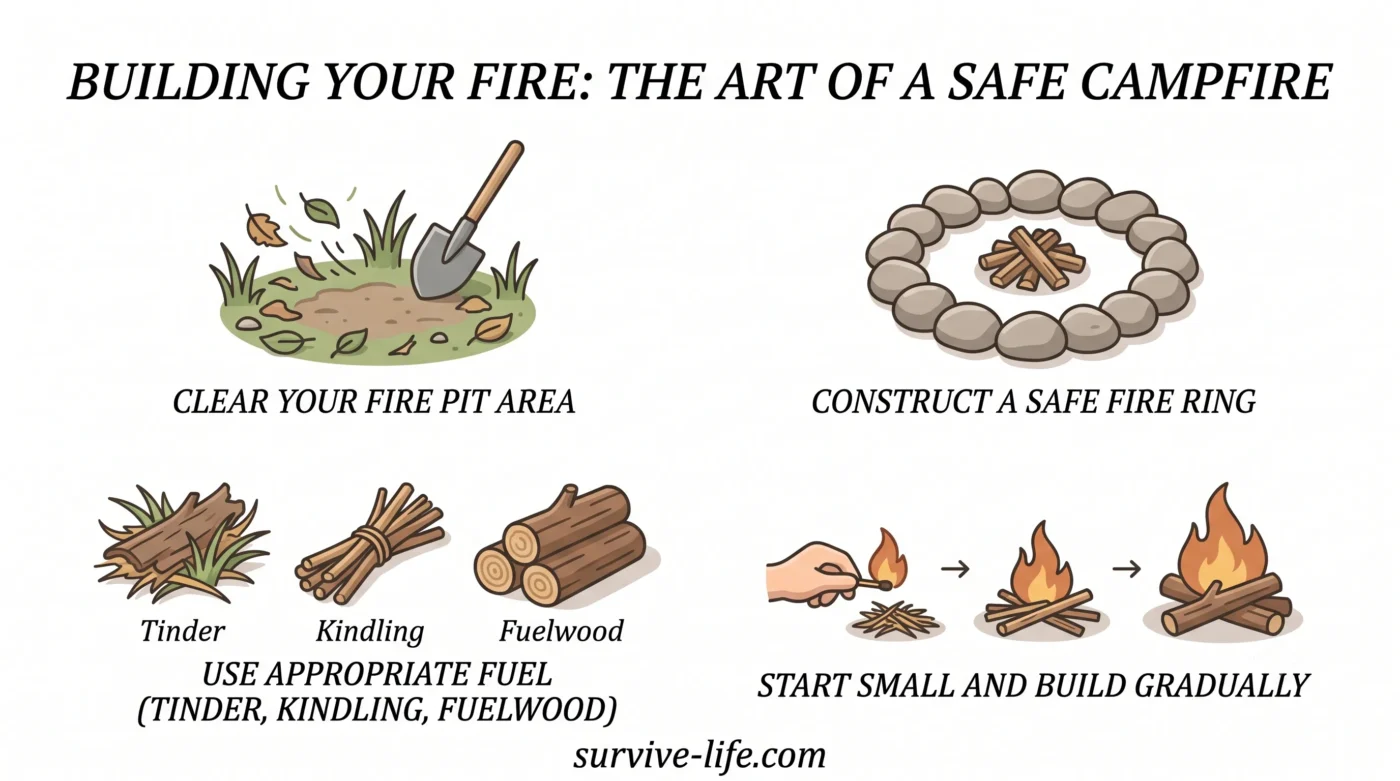
Clear Your Fire Pit Area
Create a clear zone at least 10 feet in diameter around your fire pit. This isn’t just a suggestion; it’s a critical safety measure. Remove all flammable materials – leaves, twigs, pine needles, grass, and duff – down to bare mineral soil. This creates a defensible space, preventing ground fires from spreading.
Construct a Safe Fire Ring
If no existing ring is present, build one with rocks or dig a shallow pit. A well-built fire ring helps contain embers and prevents the fire from spreading horizontally. Ensure your rocks are dry and not porous, as some rocks can explode when heated. A pit should be no deeper than necessary to contain the fire, and the excavated soil can be used to create a berm around the edge.
Use Appropriate Fuel (Tinder, Kindling, Fuelwood)
Collect only dead and downed wood that’s no larger than your forearm. This wood burns cleanly and efficiently. Avoid using live wood, treated wood, or trash, which can create excessive smoke, toxic fumes, and leave behind harmful residues. Stick to the “pencil-to-forearm” rule for size, ensuring your fuel burns completely and safely.
Start Small and Build Gradually
Begin with a small amount of tinder (fine, easily ignitable material) and kindling (small sticks). Once it’s burning steadily, slowly add larger pieces of fuelwood. A smaller fire is always easier to control. Resist the urge to build a massive bonfire; a modest fire provides plenty of warmth and light without posing an excessive risk.
Keeping Your Fire Under Control: Active Management
Building a safe fire is only half the battle. Constant vigilance is key to preventing accidents.
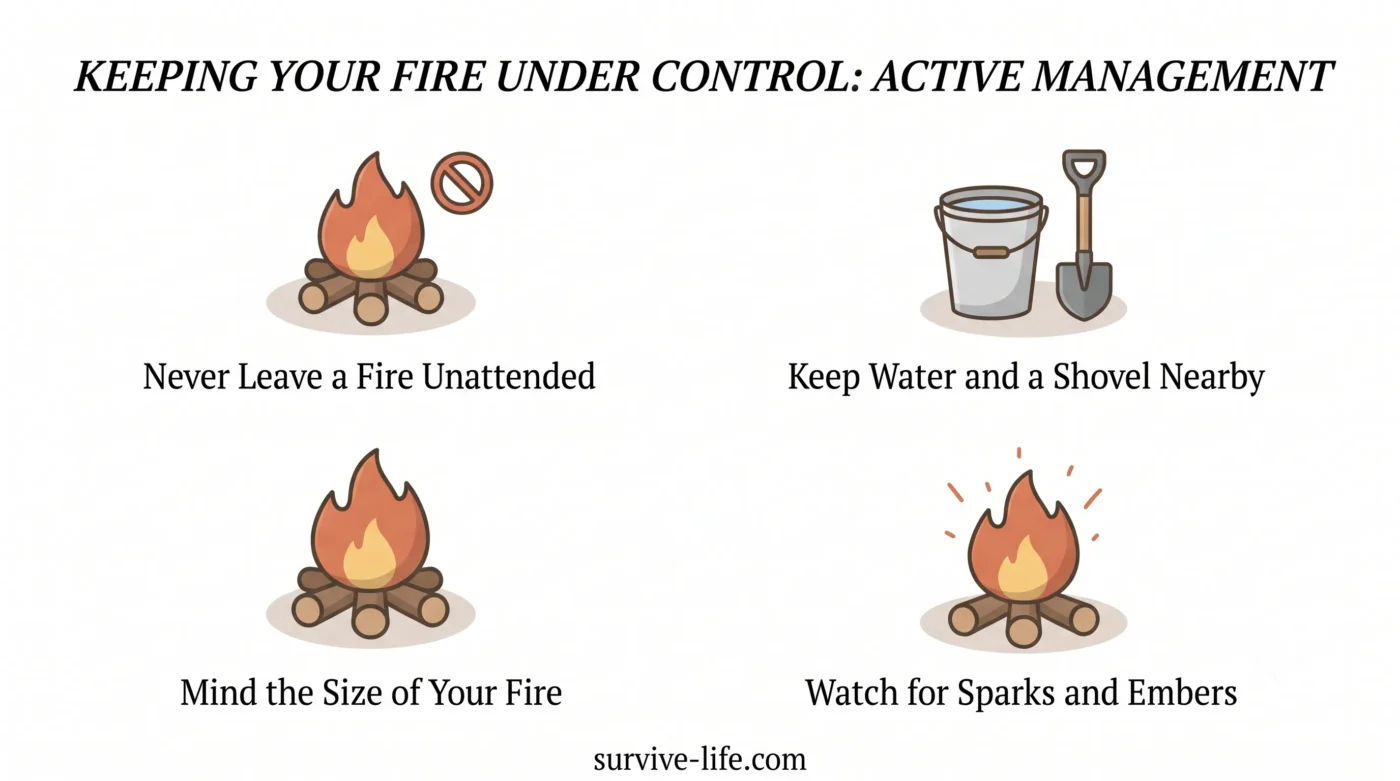
Never Leave a Fire Unattended
Even for a moment, an unattended fire can quickly get out of hand. A sudden gust of wind, a rolling ember, or a curious animal can turn a contained fire into a wildfire. Always have an adult supervising the fire. If you need to step away, even for a minute, completely extinguish the fire first.
Keep Water and a Shovel Nearby
Your filled water bucket and shovel are your first line of defense. Position them within arm’s reach of the fire. This immediate access allows you to react instantly if sparks fly or an ember escapes. Don’t just have them; ensure they are ready for immediate use.
Mind the Size of Your Fire
Keep your fire to a manageable size. A small, contained fire provides plenty of warmth and light without posing an excessive risk. Taller flames are more susceptible to wind and can throw embers further. Aim for a fire that stays well within your fire ring and clear zone.
Watch for Sparks and Embers
Be vigilant for sparks flying from the fire, especially in windy conditions. Sparks are tiny, but they carry enough heat to ignite dry vegetation. Use your shovel to tamp down any escaping embers or to move burning logs further into the center of the pit. Your eyes are your best tool for early detection.
The Crucial Step: Extinguishing Your Campfire Completely
This is arguably the most important step. A fire isn’t out until it’s cold to the touch. Many wildfires start from improperly extinguished campfires.
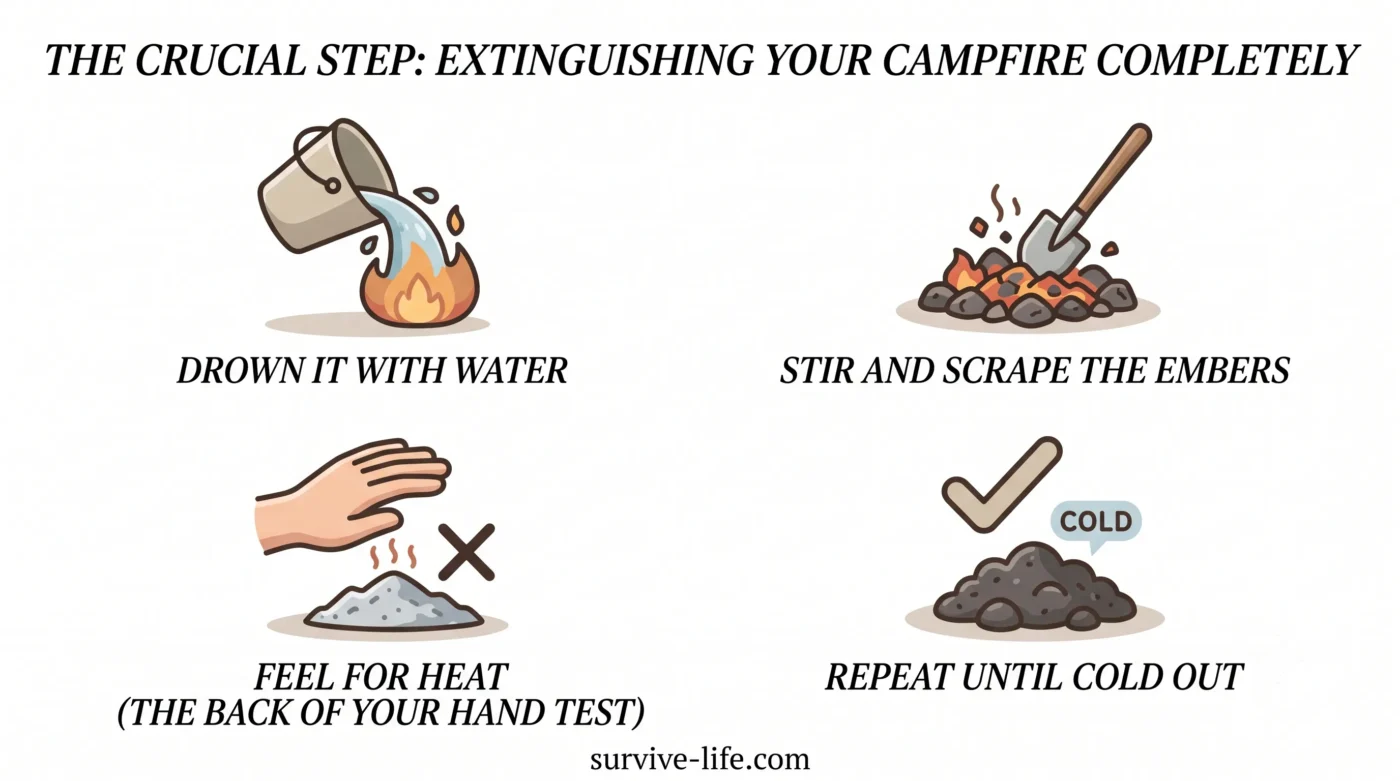
Drown It with Water
Pour generous amounts of water over all embers and hot spots. Don’t just sprinkle; saturate the entire fire pit. You should hear a hissing sound as the water hits the hot coals. Continue adding water until the hissing stops and steam subsides.
Stir and Scrape the Embers
Use your shovel to stir the ashes and remaining embers. This exposes any hidden hot spots and helps the water penetrate thoroughly. Break apart any larger pieces of charcoal or wood that might still be smoldering beneath the surface.
Feel for Heat (The Back of Your Hand Test)
Carefully place the back of your hand a few inches above the ashes. If you feel any heat, even a slight warmth, it means there are still active embers. This test is crucial because a fire can look out but still be dangerously hot underneath.
Repeat Until Cold Out
This step is non-negotiable. A fire is not out until it’s cold to the touch. Repeat the drowning, stirring, and feeling process as many times as necessary. You should be able to run your fingers through the ashes without feeling any warmth. Only then is it truly safe to leave.
Beyond the Fire Pit: Preventing Accidental Ignitions
Fire safety extends beyond the immediate campfire area. Other sources of ignition can be just as dangerous.
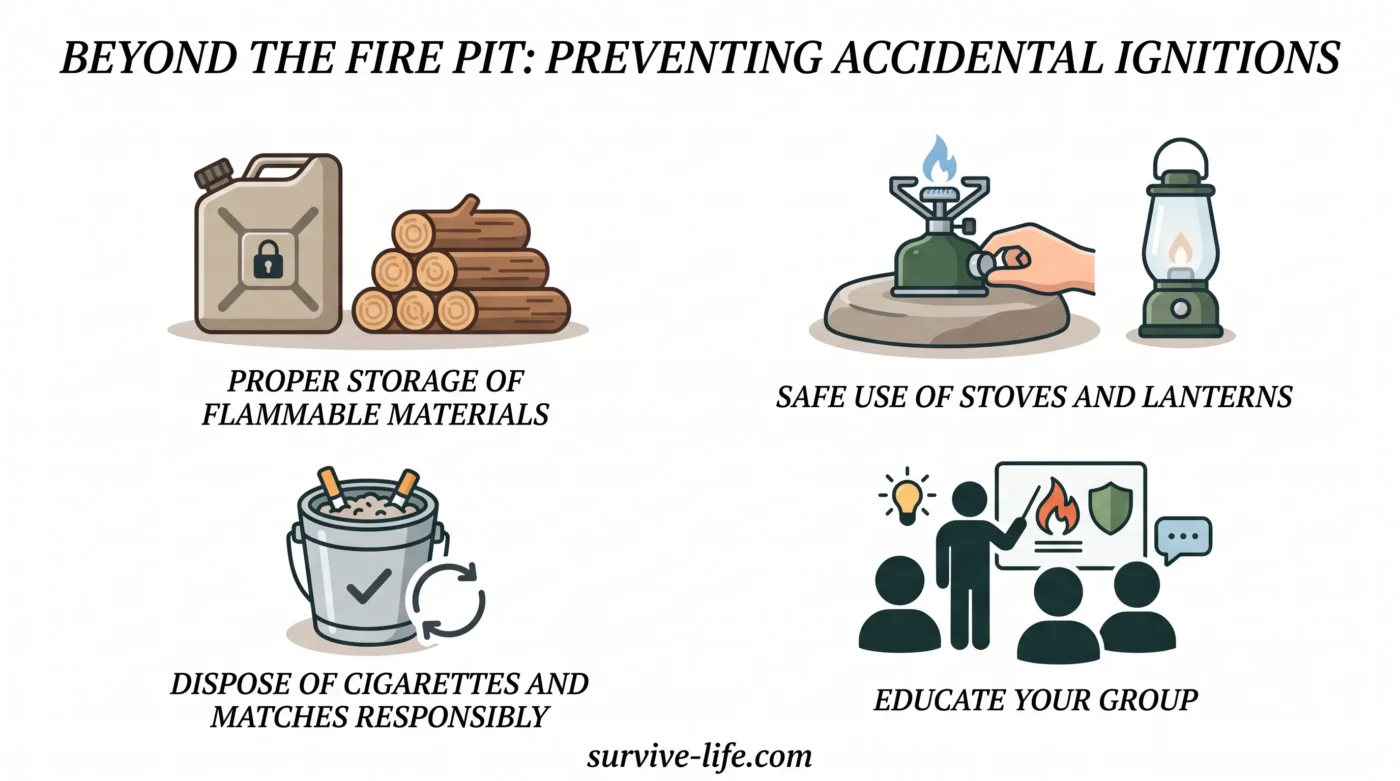
Proper Storage of Flammable Materials
Keep tents, sleeping bags, fuel canisters, and other flammable items a safe distance from your campfire and cooking areas. A stray spark or an accidental knock-over can quickly turn your gear into fuel. Designate a “cold zone” for all your flammable equipment.
Safe Use of Stoves and Lanterns
Treat camp stoves and lanterns with the same respect as a campfire. Ensure they are stable, away from flammables, and properly extinguished after use. Always operate them on a flat, clear surface, and never leave them unattended while lit. Check for leaks in fuel lines and ensure proper ventilation if using them inside a tent or shelter.
Dispose of Cigarettes and Matches Responsibly
Always fully extinguish cigarettes in a designated receptacle or by drowning them with water. Matches should be broken in half, ensuring the ember is out, and cooled before disposal. Never flick a cigarette butt or toss a match onto the ground; even a tiny spark can ignite dry leaves or grass.
Educate Your Group
Ensure everyone in your camping party understands fire safety rules and their role in preventing accidents. Share these guidelines with children and adults alike. A collective understanding and shared responsibility significantly reduce the risk of fire.
When Things Go Wrong: Emergency Preparedness
Despite your best efforts, accidents can happen. Knowing what to do in an emergency is vital.
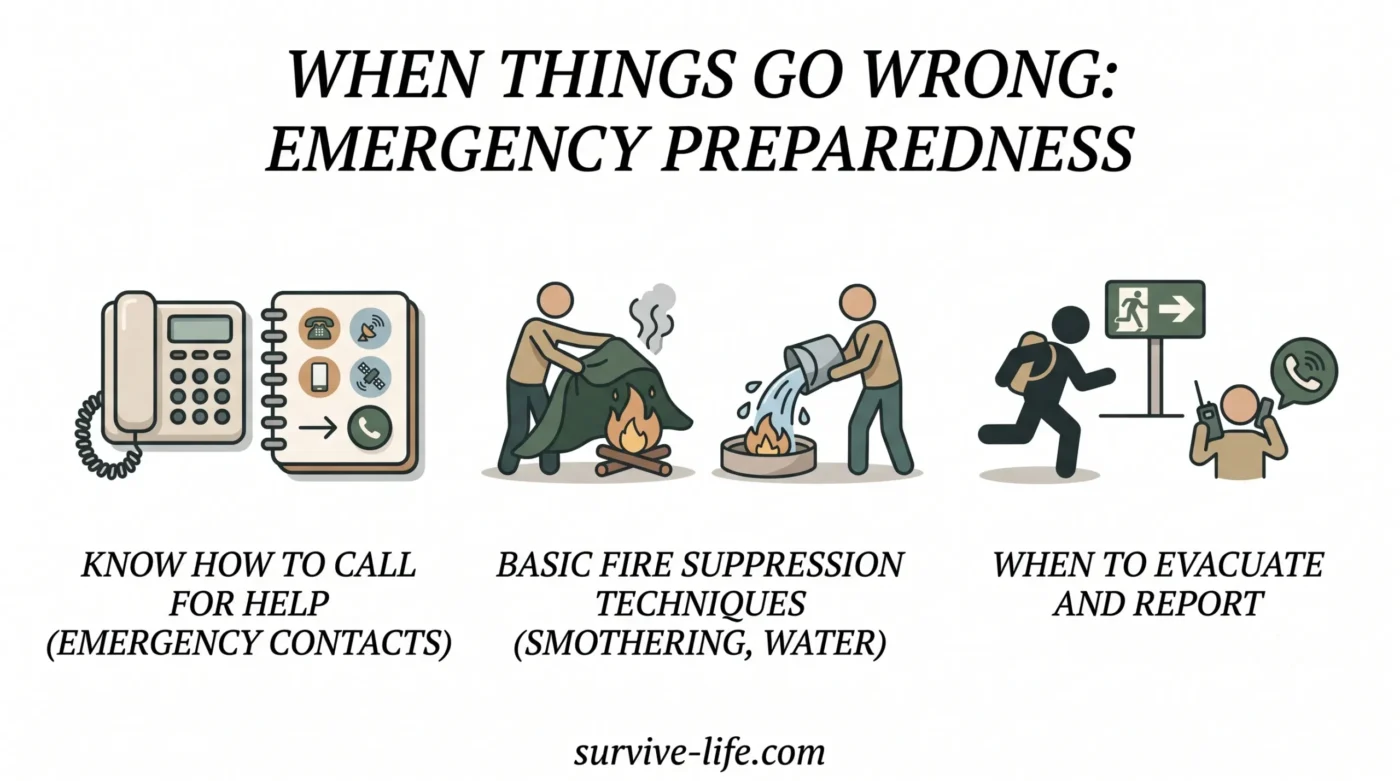
Know How to Call for Help (Emergency Contacts)
Have local emergency numbers (e.g., 911, park rangers, local fire department) readily available. Know your exact location or how to describe it using landmarks, trail markers, or GPS coordinates. Time is critical in a fire emergency.
Basic Fire Suppression Techniques (Smothering, Water)
For small, contained fires that escape the pit, use your shovel to smother flames with dirt or douse them with water. Act quickly and calmly. Your immediate actions can prevent a small problem from becoming a catastrophe. Focus on cutting off oxygen or cooling the fuel.
When to Evacuate and Report
If a fire grows beyond your immediate control – if it’s larger than a small campfire, spreading rapidly, or threatening your safety – prioritize your safety and the safety of your group. Evacuate the area immediately and report the fire to authorities as soon as possible. Don’t try to be a hero; get to safety and let trained professionals handle it.
Campfires are a cherished part of the outdoor experience, but they demand our utmost respect and vigilance. By following these practical steps for prevention, control, and complete extinguishment, you become a responsible steward of the wild. Remember, ‘Leave No Trace’ applies not just to trash, but to fire safety too. Enjoy the warmth, cook your meals, and share stories around the fire, knowing you’ve done your part to protect our precious natural spaces for generations to come. Be safe, be smart, and happy trails!