Let’s get real for a second. Knowing a few basic, super-strong survival knots isn’t just for seasoned adventurers or those super-prepared preppers you see on TV. It’s a genuine, life-saving skill that everyone can benefit from. In an emergency, whether you’re out in the wilderness or just dealing with an unexpected situation at home, a well-tied knot can be the difference between a minor inconvenience and a serious problem. It can help you secure a shelter, hoist essential gear, or even create a makeshift rescue line. It’s about having practical emergency skills that empower you to handle whatever life throws your way.
Today, we’re going to dive into three simple knots that could literally save your bacon. We’re not talking about fancy, complicated sailor’s knots that take years to master. Nope, these are practical, reliable, and relatively easy to learn. Once you’ve got these in your toolkit, you’ll feel a whole lot more confident about tackling those unexpected challenges. So, grab a cup of coffee, maybe a piece of rope if you’ve got one handy, and let’s learn about some truly essential outdoor safety techniques!
The Bowline – Your Go-To for a Secure Loop
Alright, let’s kick things off with what many folks call the “king of knots”: the bowline knot. Why such a grand title, you ask? Well, this knot creates a non-slip loop at the end of a rope that absolutely will not tighten or loosen under pressure. Think about that for a moment – a loop that stays exactly the size you made it, no matter how much strain you put on it. That’s a heck of a lot of reliability right there!
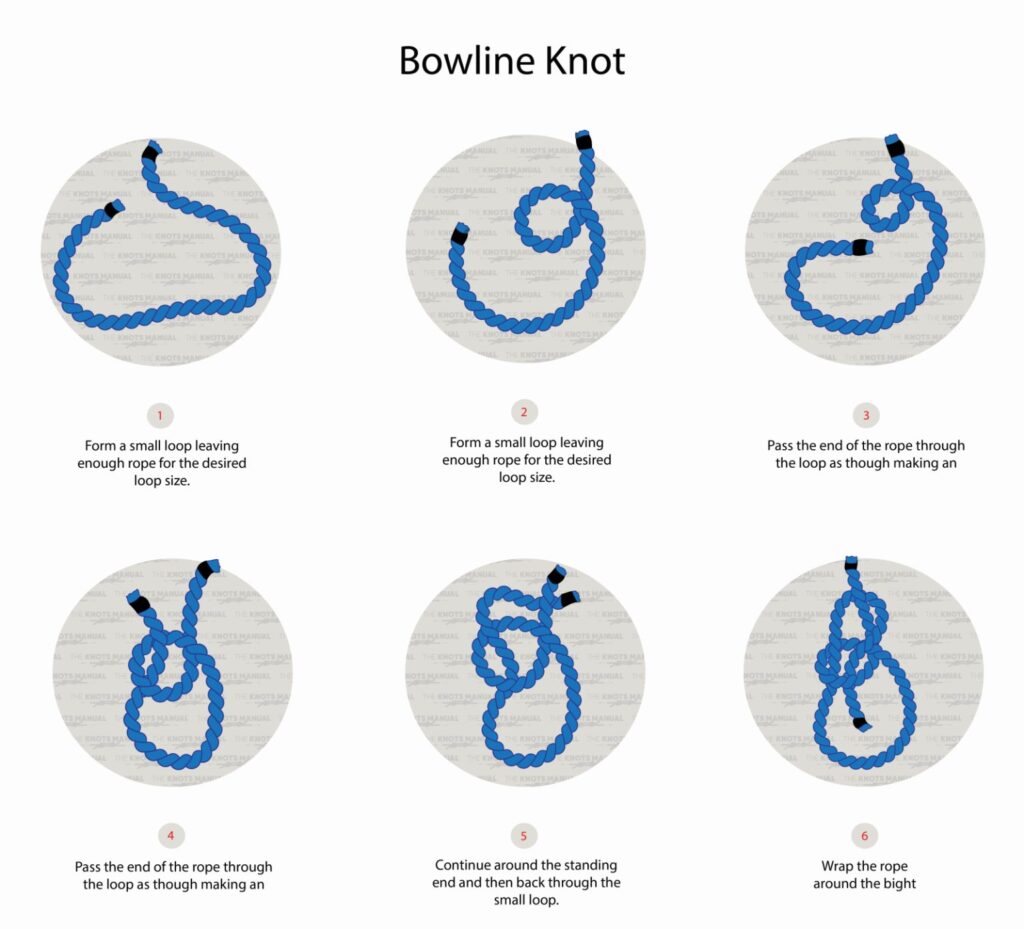
Imagine you’re out camping, and a sudden, unexpected storm rolls in. The wind is howling, and your tarp needs to be secured now. You need a strong, fixed loop to go around a tree or a stake, and you need to trust that it won’t slip or cinch down. The Bowline is your reliable friend for creating just that kind of strong, fixed loop. It’s perfect for quickly securing a tarp, creating a tie-down point that won’t budge, or even making a temporary handle on something heavy.
But its uses go way beyond just securing tarps. Let’s say you’re in a situation where you need to hoist gear up a tricky incline, like a steep bank or a small cliff. You can tie a Bowline around your backpack or a bucket, and you know that loop will hold firm as you pull it up. Or, in a more serious scenario, imagine needing to create a rescue loop for someone who’s fallen into a ditch or needs to be pulled to safety. You can quickly form a Bowline, slip it around them (under their arms, for instance), and pull, confident that the loop won’t tighten and cause further injury. It’s a true lifeline.
What makes the Bowline so special is its combination of strength and ease of untying after it’s been under load. Many knots can become “jammed” when they’ve been pulled tight, making them a nightmare to undo. Not the Bowline. Even after bearing a significant weight, it can usually be untied with relative ease, which is a huge advantage in any situation where time is of the essence or you need to pack up quickly. It’s a fundamental piece of survival knowledge that gives you incredible peace of mind.
The Clove Hitch – Quick & Easy for Poles and Posts
Next up, we’ve got the clove hitch. This one is a real workhorse when you need to quickly attach a rope to a pole, tree, or post. It’s super fast to tie and adjust, making it perfect for temporary but secure attachments. Think of it as your go-to knot for when you need something held firmly, but you also know you might need to take it down or move it relatively soon.
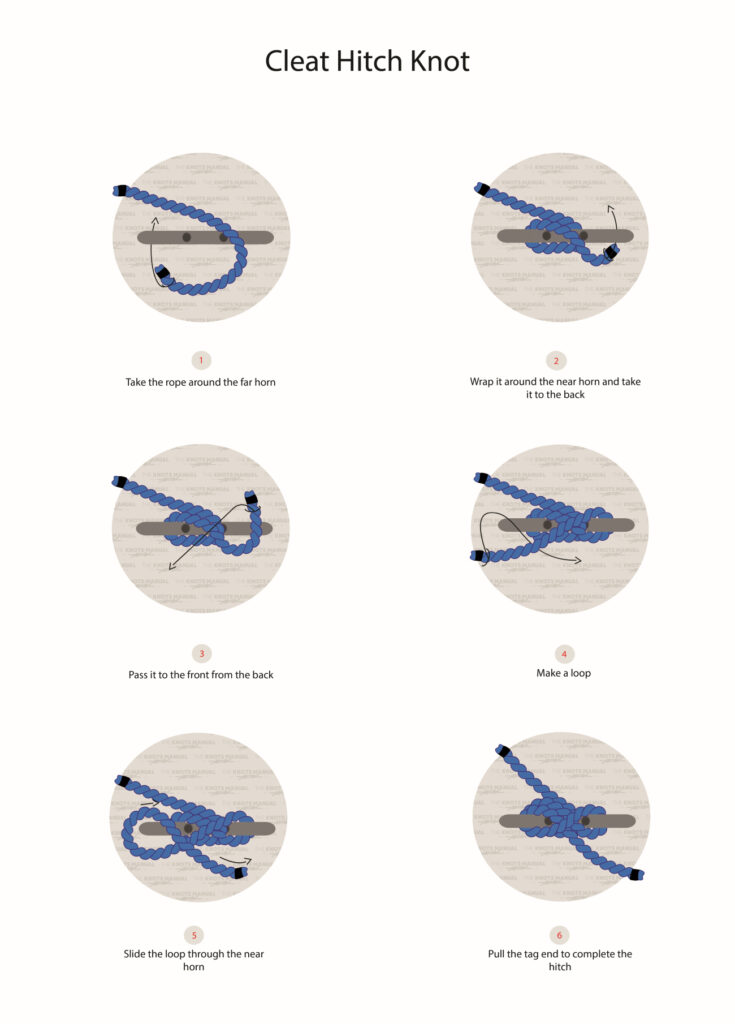
Picture this: you’re trying to set up a makeshift shelter frame in a hurry. You’ve got some sturdy branches, and you need to lash them together or secure them to a standing tree. The Clove Hitch allows you to do this with incredible speed. You can wrap it around a pole, cinch it down, and it holds firm. It’s not designed for critical, long-term loads where movement or rotation is a major concern, but for quick, temporary structural support, it’s absolutely brilliant.
Another great example? Securing a small boat to a dock, even temporarily, while you unload gear or wait for someone. You can quickly throw a Clove Hitch around a cleat or a post, and it’ll hold your boat steady. Or, imagine a tent pole breaks, and you need to splint it with a sturdy stick and some rope. A couple of Clove Hitches will hold that splint in place, getting you through the night.
The beauty of the Clove Hitch lies in its simplicity and speed. You can often tie it with one hand, or even “throw” it over an object. While it’s easy to untie, it tightens securely under constant tension, making it surprisingly robust for its intended purpose. It’s a fantastic knot for general utility and a must-have in your repertoire of emergency skills. Just remember, for really critical, long-term loads where the rope might be subject to twisting or varying directions of pull, you might want to back it up with a half hitch or choose a different knot. But for quick, reliable attachment to a cylindrical object, the Clove Hitch is your champion.
The Taut-Line Hitch – The Adjustable Tension Master
Last but certainly not least, let’s talk about the taut-line hitch. This is a fantastic knot for creating adjustable tension, and once you learn it, you’ll wonder how you ever lived without it. It’s essentially a sliding knot that moves along the main line to tighten or loosen, but then locks firmly when pulled. It gives you incredible control over the tension of your rope, which is a game-changer in so many situations.
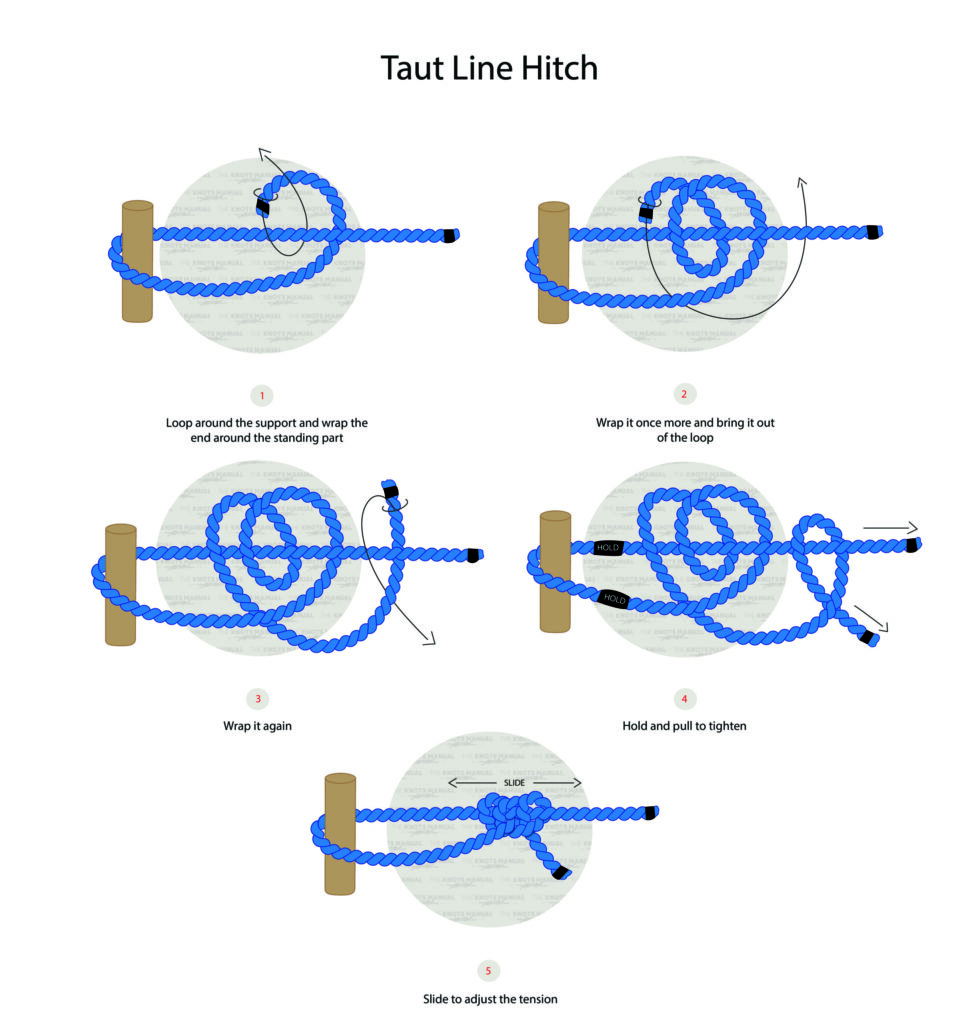
Think about setting up a tent or a tarp. Those guy lines need to be just right – tight enough to keep things stable, but not so tight they rip the fabric or pull out the stakes. The Taut-Line Hitch is absolutely perfect for this. You can tie it onto your guy line, attach the other end to a stake, and then slide the knot up or down the main line to get the perfect tension. If the wind picks up, or if your stakes shift a bit, you can easily re-adjust without having to untie and re-tie anything. It’s pure genius for maintaining outdoor safety and comfort.
But its uses don’t stop at camping. Imagine you’re securing a load on a vehicle – maybe some lumber, a kayak, or even just a stack of boxes. As you drive, things can shift, and your ropes might loosen. With a Taut-Line Hitch, you can pull over, give the knot a quick slide, and re-tighten your load in seconds, ensuring everything stays secure for the rest of your journey. No more worrying about things bouncing around or falling off!
In a pinch, you could even use it to create a makeshift clothesline. Tie one end of a rope to a tree, then use a Taut-Line Hitch on the other end to secure it to another tree, adjusting the tension until it’s perfectly taut for hanging wet clothes. It’s incredibly versatile and empowers you to adapt your rope setup to changing conditions. This knot truly embodies practical survival knowledge because it allows for dynamic adjustments, which is often exactly what you need in unpredictable environments. It’s a little more complex than the Clove Hitch, but still very approachable, and the payoff in terms of utility is huge.
Ready to Tie One On?
So, there you have it! With just the Bowline for a strong, non-slip loop, the Clove Hitch for quick and secure attachments to poles and posts, and the Taut-Line Hitch for adjustable tension, you’ve got a powerful toolkit for many emergency situations. These three survival knots cover a huge range of practical needs, from securing shelters and hoisting gear to tying down loads and creating rescue aids.
Don’t just read about them – that’s only half the battle! The real magic happens when you get your hands on a piece of rope and start practicing. Seriously, grab an old shoelace, a piece of clothesline, or some paracord, and spend a few minutes with each knot. There are tons of great videos online that can show you the step-by-step process. A little hands-on practice now means you’ll build that muscle memory, and you’ll be ready and confident when it really counts. Knowing these emergency skills isn’t just about being prepared; it’s about feeling empowered and capable. Stay safe out there, my friend!