
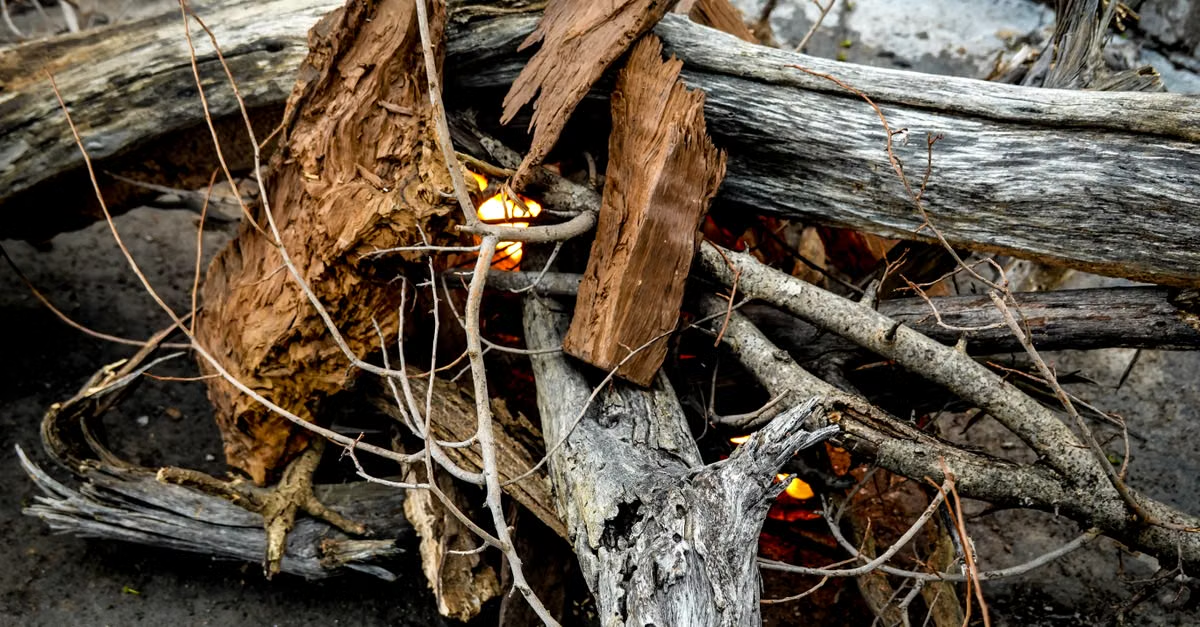
Master fire starting with this practical guide to natural tinder. Learn to identify, harvest, and prepare the best fibrous plants, resinous woods, and fungi for reliable ignition in any survival situation.
Introduction
Fire is more than just warmth; it’s a lifeline in the wilderness, offering protection, cooking capabilities, and a morale boost. But before you can enjoy a roaring blaze, you need to master the art of fire starting, and that begins with tinder. Tinder is the easily ignitable material that catches a spark or tiny flame and holds it long enough to ignite your kindling. In a survival situation, knowing which natural materials actually work as tinder can be the difference between comfort and crisis. This guide cuts through the noise to give you practical, proven advice on finding, preparing, and using the best natural tinder.
Understanding Tinder: The Foundation of Any Fire
What Makes Good Tinder?
Good tinder shares a few critical characteristics. First, it must be bone dry. Moisture is the enemy of ignition. Second, it needs a high surface area. Think of it like a thousand tiny hairs – more surface means more points for a spark to catch and more oxygen to feed a nascent flame. Finally, a fibrous nature helps it hold together and allows air to circulate, which is crucial for sustained burning. If it crumbles into dust or is too dense, it won’t work well.
The ‘Tinder Bundle’ Concept: Why it’s crucial for success
A tinder bundle isn’t just a pile of tinder; it’s a carefully constructed nest designed to catch a spark and burst into a small flame. You’re aiming for a bird’s nest shape, with the finest, most ignitable material in the center, surrounded by slightly coarser tinder, and then a layer of very fine kindling. This structure allows you to transfer a tiny ember or spark into a sustained flame that can then ignite your larger kindling. Without a proper bundle, even the best tinder can fail to transition into a usable fire.
Why Preparation is Key: Processing raw materials for optimal ignition
Finding raw tinder is one thing; preparing it is another. Most natural materials need some processing to reach their full potential. This means shredding, fluffing, scraping, or crushing to increase that vital surface area. A piece of bark might not catch a spark, but finely scraped bark fibers will. Taking the time to process your tinder before you even attempt to light it dramatically increases your chances of success.
Fibrous Plant Materials: Nature’s Best Tinder
Inner Bark (Cedar, Juniper, Aspen, Cottonwood)
These barks are champions of fibrous tinder. To harvest, look for deadfall or standing dead trees. Avoid stripping bark from living trees, as this can harm them. Peel off the outer bark to expose the inner, fibrous layer. With a knife or even your fingernails, scrape and shred this inner bark into a fine, fluffy mass. Cedar bark, in particular, is excellent; it breaks down into incredibly fine, hair-like fibers that catch a spark readily and burn with a good flame. Juniper, aspen, and cottonwood barks offer similar properties when properly processed.
Dried Grasses and Cattail Fluff
Dried grasses are abundant and often overlooked. Look for the driest, finest blades, preferably those that have been bleached by the sun. Crush and rub them between your hands to break them down and increase their surface area. Form them into a loose, airy bundle. Cattail fluff (the seed head of the cattail plant) is incredibly fine and catches a spark almost instantly. Collect it when the heads are dry and fluffy. The downside is that it burns very quickly, so you need a well-prepared tinder bundle and kindling ready to go. Store these in a waterproof bag, as they absorb moisture easily.
Milkweed and Thistle Down
These are exceptionally fine and fluffy materials, similar to cattail fluff. Milkweed down comes from the pods of the milkweed plant, while thistle down is found in the seed heads of thistles. They are fantastic for catching a spark, but like cattail fluff, they burn out very fast. They can be challenging to ignite and sustain a flame if your tinder bundle isn’t perfectly constructed and your kindling isn’t immediately available.
Dead Leaves and Pine Needles
When they work, they work well, but conditions must be perfect. Dead leaves need to be absolutely bone dry and crushed into a fine powder or small fragments. If they’re even slightly damp or too coarse, they’ll just smolder or refuse to ignite. Pine needles are similar; they must be completely dry and finely crushed. They contain resins that can help them burn, but their density and shape often make them difficult to ignite with a spark alone. They’re better used as a secondary tinder or fine kindling once a flame is established.
Resinous & Oily Tinder: The Fire Starters’ Secret Weapon
Fatwood (Pine Knots, Heartwood)
Fatwood is a gift from the forest. It’s pine wood saturated with resin, making it highly flammable and ignitable even when damp. You’ll find it in the heartwood of dead pine stumps, at the base of dead branches (knots), or where a branch broke off a living tree, exposing the core. It smells strongly of turpentine. To use it, shave off fine curls or dust with your knife. These shavings catch a spark readily and burn with a hot, sustained flame, acting as a powerful accelerant for your tinder bundle. A small piece of fatwood can make all the difference in wet conditions.
Birch Bark: The ‘paper’ of the forest
Birch bark is legendary for a reason. It contains oils that make it highly flammable, even when wet. The thin, papery outer layers of birch bark peel off easily. Look for fallen trees or loose bark on standing trees; avoid girdling a living tree. Shred the bark into fine strips or curls. It catches a spark quickly and burns with a strong, hot flame, making it one of the most reliable natural tinders you can find. It’s an absolute staple for any fire starter.
Pine Sap/Resin
Pine sap, or resin, is a powerful accelerant and booster, but it’s not a primary tinder on its own. You can collect hardened sap from pine trees, especially where the tree has been wounded. Add small pieces of it to your tinder bundle or directly to your kindling once you have a small flame. It will melt, bubble, and burn with intense heat, helping your fire grow quickly. It’s a fantastic way to ensure your initial flame takes hold of larger kindling.
Fungi & Other Unique Natural Tinder
Chaga Mushroom (Dried)
Chaga, often found on birch trees, is a unique tinder. When dried, the inner, corky part of the chaga mushroom can catch a spark and smolder for a long time, acting as an excellent ember carrier. It’s not ideal for bursting into flame quickly, but it’s perfect for transferring a precious ember from a ferro rod or friction fire to your tinder bundle, giving you more time to build your fire.
Artist’s Conk / Tinder Fungus
Artist’s Conk (Fomes fomentarius), also known as Tinder Fungus, has a long history of use as tinder. The inner, spongy layer (the context) needs to be processed. You typically slice it thin, then pound or flatten it to increase its surface area and make it more receptive to a spark. Once prepared, it can catch a spark and smolder, much like chaga, making it a reliable ember carrier. It’s a bit more work to prepare than other tinders, but it’s incredibly effective.
Bird Nests (Abandoned)
An abandoned bird’s nest is often a ready-made, perfectly structured tinder bundle. Birds are masters of construction, using fine grasses, twigs, feathers, and other fibrous materials to create a warm, insulated home. If you find one that’s clearly abandoned and dry, it can be an instant fire starter. Just be sure it’s truly empty and not housing any critters.
The Importance of Dryness and Preparation
Protecting Your Tinder from Moisture: Storage tips for your ‘tinder pouch’ or kit
Even the best tinder is useless if it’s wet. Always protect your collected tinder from moisture. Carry a dedicated ‘tinder pouch’ – a waterproof bag or container – to store your pre-processed materials. A Ziploc bag, a dry bag, or even a plastic bottle can work. Keep this pouch close to your body to benefit from your body heat, which can help dry out any residual moisture.
Process Tinder for Maximum Effectiveness: Shredding, fluffing, and creating a ‘bird’s nest’ shape
Once you’ve collected your tinder, the work isn’t over. Shred fibrous barks into the finest possible strands. Fluff grasses and downy materials to maximize air pockets. Then, arrange your processed tinder into that crucial ‘bird’s nest’ shape. This structure allows you to place your spark or ember in the center, where it’s protected and has plenty of fine material to ignite, while the outer layers provide insulation and a gradual transition to kindling.
Testing Your Tinder: A quick field check to ensure it’s ready to catch a spark
Before you commit to lighting your fire, do a quick field test. Take a small pinch of your prepared tinder and try to ignite it with a spark from your ferro rod or a brief touch from a lighter. If it catches easily and holds a flame for a few seconds, you’re good to go. If it just smolders or refuses to catch, you need to process it further or find drier material. Don’t wait until you’re trying to start your main fire to discover your tinder isn’t ready.
Common Mistakes and How to Avoid Them
Underestimating the Amount Needed: Always gather more than you think you’ll need
This is a classic beginner’s mistake. You’ll always need more tinder and kindling than you anticipate. A small flame needs constant feeding to grow into a sustainable fire. Gather a pile that looks excessive – you’ll thank yourself later. It’s better to have too much and not need it than to run out when your fire is just starting to take hold.
Using Damp or Green Materials: The most common pitfall for beginners
Wet tinder won’t light. Green (living) materials contain too much moisture to burn effectively. Always prioritize dry, dead materials. If everything around you is damp, look for tinder under overhangs, inside hollow logs, or on the underside of fallen trees. Fatwood and birch bark are your best friends in these conditions because of their natural oils.
Not Preparing Tinder in Advance: The value of pre-processed tinder
Trying to shred bark or fluff grasses with cold, numb fingers in a sudden downpour is a recipe for frustration. Whenever you have downtime, especially in camp or before a trip, process some tinder and store it in your tinder pouch. Having a ready supply of fine, dry tinder can be a lifesaver when conditions are less than ideal.
Relying on a Single Type of Tinder: Diversify your tinder sources for reliability
Don’t put all your eggs in one basket. While birch bark is fantastic, what if there are no birch trees? Learn to identify and use multiple types of tinder. Carry a small piece of fatwood in your kit, know where to find inner bark, and understand how to use grasses. Diversifying your tinder knowledge and collection ensures you’ll always have options, no matter the environment.
Conclusion
Mastering natural tinder collection and preparation is a fundamental skill for anyone venturing into the outdoors. From the fibrous inner barks to the resinous fatwood and unique fungi, nature provides an abundance of materials that, when properly understood and prepared, can ensure you’re never without fire. Remember, practice is key. Get out there, experiment with these materials, and build your confidence. Stay prepared, stay safe, and keep the flame alive.