
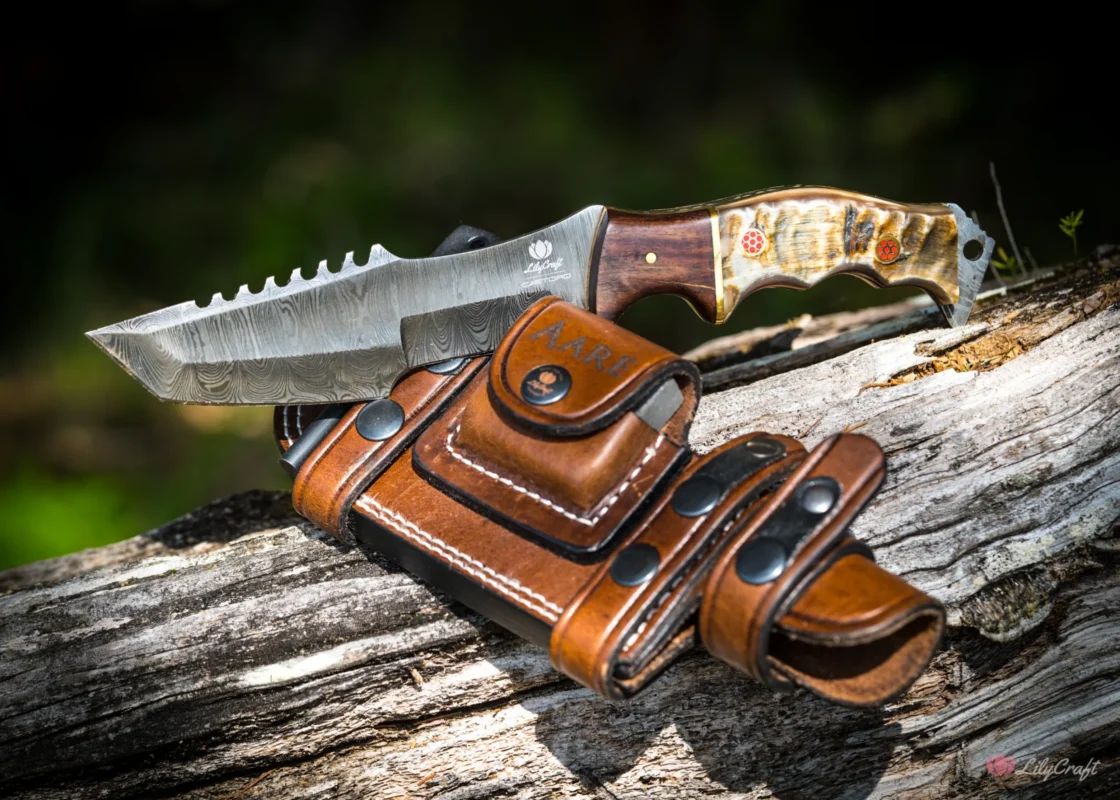
A survival knife is a primary tool in any kit. Its blade thickness dictates its utility and durability in the field. The optimal thickness balances strength for heavy tasks with efficiency for fine work. This balance is crucial for reliable performance. A general-purpose survival blade typically falls between 3/16 and 1/4 inch.
Understanding blade thickness is not merely about raw strength. It involves a nuanced appreciation for how material volume affects cutting geometry, weight, and overall handling. Every fraction of an inch impacts the knife’s performance across diverse survival scenarios. Therefore, selecting the correct blade thickness is a critical decision for any serious outdoorsman or prepper.
The Core Function of Blade Thickness in Survival
Blade thickness directly influences a survival knife’s ability to withstand demanding tasks. A thicker spine provides significant resistance against bending and breaking. This is particularly vital when processing wood through batoning. Batoning involves striking the spine of the blade with a piece of wood to split larger logs. A robust spine prevents catastrophic failure during such high-impact activities. Furthermore, a thicker blade is less likely to deform when prying open containers or manipulating stubborn materials. This structural integrity is a non-negotiable aspect of a reliable survival tool.
Increased material behind the edge also enhances edge retention and durability under stress. When a blade encounters resistance, the force is distributed across a greater volume of steel. This reduces the likelihood of chipping or rolling the edge. Demanding uses, such as chopping through tough roots or scraping bark, place immense stress on the blade’s cutting edge. A thicker blade provides a stronger foundation for the edge. Consequently, it maintains its sharpness longer and resists damage more effectively. This resilience is paramount in situations where resharpening tools are limited or unavailable. A durable edge ensures the knife remains functional for extended periods in the wilderness.
The spine’s thickness also impacts the knife’s ability to generate sparks. A sharp, 90-degree spine on a thick blade provides an excellent surface for striking a ferro rod. This creates a shower of hot sparks, essential for fire starting. A thinner spine might lack the necessary rigidity or sharp angle for effective ferro rod use. Therefore, blade thickness contributes directly to critical survival skills. It is not just about brute force. It is about enabling a range of essential functions. A well-chosen thickness ensures the knife performs reliably across all necessary tasks. This includes everything from shelter building to fire ignition. Always prioritize a blade with a consistent, robust spine for heavy-duty tasks.
Field Note: When batoning, ensure the wood used to strike the spine is softer than the blade steel. This prevents damage to the knife’s spine. Also, strike close to the wood being split, not the tip, to maximize leverage and minimize stress on the blade.
Optimal Blade Thickness for General-Purpose Survival
The 3/16-inch (4.75mm) standard represents a versatile balance for survival knives. This thickness provides ample strength for most batoning and prying tasks. It resists bending and breaking under significant stress. Simultaneously, it maintains sufficient slicing capability for food preparation and finer work. Many experienced survivalists and bushcrafters consider this thickness the sweet spot. It offers a robust tool without excessive weight or bulk. This makes it suitable for a wide range of field applications. The 3/16-inch blade excels at processing firewood, preparing game, and crafting camp tools. Its balanced profile ensures efficiency in diverse scenarios.
The 1/4-inch (6.35mm) heavy-duty option is chosen when maximum strength and abuse resistance are paramount. This thickness provides superior robustness. It is particularly valuable in extreme cold weather or remote wilderness. In these environments, tool failure can be catastrophic. A 1/4-inch blade can withstand extreme prying, chopping, and impact. It offers unparalleled confidence in the most demanding conditions. However, this increased strength comes with trade-offs. The thicker blade will be heavier and less efficient for fine slicing tasks. It creates more drag during cutting. Despite this, for those prioritizing sheer indestructibility, the 1/4-inch blade is an excellent choice. It is often favored for dedicated chopping or heavy-duty camp knives.
These common blade thickness ranges are widely accepted within the survival and bushcraft communities. They represent a consensus on what performs best for general-purpose and heavy-duty applications. The 3/16-inch thickness is often recommended for a primary, all-around survival knife. It offers a practical blend of utility and durability. Conversely, the 1/4-inch thickness is reserved for specialized, high-stress roles. It is ideal when the primary concern is preventing any possibility of blade failure. Therefore, the choice between these two depends heavily on the anticipated primary use. Consider the specific demands of your environment. A 3/16-inch blade offers the best all-around performance for most survivalists.
Pro-Tip: When evaluating a knife, do not just look at the thickness at the spine. Observe how quickly the blade tapers to the edge. A rapid taper on a thick spine can still result in a robust but efficient cutter.
Beyond Thickness: The Role of Blade Geometry and Grind
Blade geometry and grind are as critical as thickness in determining a knife’s performance. A full flat grind, for instance, can offer excellent slicing despite a thicker spine. This is due to its gradual taper from the spine all the way to the edge. The broad, flat surfaces reduce drag when cutting through materials. This makes it highly efficient for food preparation, skinning, and general utility tasks. The full flat grind distributes stress effectively across the blade. It provides a strong edge while maintaining good cutting ability. It is a versatile grind suitable for many survival applications.
A Scandi grind excels at wood carving and processing. Its primary grind forms the entire bevel to the edge. This creates a very strong, acute angle that bites deeply into wood. It allows for precise control during tasks like feather sticking or making traps. However, a Scandi grind can be more prone to chipping if the primary grind is too thin for the blade’s overall thickness. The lack of a secondary bevel means the entire edge is exposed to impact. Therefore, a well-executed Scandi grind on a blade of appropriate thickness is crucial. It maximizes its woodcrafting advantages while mitigating its vulnerability to edge damage. A robust Scandi grind is a hallmark of many dedicated bushcraft knives.
Taper and spine design further refine a blade’s utility. A well-executed distal taper reduces weight towards the tip without compromising strength at the handle. This improves balance and maneuverability. It makes the knife feel lighter in hand during prolonged use. A distal taper also enhances piercing capability. It allows the tip to penetrate materials more easily. Furthermore, a sharp, 90-degree spine is crucial for striking ferro rods. This creates a shower of sparks for fire starting. A rounded or polished spine will not effectively scrape a ferro rod. Therefore, inspect the spine carefully. A sharp, unpolished 90-degree spine is essential for fire starting with a ferro rod.
Field Note: A knife with a good distal taper will feel more lively and less ‘club-like’ in hand. Test the balance point; it should typically be just forward of the guard for optimal control.
The Disadvantages of Excessive Blade Thickness
Excessive blade thickness significantly reduces slicing and carving performance. A very thick blade creates more drag as it passes through material. This makes fine cutting tasks considerably more difficult and less efficient. Food preparation, such as slicing vegetables or filleting fish, becomes a chore. Feather sticking, a critical bushcraft skill for fire starting, is also hampered. The thick blade struggles to create thin, consistent curls of wood. Detailed carving, like making trap components or utensils, requires more effort and precision. The blade’s geometry simply isn’t optimized for delicate work. This compromises the knife’s versatility in a survival situation.
Unnecessary thickness also adds weight to the knife. This can be a significant burden on extended treks. Every ounce counts when carrying a pack for days or weeks. A heavy knife contributes to overall load fatigue. Furthermore, prolonged use of a heavy blade can lead to hand fatigue. Chopping, batoning, or even repetitive slicing can strain the wrist and forearm. This reduces efficiency and increases the risk of accidents. A lighter, more balanced knife allows for longer periods of sustained work. It minimizes user exhaustion. Therefore, excessive weight from an overly thick blade is a practical disadvantage in the field.
Difficulty in sharpening and edge maintenance is another drawback of excessive blade thickness. More material behind the edge means more steel must be removed to achieve and maintain a keen edge. This process is more challenging, especially with field sharpening tools. Small, portable sharpeners may struggle to effectively reprofile a very thick blade. It requires more time and effort to restore sharpness. In a survival scenario, quick and efficient edge maintenance is crucial. A blade that is difficult to sharpen can quickly become a liability. It loses its cutting ability faster and takes longer to restore. Avoid excessive blade thickness if fine cutting and easy field sharpening are priorities.
Pro-Tip: When sharpening a very thick blade, focus on maintaining a consistent angle. Use coarse stones to remove material efficiently, then progress to finer grits. A small, flat diamond sharpener can be very effective for field touch-ups on thick edges.
Matching Blade Thickness to Specific Survival Scenarios
For tasks heavily focused on bushcraft and wood processing, a blade around 3/16 inch offers the best balance. This thickness, combined with a good grind like a Scandi or high saber, provides optimal strength and cutting efficiency. It handles batoning logs for firewood with ease. It also excels at carving tent stakes, making feather sticks, and crafting other wooden tools. The 3/16-inch blade is robust enough for demanding wood tasks. Yet, it remains thin enough to perform detailed work without excessive drag. This versatility makes it a preferred choice for dedicated woodcrafters. It ensures reliable performance across a spectrum of wilderness skills.
In scenarios prioritizing sheer robustness and impact resistance, such as emergency and self-defense, a 1/4-inch blade provides maximum confidence. This thickness offers unparalleled durability. It can withstand extreme abuse without fear of failure. While it sacrifices some utility for fine tasks, its primary role is to endure. This makes it suitable for situations where the knife might be used for prying, breaching, or as a last-resort defensive tool. The added material provides a psychological advantage. It assures the user of the tool’s unwavering strength. However, this choice should be made with a clear understanding of its limitations in other areas. It is a specialized tool for extreme conditions. For maximum impact resistance and durability, a 1/4-inch blade is the superior choice.
For lightweight backpacking and minimalist setups, a thinner blade might be acceptable. A thickness of 1/8 inch or even 5/32 inch prioritizes weight savings and fine utility. This is suitable if heavy batoning or extreme prying is not anticipated. These thinner blades excel at food preparation, cordage cutting, and light carving. They reduce the overall carry weight, which is crucial for long-distance hikers. While less robust than their thicker counterparts, they are perfectly capable for general camp tasks. They offer excellent slicing performance. The trade-off is reduced strength for heavy-duty wood processing. Therefore, assess your typical backpacking activities. Choose a thinner blade if weight and fine utility are paramount. This ensures your gear matches your specific needs.
Field Note: When opting for a thinner blade for lightweight carry, compensate by carrying a small folding saw. This combination handles wood processing more efficiently than relying solely on a thin knife for batoning.
Recommended Blade Thickness Ranges and Specific Models for Your Kit
For most survivalists, a general-purpose field knife with a 3/16-inch blade offers an ideal balance. This thickness provides ample strength for demanding tasks. It also maintains excellent cutting performance for finer work. Models like the ESEE-4 are renowned for their robust construction and versatile design. The ESEE-4 features a full flat grind, making it an efficient slicer despite its sturdy spine. Another excellent option is the Benchmade Bushcrafter. This knife combines premium steel with a comfortable handle and a high saber grind. It excels at wood processing and general camp duties. Both knives are field-proven and highly regarded for their reliability and balanced utility. They represent the sweet spot for a primary survival blade.
When extreme durability is the priority, heavy-duty camp and chopping knives with a 1/4-inch blade are recommended. These knives are built to withstand severe abuse. They are ideal for environments where tool failure is not an option. The KA-BAR Becker BK2 is a prime example. Its thick, full-tang construction and heavy-duty design make it almost indestructible. It excels at chopping, prying, and heavy batoning. Another top-tier option is the Fallkniven A1. This knife features a convex grind on a thick laminate steel blade. It offers exceptional strength and edge retention. These models are heavier. However, they provide unmatched confidence for the most demanding tasks. They are specialized tools for extreme conditions.
For lighter tasks and reduced carry weight, utility blades ranging from 1/8 inch to 5/32 inch are excellent choices. These knives prioritize slicing efficiency and portability. They are suitable for minimalist setups or as secondary blades. The Morakniv Garberg, available in both carbon and stainless steel, offers a robust 3.2mm (approx. 1/8 inch) blade. It features a Scandi grind with a secondary bevel, providing excellent woodcrafting ability and durability. The Bradford Guardian 3, typically around 5/32 inch thick, is a compact yet capable fixed blade. It excels at fine work and everyday carry tasks. These lighter blades are perfect for food prep, cord cutting, and detailed carving. Choose a 3/16-inch blade for your primary, all-around survival knife.
Pro-Tip: When selecting a knife, always check the steel type in addition to thickness. High-carbon steels like 1095 are tough and easy to sharpen, while premium stainless steels like S30V offer superior corrosion resistance and edge retention.
Final Verdict: Prioritizing Practicality Over Extremes
For the vast majority of survival scenarios, a blade thickness of 3/16 inch (approximately 4.75mm) provides the optimal blend of strength, versatility, and practical utility. This thickness offers sufficient robustness for demanding tasks like batoning and prying. It also maintains excellent slicing and carving performance for finer work. It avoids the excessive weight and drag associated with overly thick blades. This makes it the sweet spot for a general-purpose survival knife. It ensures the tool is capable across a wide spectrum of wilderness challenges. This balanced approach maximizes the knife’s overall effectiveness in the field.
Assessing your primary use case is crucial for making the right choice. Evaluate your most likely survival environment and tasks. If heavy-duty wood processing and prying are constant requirements, lean towards a 1/4-inch blade. This provides maximum durability and peace of mind in extreme conditions. Conversely, if fine work, reduced carry weight, and efficient slicing are critical, consider a robust 1/8-inch or 5/32-inch blade. This optimizes the knife for precision and portability. Your environment dictates the specific demands on your gear. Therefore, tailor your blade thickness to those anticipated needs.
Always prioritize a well-designed blade geometry over extreme thickness alone. A thinner blade with an excellent grind can outperform a thicker blade with poor geometry. The way the steel tapers to the edge, the type of grind, and the spine’s finish all contribute significantly to performance. These factors often have a greater impact on cutting efficiency than raw thickness. A knife is a system of interconnected design elements. Each element must work in harmony. Therefore, do not fall into the trap of believing ‘thicker is always better.’ A balanced, thoughtful design is paramount. A knife’s overall design and geometry are more critical than thickness alone.
Field Note: Before committing to a knife, handle it. Assess its balance, grip comfort, and overall feel. A knife that feels good in your hand will be safer and more efficient to use, regardless of its specifications on paper.