Unlock peace of mind in the city! Discover how to be truly City-Smart & Ready, transforming urban challenges into opportunities for confident, resilient living. Your guide to thriving.
1. Introduction: What is City-Smart & Ready?
So, what exactly is City-Smart & Ready? At its core, it’s about urban resilience. Think of it as your personal superpower for navigating the hustle and bustle, the unexpected hiccups, and even the bigger challenges that can pop up in a city. It’s about being adaptable, resourceful, and connected.
We’ve all seen it, right? Remember when that huge storm hit, and suddenly the power was out for days? Or that time a major transit line went down, leaving thousands stranded? What about the smaller stuff, like a sudden water main break on your street, or even just losing your phone in a crowded place? These aren’t just inconveniences; they can be genuinely stressful and even dangerous if you’re not ready.
But here’s the cool part: we also see incredible examples of urban resilience in action. Think about how New Yorkers pulled together after Hurricane Sandy, neighbors helping neighbors, sharing resources, and checking in on the vulnerable. Or how cities like Tokyo have integrated earthquake drills into everyday life, making preparedness a collective habit. It’s not just about big disasters; it’s about the everyday grit and readiness that makes a city strong.
So, let me ask you: Have you ever wondered what you’d do if the internet went down for a week? Or if you suddenly couldn’t access your bank account? Are you truly ready for the unexpected? Being City-Smart & Ready means you can answer those questions with a calm, confident “Yes.”
In a nutshell, City-Smart & Ready is about being prepared, adaptable, and connected within your urban environment, ensuring you can handle disruptions big or small with confidence.
2. Why Being City-Smart & Ready Matters for You
Now, you might be thinking, “Okay, sounds good, but how does this really affect me?” Well, let’s get personal! Being City-Smart & Ready isn’t just some abstract concept; it has a heck of a lot of personal benefits that improve your daily life and safety in tangible ways.
First off, it’s about peace of mind. Imagine not having that nagging worry in the back of your head about “what if.” Instead, you’ll have a quiet confidence, knowing you’ve got a plan. That alone can reduce a ton of stress. When something unexpected does happen – and let’s be real, it will – you won’t be scrambling in a panic. You’ll be able to think clearly, act decisively, and protect yourself and your loved ones.
Think about it: a sudden power outage? No biggie, you know exactly where your flashlight and power bank are. A transit strike? You’ve got alternative routes mapped out, maybe even a bike ready to go. This isn’t just about surviving; it’s about thriving, even when things get a little messy.
This preparedness translates directly into improved daily life. You’ll feel more secure in your home, more confident on your commute, and generally more in control of your surroundings. It’s like having an invisible shield that helps you navigate the urban jungle with greater ease. You’ll walk taller, knowing you’re not just a passenger in your city, but an active, capable participant ready for anything. It’s a fantastic feeling, truly.
3. Building Your Personal Urban Resilience Kit
Alright, let’s get practical! Building your personal urban resilience kit is like putting together your superhero utility belt. It’s not just about physical stuff, though that’s a big part of it. It’s also about digital readiness and sharpening your own skills.
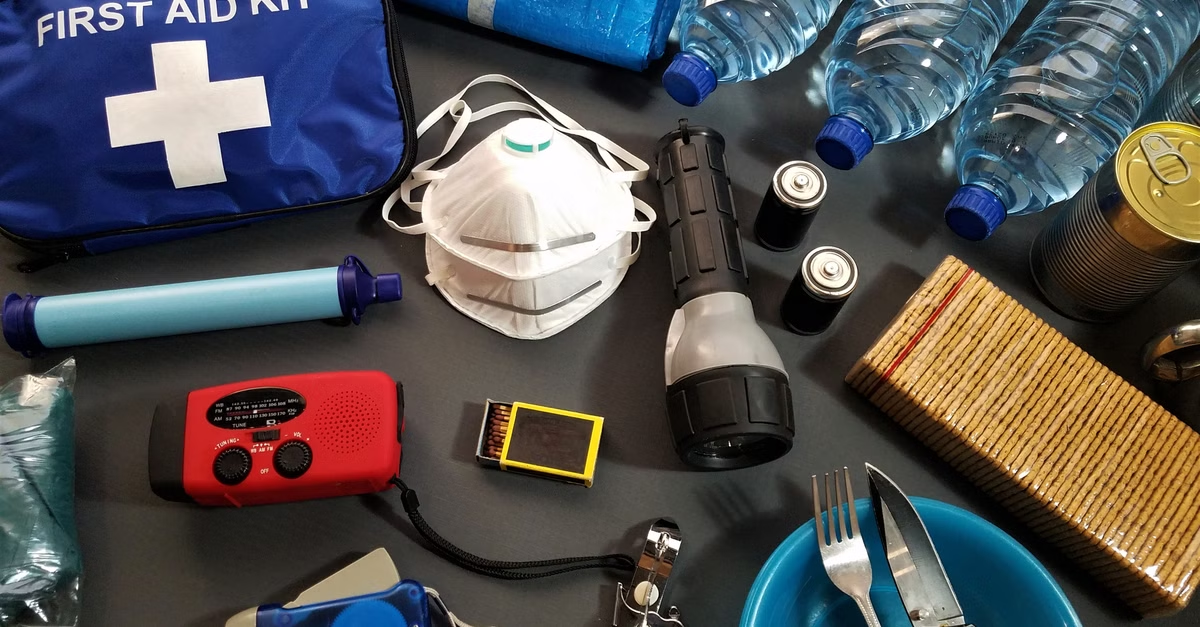
First, let’s talk about the physical stuff. You’ll want two main kits: one for home and a smaller “go-bag” for when you’re out and about.
For your home kit:
- Water: At least one gallon per person per day for 3-5 days. Don’t forget pets!
- Food: Non-perishable, easy-to-prepare items for 3-5 days. Think canned goods, energy bars, dried fruit.
- First-Aid Kit: A well-stocked one, plus any personal medications.
- Light & Power: Flashlights (with extra batteries!), headlamps, a hand-crank or solar-powered radio, and a fully charged power bank for your phone.
- Sanitation: Wet wipes, hand sanitizer, garbage bags, toilet paper.
- Important Documents: Copies of IDs, insurance policies, birth certificates in a waterproof bag.
- Cash: Small bills, because ATMs might not work.
Your “go-bag” (for your car, office, or daily carry):
- Smaller versions of the above: a water bottle, energy bar, basic first-aid, small flashlight, phone charger/power bank, comfortable walking shoes, a whistle.
Next up, digital readiness. In our connected world, this is huge!
- Data Backup: Regularly back up your important files, photos, and contacts to a cloud service or an external hard drive.
- Communication Plan: What if cell towers are down? Have a family communication plan. Designate an out-of-state contact person everyone can check in with. Know a physical meeting point if you can’t reach each other. Write down important phone numbers (yes, on paper!) because your phone might die.
Finally, skill-building. This is where you become your own best asset!
- Basic First Aid & CPR: Knowing how to stop bleeding, treat burns, or perform CPR can be life-saving. Look for local classes!
- Navigation: Can you read a paper map? Seriously, practice navigating without GPS. Know your city’s layout, alternative routes, and landmarks.
- Problem-Solving: This is more of a mindset. Practice thinking on your feet. If X happens, what are 3 ways you could deal with it? This builds mental flexibility.
4. Community Power: Working Together for a Stronger City
You know, as much as we talk about personal preparedness, there’s a truth that really hits home in a city: no one is an island. Your neighbors, the folks in your building, the small businesses on your street – they’re your first line of defense and your strongest allies when things get tough. Building a strong, connected community is absolutely vital for urban resilience.
Think about it: during a widespread emergency, professional first responders might be stretched thin. Who’s going to check on Mrs. Henderson down the hall who lives alone? Who’s got a generator they can share for a few hours? Who knows how to fix a leaky pipe? It’s your community.
So, how can you get involved?
- Get to know your neighbors: Seriously, a friendly “hello” goes a long way. Exchange contact info, know who has what skills (a doctor, a handy person, someone with a car).
- Join or start a local group: Many cities have Neighborhood Watch programs or Community Emergency Response Teams (CERT). These groups train volunteers in basic disaster response skills like fire safety, light search and rescue, and disaster medical operations. It’s a fantastic way to learn and contribute.
- Participate in local initiatives: Keep an eye out for community clean-up days, block parties, or local government meetings discussing emergency preparedness. Your voice and presence matter.
- Share resources and knowledge: If you have extra batteries, a spare room, or a particular skill, be willing to share. And don’t be afraid to ask for help when you need it. Resilience is a two-way street.
When a community is connected and organized, it can bounce back from challenges so much faster and stronger. It’s about collective strength, and you’re a crucial part of that.
5. Everyday Habits for a Resilient Life
Being City-Smart & Ready isn’t just about having a big kit tucked away; it’s also about weaving small, smart habits into your daily routine. These little things add up, building a foundation of readiness without you even really thinking about it.
Here are some simple routines that can make a big difference:
- Keep your phone charged: Sounds obvious, right? But how often do we let it dip to 10%? Make it a habit to charge it fully overnight.
- Gas tank half-full: If you drive, try to keep your gas tank at least half-full. You never know when you might need to evacuate or when gas stations might be closed.
- Check your smoke detectors: A quick press of the test button once a month. Easy peasy, potentially life-saving.
- Know your exits: Whether it’s your apartment building, your office, or a new restaurant, always mentally note the nearest two exits.
- Stay hydrated and nourished: A healthy body is a resilient body. Simple, but true.
Beyond the physical, there’s mental toughness and adaptability. This is huge. Life in the city is constantly changing, and being able to roll with the punches is a superpower.
- Practice problem-solving: When a small inconvenience pops up (e.g., your usual bus is delayed), instead of getting frustrated, see it as a mini-challenge. How else can I get there? What’s my backup plan?
- Cultivate a positive outlook: A resilient mindset isn’t about ignoring problems, but about believing in your ability to overcome them.
- Embrace learning: Read up on new skills, watch tutorials, stay curious.
And finally, staying informed without panic. In the age of instant news and social media, it’s easy to get overwhelmed or fall for misinformation.
- Identify reliable sources: Bookmark your city’s official emergency management website, local news channels, and trusted weather services.
- Get alerts: Sign up for local emergency alerts on your phone.
- Filter the noise: Don’t get sucked into rumor mills or sensationalist headlines. Get the facts, then focus on what you can control. It’s about being aware, not anxious.
6. The Future of Urban Living: Staying Ahead
Our cities are constantly evolving, and so should our approach to being City-Smart & Ready. It’s not just about preparing for yesterday’s problems, but also looking ahead to tomorrow’s challenges.
First, let’s talk about understanding city infrastructure and services. Knowing how your city works can give you a huge advantage.
- Utilities: Do you know where your main water shut-off valve is in your apartment or house? What about the circuit breaker? These are crucial in an emergency.
- Public Services: Understand how public transport operates, where hospitals are located, and how waste management works. Knowing the system helps you navigate disruptions.
- Emergency Services: Know the non-emergency numbers for police and fire, in addition to 911.
Next, adapting to new technologies and environmental changes. The world isn’t standing still!
- Tech for Safety: Smart home devices can offer security and even alert you to issues like carbon monoxide leaks. Apps can provide real-time traffic updates, weather warnings, and emergency alerts. Stay updated on what’s available.
- Environmental Shifts: Climate change means more extreme weather events – hotter summers, heavier rains, increased risk of flooding or wildfires in some areas. How might these affect your specific neighborhood? Are there flood zones nearby? Is your building prepared for heatwaves? Thinking about these things helps you adapt your home and habits.
Finally, long-term planning for urban challenges. This is where we think bigger than just our own household.
- Advocate for better city planning: Get involved in local discussions about infrastructure improvements, green spaces, and sustainable development. A resilient city is built from the ground up.
- Sustainable Living: Reducing your own environmental footprint contributes to the overall health and resilience of your city. Think about energy efficiency, waste reduction, and supporting local businesses.
By staying curious, informed, and proactive, you’re not just preparing for the future; you’re helping to shape a more resilient one for everyone.
7. Conclusion: Your Role in a Stronger City
So, we’ve covered a lot, haven’t we? From building your personal kit and sharpening your skills to connecting with your community and looking ahead to the future of urban living. The journey to becoming truly City-Smart & Ready is an ongoing one, but every step you take makes a real difference.
Remember, it’s about having that personal preparedness kit, both physical and digital. It’s about embracing the incredible power of your community and knowing your neighbors. It’s about those small, everyday habits that build a foundation of readiness, and cultivating a mindset of adaptability and calm. And it’s about staying informed and thinking proactively about how our cities are changing.
This isn’t about fear; it’s about empowerment. It’s about taking control and feeling confident in your ability to handle whatever comes your way. You’re not just preparing yourself; you’re contributing to the collective strength of your entire city.
When we’re all City-Smart & Ready, our cities aren’t just places we live; they’re vibrant, strong, and truly unshakeable. So, go forth, be smart, be ready, and help build a more resilient urban future, one confident step at a time!